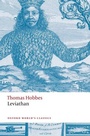
Leviathan
Published on 11. September 2008
Book
Paperback/Softback
576 pages
978-0-19-953728-0 (ISBN)
Description
He that is to govern a whole nation, must read in himself, not this, or that particular man; but mankind.
Leviathan is both a magnificent literary achievement and the greatest work of political philosophy in the English language. Permanently challenging, it has found new applications and new refutations in every generation. Hobbes argues that human beings are first and foremost concerned with their own individual desires and fears. He shows that a conflict of each against every man can only be avoided by the adoption of a compact to enforce peace. The compact involves giving up some of our natural freedom to a sovereign power which will enforce the laws of peace on all citizens. Hobbes also analyses the subversive forces - religion, ambition, private conscience - that threaten to destroy the body politic, Leviathan itself, and return us to the state of war.
This new edition reproduces the first printed text, retaining the original punctuation but modernizing the spelling. It offers exceptionally thorough and useful annotation, an introduction that guides the reader through the complexities of Hobbes's arguments, and a substantial index.
ABOUT THE SERIES: For over 100 years Oxford World's Classics has made available the widest range of literature from around the globe. Each affordable volume reflects Oxford's commitment to scholarship, providing the most accurate text plus a wealth of other valuable features, including expert introductions by leading authorities, helpful notes to clarify the text, up-to-date bibliographies for further study, and much more.
Leviathan is both a magnificent literary achievement and the greatest work of political philosophy in the English language. Permanently challenging, it has found new applications and new refutations in every generation. Hobbes argues that human beings are first and foremost concerned with their own individual desires and fears. He shows that a conflict of each against every man can only be avoided by the adoption of a compact to enforce peace. The compact involves giving up some of our natural freedom to a sovereign power which will enforce the laws of peace on all citizens. Hobbes also analyses the subversive forces - religion, ambition, private conscience - that threaten to destroy the body politic, Leviathan itself, and return us to the state of war.
This new edition reproduces the first printed text, retaining the original punctuation but modernizing the spelling. It offers exceptionally thorough and useful annotation, an introduction that guides the reader through the complexities of Hobbes's arguments, and a substantial index.
ABOUT THE SERIES: For over 100 years Oxford World's Classics has made available the widest range of literature from around the globe. Each affordable volume reflects Oxford's commitment to scholarship, providing the most accurate text plus a wealth of other valuable features, including expert introductions by leading authorities, helpful notes to clarify the text, up-to-date bibliographies for further study, and much more.
More details
Series
Language
English
Place of publication
Oxford
United Kingdom
Illustrations
facsimile title-page and engraving
Dimensions
Height: 196 mm
Width: 129 mm
Thickness: 25 mm
Weight
393 gr
ISBN-13
978-0-19-953728-0 (9780199537280)
Copyright in bibliographic data and cover images is held by Nielsen Book Services Limited or by the publishers or by their respective licensors: all rights reserved.
Schweitzer Classification