

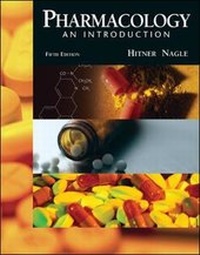
Pharmacology: An Introduction 5/e (Revised)
5th Edition
Published on 16. September 2004
Book
Paperback/Softback
598 pages
978-0-07-312275-5 (ISBN)
Description
This text, formerly Basic Pharmacology, provides a basic understanding of pharmacology with an emphasis on drug therapy and drug interaction. In each section, a review of pertinent physiology and related diseases precedes the presentation of the pharmacology of the drugs. The major theme of the fifth edition is to concentrate on core facts and present the clinical aspects of pharmacology as it relates to patient care. This text includes a chapter on drugs and the geriatric patient; information on nutrition and vitamins with explanations of drugs and food interactions; more thorough math review; new material on patient education; and Internet activities.
More details
Edition
5th edition
Language
English
Place of publication
United States
Publishing group
McGraw-Hill Education - Europe
Target group
College/higher education
Illustrations
Tables, black and white
Dimensions
Height: 279 mm
Width: 221 mm
Thickness: 14 mm
Weight
1236 gr
ISBN-13
978-0-07-312275-5 (9780073122755)
Copyright in bibliographic data and cover images is held by Nielsen Book Services Limited or by the publishers or by their respective licensors: all rights reserved.
Schweitzer Classification
Other editions
Previous edition

Henry Hitner | Barbara T. Nagle
Glencoe Basic Pharmacology
Book
10/1998
4th Edition
McGraw-Hill Inc.,US
€62.15
Article exhausted; check for reprint
Persons
Henry Hitner earned a bachelor of science degree in biology from Moravian College
in Bethlehem, Pennsylvania, and spent several years working in the pharmaceutical
industry, first as a research assistant in toxicology for Wyeth Laboratories and then
as a research pharmacologist for National Drug Company, both in Philadelphia. During
this time he earned a master of education degree in biology from West Chester University.
He attended graduate school at Hahnemann Medical College in Philadelphia,
where he earned a PhD in pharmacology. Dr. Hitner then went into academia, where
he held numerous faculty positions, first as an instructor of biology and allied health
sciences at Montgomery County Community College, followed by 30 years of teaching
and research at the Philadelphia College of Osteopathic Medicine (PCOM). At PCOM
he served as professor and vice chair of the neuroscience, physiology, and pharmacology
department. Other positions included director of the animal facility and chair of the
institutional animal care and utilization committee. Professional memberships included
the Sigma Xi Scientific Research Society and the American Society for Pharmacology
and Experimental Therapeutics. He was the recipient of the Lindback Foundation Award
for Distinguished Teaching and a Mentor Award from the National Student Association.
Henry and his wife Carlotta enjoy traveling, the beach, and time spent with family and
their nine grandchildren.
Barbara Nagle earned a master of science and doctorate at Hahnemann Medical
College and University in the department of pharmacology. Following postdoctoral
training in ocular pharmacology at Wills Eye Hospital, Philadelphia, she taught pharmacology
and physiology to medical students at the Philadelphia College of Osteopathic
Medicine (PCOM) and to nursing students at Widener University. After several years in
academia, she moved into the pharmaceutical industry at Glaxo Smith-Kline, Endo Pharmaceuticals,
Bio-Pharm Clinical Services, ICON, and InKine Pharmaceuticals, Inc. as
Director of Clinical Information and later Vice President of Clinical Research, Training
and Quality Assurance. She has been part of the research effort to bring products through
clinical development to FDA approval such as gastric acid suppressants (antihistamines),
beta-blockers, antiinfectives, muscle relaxants, and oral contraceptives. Her most recent
affiliation was with Endo Pharmaceuticals in pain management research prior to her current
activities as consultant and educator. She has served as International Director of
Drug Development Training and Medical Education for BioPharm. Professional memberships
include the Sigma Xi Scientific Research and American Medical Writers Association.
Barbara is a freelance photographer, traveler, and silk painter.
in Bethlehem, Pennsylvania, and spent several years working in the pharmaceutical
industry, first as a research assistant in toxicology for Wyeth Laboratories and then
as a research pharmacologist for National Drug Company, both in Philadelphia. During
this time he earned a master of education degree in biology from West Chester University.
He attended graduate school at Hahnemann Medical College in Philadelphia,
where he earned a PhD in pharmacology. Dr. Hitner then went into academia, where
he held numerous faculty positions, first as an instructor of biology and allied health
sciences at Montgomery County Community College, followed by 30 years of teaching
and research at the Philadelphia College of Osteopathic Medicine (PCOM). At PCOM
he served as professor and vice chair of the neuroscience, physiology, and pharmacology
department. Other positions included director of the animal facility and chair of the
institutional animal care and utilization committee. Professional memberships included
the Sigma Xi Scientific Research Society and the American Society for Pharmacology
and Experimental Therapeutics. He was the recipient of the Lindback Foundation Award
for Distinguished Teaching and a Mentor Award from the National Student Association.
Henry and his wife Carlotta enjoy traveling, the beach, and time spent with family and
their nine grandchildren.
Barbara Nagle earned a master of science and doctorate at Hahnemann Medical
College and University in the department of pharmacology. Following postdoctoral
training in ocular pharmacology at Wills Eye Hospital, Philadelphia, she taught pharmacology
and physiology to medical students at the Philadelphia College of Osteopathic
Medicine (PCOM) and to nursing students at Widener University. After several years in
academia, she moved into the pharmaceutical industry at Glaxo Smith-Kline, Endo Pharmaceuticals,
Bio-Pharm Clinical Services, ICON, and InKine Pharmaceuticals, Inc. as
Director of Clinical Information and later Vice President of Clinical Research, Training
and Quality Assurance. She has been part of the research effort to bring products through
clinical development to FDA approval such as gastric acid suppressants (antihistamines),
beta-blockers, antiinfectives, muscle relaxants, and oral contraceptives. Her most recent
affiliation was with Endo Pharmaceuticals in pain management research prior to her current
activities as consultant and educator. She has served as International Director of
Drug Development Training and Medical Education for BioPharm. Professional memberships
include the Sigma Xi Scientific Research and American Medical Writers Association.
Barbara is a freelance photographer, traveler, and silk painter.
Content
Part I General Concepts1 Pharmacology: An Introduction2 Biological Factors Affecting the Action of Drugs3 Geriatric Pharmacology4 Math Review and Dosage CalculationsPart II Pharmacology of the Peripheral Nervous System5 Autonomic Nervous System6 Drugs Affecting the Sympathetic Nervous System7 Drugs Affecting the Parasympathetic Nervous System8 Drugs Affecting the Autonomic Ganglia9 Skeletal Muscle Relaxants10 Local AnestheticsPart III Pharmacology of the Central Nervous System11 Introduction to the Central Nervous System12 Sedative-Hypnotic Drugs and Alcohol13 Antipsychotic and Antianxiety Drugs14 Antidepressants, Psychomotor Stimulants, and Lithium15 Psychotomimetic Drugs of Abuse16 Antiepileptic Drugs17 Antiparkinson Drugs18 General Anesthetics19 Opioid (Narcotic) Analgesics20 Analgesics Nonopiod Antiinflammatory, and Antigout DrugsPart IV Pharmacology of the Heart21 Cardiac Physiology and Pathology22 Cardiac Glycosides and the Treatment of Congestive Heart Failure23 Antiarrhythmic DrugsPart V Pharmacology of the Vascular and Renal Systems24 Antianginal Drugs25 Duretics26 Antihypertensive Drugs27 Anticoagulants and Coagulants28 Nutrition and Therapy29 Hypolipidemic Drugs30 AntianemicsPart VI Drugs that Affect the Respiratory System31 Antiallergic and Antihistaminic Drugs32 Bronchodilator Drugs and the Treatment of AsthmaPart VII Pharmacology of the GI Tract33 Therapy of Gastrointestinal Disorders: GERD, Ulcers, and Vomiting34 Agents that Affect Intestinal MotilityPart VIII Pharmacology of the Endocrine System35 Introduction to the Endocrine System36 Adrenal Steroids37 Gonadal Hormones and the Oral Contraceptives38 Drugs Affecting the Thyroid and Parathyroid Glands and Bone Degeneration39 Pancreatic Hormones and Antidiabetic Drugs40 Posterior Pituitary Hormones and Drugs Affecting Uterine MusclePart IX Pharmacology of Infectious Diseases41 Antibacterial Agents42 Antifungal and Antiviral (AIDS) Drugs43 Antiprotozoal and Anthelmintic Drugs44 Antiseptics and DisinfectantsPart X Antineoplastics and Drugs Affecting the Immune System45 Antineoplastic Agents46 Immunopharmacology