

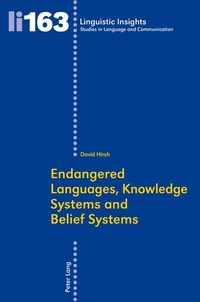
Endangered Languages, Knowledge Systems and Belief Systems
Published on 14. January 2014
Book
Paperback/Softback
168 pages
978-3-0343-1232-5 (ISBN)
Description
Many of the world's 7000 documented language groups are endangered due to falling rates of language and culture transmission from one generation to the next. Some endangered language groups have been the focus of efforts to reverse patterns of linguistic and cultural loss, with variable success. This book presents case studies of endangered language groups from Africa, the Americas, Asia, Europe and the Pacific (including Bisu, Iban, Iquito, Quechua, Wawa, Yi and sign languages) and of their associated knowledge and belief systems, to highlight the importance of preserving linguistic and cultural diversity. Issues of identity and pride emerge within the book, alongside discussion of language and culture policy.
More details
Other editions
Additional editions
David Hirsh
Endangered Languages, Knowledge Systems and Belief Systems
New Zealand Baptists and Public Issues 1882-2000
E-Book
12/2013
180th Edition
Peter Lang Verlag
€104.39
Available for download
Person
David Hirsh is senior lecturer in TESOL (Teaching English to speakers of other languages) at the University of Sydney. His research focuses on second language development and indigenous language revitalization. He has published in Reading in a Foreign Language and Revue Française de Linguistique Appliquée, and in the volumes Teaching Academic Writing: An introduction for teachers of second language writers (2009) and Continuum Companion to Research Methods in Applied Linguistics (2010). He is co-editor of University of Sydney Papers in TESOL.
Content
Contents: Language situation - Endangered languages - Policy change - Language revitalisation - Knowledge systems - Belief systems - Preserving cultural identity.