

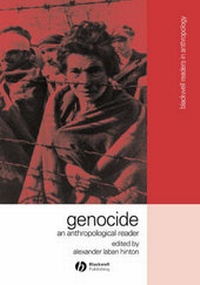
Genocide
An Anthropological Reader
1st Edition
Published on 14. December 2001
Book
Hardback
396 pages
978-0-631-22354-2 (ISBN)
Description
Genocide: An Anthropological Reader helps to lay a foundation for a ground-breaking "anthropology of genocide" by gathering together for the first time the seminal texts for learning about and understanding this phenomenon.
Reviews / Votes
"An excellent contribution to the field of genocide studies: lucid, wide-ranging, and accessible; should be a core text in any course on genocide." Roger W. Smith, The College of William and Mary"This volume, edited and ably introduced by an important scholar of genocide, is an especially timely and important contribution to a growing field. Essential international documents coupled with an excellent collection of previously published articles attempt to explain genocide and related state violence as the first step towards prevention. This fine book is especially suitable for undergraduate and graduate courses." Carole Nagengast, University of New Mexico
"This Reader will be useful for college teachers and novice administrators. Each contribution examines dramatic and controversial issues of immediate concern. While the collection addresses genocidal disasters, its emphasis is on the differences among them, and the varied interpretations that have been made of their causes and their consequences." Journal of the Royal Anthropological Institute
More details
Series
Language
English
Place of publication
Hoboken
United Kingdom
Publishing group
John Wiley and Sons Ltd
Target group
College/higher education
Professional and scholarly
Dimensions
Height: 254 mm
Width: 178 mm
Thickness: 36 mm
Weight
798 gr
ISBN-13
978-0-631-22354-2 (9780631223542)
Copyright in bibliographic data and cover images is held by Nielsen Book Services Limited or by the publishers or by their respective licensors: all rights reserved.
Schweitzer Classification
Other editions
Additional editions
Book
12/2001
1st Edition
Wiley
€71.94
Shipment within 15-20 days
Person
Alexander Laban Hinton is Assistant Professor in the Department of Sociology and Anthropology and a faculty fellow in the Center for Global Change and Governance at Rutgers University, Newark. He is the editor of Biocultural Approaches to the Emotions (1999) and Annihilating Difference: The Anthropology of Genocide (2002), an edited collection of new research articles
Content
Acknowledgements. . Introduction: Genocide and Anthropology: Alexander Laban Hinton.
Part I: Conceptual Foundations.
1. Genocide. ( Raphael Lemkin).
2. Text of the UN Genocide Convention.
3. Genocide: Its Political Use in the Twentieth Century. (Leo Kuper).
4. Genocide: A Sociological Perspective. (Helen Fein).
5. Eichmann in Jerusalem: A Report on the Banality of Evil. (Hannah Arendt).
6. Modernity and the Holocaust. (Zygmunt Bauman).
Part II: Genocide, History, and Modernity.
7. Victims of Progress. (John H. Bodley).
8. Culture of Terror - Space of Death: Roger Casement's Putumayo Report and the Explanation of Torture. (Michael Taussig).
9. National Socialist Germany. (Eric R. Wolf).
Part III: Manufacturing Difference and "Purification".
10. "Ethnic Cleansing": A Metaphor for Our Time? (Akbhar S. Ahmed).
11. Imagined Communities and Real Victims: Self-Determination and Ethnic Cleansing in Yugoslavia. (Robert M. Hayden).
12. A Head for an Eye: Revenge in the Cambodian Genocide. (Alexander Laban Hinton).
13. Dead Certainty: Ethnic Violence in the Era of Globalization: Arjun Appadurai.
Part IV: Coping and Understanding.
14. Fear as a Way of Life. (Linda Green).
15. The Myth of Global Ethnic Conflict. (John R. Bowen).
16. Speechless Emissaries: Refugees, Humanitarianism, and Dehistoricization. (Liisa H. Malkki).
Appendix: Websites on Genocide.
Index.
Part I: Conceptual Foundations.
1. Genocide. ( Raphael Lemkin).
2. Text of the UN Genocide Convention.
3. Genocide: Its Political Use in the Twentieth Century. (Leo Kuper).
4. Genocide: A Sociological Perspective. (Helen Fein).
5. Eichmann in Jerusalem: A Report on the Banality of Evil. (Hannah Arendt).
6. Modernity and the Holocaust. (Zygmunt Bauman).
Part II: Genocide, History, and Modernity.
7. Victims of Progress. (John H. Bodley).
8. Culture of Terror - Space of Death: Roger Casement's Putumayo Report and the Explanation of Torture. (Michael Taussig).
9. National Socialist Germany. (Eric R. Wolf).
Part III: Manufacturing Difference and "Purification".
10. "Ethnic Cleansing": A Metaphor for Our Time? (Akbhar S. Ahmed).
11. Imagined Communities and Real Victims: Self-Determination and Ethnic Cleansing in Yugoslavia. (Robert M. Hayden).
12. A Head for an Eye: Revenge in the Cambodian Genocide. (Alexander Laban Hinton).
13. Dead Certainty: Ethnic Violence in the Era of Globalization: Arjun Appadurai.
Part IV: Coping and Understanding.
14. Fear as a Way of Life. (Linda Green).
15. The Myth of Global Ethnic Conflict. (John R. Bowen).
16. Speechless Emissaries: Refugees, Humanitarianism, and Dehistoricization. (Liisa H. Malkki).
Appendix: Websites on Genocide.
Index.