

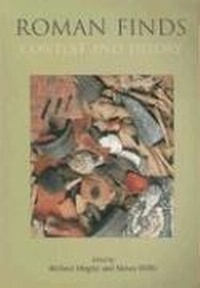
Roman Finds
Context and Theory
Published on 15. November 2016
Book
Paperback/Softback
254 pages
978-1-84217-163-9 (ISBN)
Description
Studies on finds in Roman Britain and the Western Provinces have come to greater prominence in the literature of recent years. The quality of such work has also improved, and is now theoretically informed, and based on rich data-sets. Work on finds over the last decade or two has changed our understanding of the Roman era in profound ways, and yet despite such encouraging advances and such clear worth, there has to date been little in the way of a dedicated forum for the presentation and evaluation of current approaches to the study of material culture. The conference at which these papers were initially presented has gone some way to redressing this, and these papers bring the very latest studies on Roman finds to a wider audience. Twenty papers are here presented covering various themes.
More details
Language
English
Place of publication
Oxford
United Kingdom
Target group
College/higher education
Professional and scholarly
Product notice
Paperback (trade)
Unsewn / adhesive bound
Dimensions
Height: 297 mm
Width: 210 mm
Thickness: 19 mm
Weight
987 gr
ISBN-13
978-1-84217-163-9 (9781842171639)
Copyright in bibliographic data and cover images is held by Nielsen Book Services Limited or by the publishers or by their respective licensors: all rights reserved.
Schweitzer Classification
Other editions
Additional editions

Persons
Steven Willis is Head of Department and Senior Lecturer in the Department of Classical and Archaeological Studies at the University of Kent. He has expertise in the Iron Age and Roman periods in Britain and Europe. His research interests cover settlement and society, material culture, landscape and environments, and phenomenology, as well as the archaeology of coasts and cultural expression in the Early Modern era.
Content
The Context of Roman Finds Studies
1. Roman Finds: Context and Theory (Steven Willis and Richard Hingley)
2. Small objects, small questions? Perceptions of finds research in the academic community (Ellen Swift)
3. The Last Chance (Catherine Johns)
4. Promoting the study of finds in Roman Britain: Democracty, integration and dissemination. Practice and methodologies for the future (Nicholas J. Cooper)
Method and Theory
5. Telling stories about Brougham, or the importance of the specialist report (H.E.M.Cool)
6. Six honest serving men:a basic methodology for the study of small finds (Nina Crummy)
7. Developing methodology for inter-provincial comparison of pottery assemblages (Robin P. Symonds and Ian Haynes)
8. Mine's bigger than yours: comparing values of late Roman hoards (Richard Hobbs)
9. Techniques for exploring context, deposition and chronology (T.S. Martin)
10. Experiments in the Analysis of Finds Deposition at Shiptonthorpe: a Retrospect (Martin Millett)
11. Creolising the body in early Roman Britain (Gillian Carr)
12. A severed Head. Prolegomena to a study of the fragmented body in Roman archaeology and art (Iain Ferris)
13. Artefacts, contexts and the archaeology of social practices (Andrew Gardner)
Applications of method and theory
14. Contexts in Colchester (Hella Eckardt)
15. Creating order in waste: Structured deposits in Roman Tienen, Belgium (Marleen Martens)
16. Not in my back yard! The industry of secondary animal products within the Roman Civitas (Alain Vanderhoeven and Anton Ervynck)
17. Styles of pottery deposition at a Roman rural site in Hampshire (J.G. Evans)
18. Deposit or withdrawal? (Raphael M.J. Isserlin)
19. The detritus of life: the contribution of small finds to understanding smaller military installations (Sonja Jilek and David Breeze)
20. Silver for the Barbarians: Interpretations of Denarii hoards in North Britain and beyond (Fraser Hunter)
1. Roman Finds: Context and Theory (Steven Willis and Richard Hingley)
2. Small objects, small questions? Perceptions of finds research in the academic community (Ellen Swift)
3. The Last Chance (Catherine Johns)
4. Promoting the study of finds in Roman Britain: Democracty, integration and dissemination. Practice and methodologies for the future (Nicholas J. Cooper)
Method and Theory
5. Telling stories about Brougham, or the importance of the specialist report (H.E.M.Cool)
6. Six honest serving men:a basic methodology for the study of small finds (Nina Crummy)
7. Developing methodology for inter-provincial comparison of pottery assemblages (Robin P. Symonds and Ian Haynes)
8. Mine's bigger than yours: comparing values of late Roman hoards (Richard Hobbs)
9. Techniques for exploring context, deposition and chronology (T.S. Martin)
10. Experiments in the Analysis of Finds Deposition at Shiptonthorpe: a Retrospect (Martin Millett)
11. Creolising the body in early Roman Britain (Gillian Carr)
12. A severed Head. Prolegomena to a study of the fragmented body in Roman archaeology and art (Iain Ferris)
13. Artefacts, contexts and the archaeology of social practices (Andrew Gardner)
Applications of method and theory
14. Contexts in Colchester (Hella Eckardt)
15. Creating order in waste: Structured deposits in Roman Tienen, Belgium (Marleen Martens)
16. Not in my back yard! The industry of secondary animal products within the Roman Civitas (Alain Vanderhoeven and Anton Ervynck)
17. Styles of pottery deposition at a Roman rural site in Hampshire (J.G. Evans)
18. Deposit or withdrawal? (Raphael M.J. Isserlin)
19. The detritus of life: the contribution of small finds to understanding smaller military installations (Sonja Jilek and David Breeze)
20. Silver for the Barbarians: Interpretations of Denarii hoards in North Britain and beyond (Fraser Hunter)