

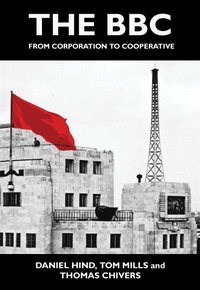
The BBC
From Corporation to Cooperative
Will be published approx. on 15. October 2026
Book
Paperback/Softback
170 pages
978-1-68219-477-5 (ISBN)
Description
As the BBC approaches charter renewal in 2028, this book asks a question few are willing to confront: who does the BBC really serve? At a moment when public media faces its most consequential reckoning in decades, it argues that the future of democratic life in Britain-and beyond-will be decided by how this question is answered.
Since its creation in the final decades of the British Empire, the BBC has wielded enormous cultural and political power in the UK and around the world. Yet it remains largely unaccountable to the public it claims to serve. The 2028 charter renewal, the corporation's first in the digital age, will determine its governance and operational structure for at least a decade-and in doing so will help shape what kind of country Britain becomes.
This book shows how and why the BBC continues to operate as an instrument of elite power at home and abroad, before laying out a practical path beyond it. It proposes transforming an imperial-era broadcaster into a democratic digital media institution, governed through universal rights and randomly selected public bodies. In doing so, it offers not just a plan for the BBC, but a replicable model for public media in the twenty-first century.
Too often the left has underestimated the power of the media and the role communication plays in shaping democratic life. This book argues that without meaningful public control over the institutions through which information circulates, politics risks becoming increasingly shaped by persuasion rather than participation. Against the limits of liberal paternalism, it makes the case for democratic media governance as both a practical necessity and a wider political possibility, with the BBC serving as a test case for what such an alternative might look like.
Since its creation in the final decades of the British Empire, the BBC has wielded enormous cultural and political power in the UK and around the world. Yet it remains largely unaccountable to the public it claims to serve. The 2028 charter renewal, the corporation's first in the digital age, will determine its governance and operational structure for at least a decade-and in doing so will help shape what kind of country Britain becomes.
This book shows how and why the BBC continues to operate as an instrument of elite power at home and abroad, before laying out a practical path beyond it. It proposes transforming an imperial-era broadcaster into a democratic digital media institution, governed through universal rights and randomly selected public bodies. In doing so, it offers not just a plan for the BBC, but a replicable model for public media in the twenty-first century.
Too often the left has underestimated the power of the media and the role communication plays in shaping democratic life. This book argues that without meaningful public control over the institutions through which information circulates, politics risks becoming increasingly shaped by persuasion rather than participation. Against the limits of liberal paternalism, it makes the case for democratic media governance as both a practical necessity and a wider political possibility, with the BBC serving as a test case for what such an alternative might look like.
More details
Language
English
Place of publication
New York
United States
Product notice
Paperback (trade)
Illustrations
Illustrations
Dimensions
Height: 203 mm
Width: 139 mm
ISBN-13
978-1-68219-477-5 (9781682194775)
Copyright in bibliographic data and cover images is held by Nielsen Book Services Limited or by the publishers or by their respective licensors: all rights reserved.
Schweitzer Classification
Persons
Daniel Hind is an independent publisher and journalist. He was the first editorial director of the revived Bodley Head imprint at Random House in 2007. In 2024, he was awarded a doctorate for his thesis The Matter of Opinion: Popular Sovereignty and the Constitution of Social Reality. He is the author of The Threat to Reason, The Return of the Public, and The Magic Kingdom, as well as several policy papers.
Dr Tom Mills is Senior Lecturer in Sociology at Aston University, where he works on media, communication, and the sociology of elites. A former chair of the Media Reform Coalition, he is the author of The BBC: Myth of a Public Service, which examines the BBC's relationship with the state and the impact of neoliberalism on its organisation and culture.
Dr Tom Chivers is a research associate in British media policy at Goldsmiths, University of London and co-author of Our Mutual Friend: The BBC in the Digital Age.
Dr Tom Mills is Senior Lecturer in Sociology at Aston University, where he works on media, communication, and the sociology of elites. A former chair of the Media Reform Coalition, he is the author of The BBC: Myth of a Public Service, which examines the BBC's relationship with the state and the impact of neoliberalism on its organisation and culture.
Dr Tom Chivers is a research associate in British media policy at Goldsmiths, University of London and co-author of Our Mutual Friend: The BBC in the Digital Age.