

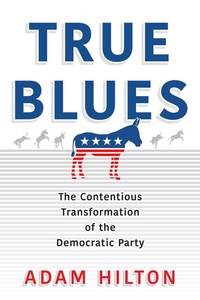
True Blues
The Contentious Transformation of the Democratic Party
Published on 27. August 2024
Book
Paperback/Softback
280 pages
978-1-5128-2689-0 (ISBN)
Description
An examination of the transformation of the Democratic Party since the late 1960s
Who governs political parties? Recent insurgent campaigns, such as those of Donald Trump and Bernie Sanders, have thrust this critical question to the center of political debate for casual observers and scholars alike. Yet the dynamics of modern party politics remain poorly understood. Assertions of either elite control or interest group dominance both fail to explain the Trump victory and the surprise of the Sanders insurgency and their subsequent reverberations through the American political landscape.
In True Blues, Adam Hilton tackles the question of who governs parties by examining the transformation of the Democratic Party since the late 1960s. Reconceiving parties as "contentious institutions," Hilton argues that Democratic Party change was driven by recurrent conflicts between groups and officeholders to define and control party identity, program, and policy. The outcome of this prolonged struggle was a wholly new kind of party-an advocacy party-which institutionalized greater party dependence on outside groups for legitimacy and organizational support, while also, in turn, fostering greater group dependency on the presidency for the satisfaction of its symbolic and substantive demands. Consequently, while the long conflict between party reformers and counter-reformers successfully opened the Democratic Party to new voices and identities, it also facilitated the growth of presidential power, rising inequality, and deepening partisan polarization.
Tracing the rise of the advocacy party from the fall of the New Deal order through the presidency of Barack Obama, True Blues explains how and why the Democratic Party has come to its current crossroads and suggests a bold new perspective for comprehending the dynamics driving American party politics more broadly.
Who governs political parties? Recent insurgent campaigns, such as those of Donald Trump and Bernie Sanders, have thrust this critical question to the center of political debate for casual observers and scholars alike. Yet the dynamics of modern party politics remain poorly understood. Assertions of either elite control or interest group dominance both fail to explain the Trump victory and the surprise of the Sanders insurgency and their subsequent reverberations through the American political landscape.
In True Blues, Adam Hilton tackles the question of who governs parties by examining the transformation of the Democratic Party since the late 1960s. Reconceiving parties as "contentious institutions," Hilton argues that Democratic Party change was driven by recurrent conflicts between groups and officeholders to define and control party identity, program, and policy. The outcome of this prolonged struggle was a wholly new kind of party-an advocacy party-which institutionalized greater party dependence on outside groups for legitimacy and organizational support, while also, in turn, fostering greater group dependency on the presidency for the satisfaction of its symbolic and substantive demands. Consequently, while the long conflict between party reformers and counter-reformers successfully opened the Democratic Party to new voices and identities, it also facilitated the growth of presidential power, rising inequality, and deepening partisan polarization.
Tracing the rise of the advocacy party from the fall of the New Deal order through the presidency of Barack Obama, True Blues explains how and why the Democratic Party has come to its current crossroads and suggests a bold new perspective for comprehending the dynamics driving American party politics more broadly.
Reviews / Votes
"Adam Hilton's True Blues skillfully demonstrates how the New Politics movement both succeeded and failed to achieve its goals. In his telling, the hard-fought battle between extra-party groups from the New Left - the civil rights, feminist, and antiwar movements and the labor unions allied with them - and established officeholders shaped the Democrats into the party it is today." (Jacobin) "In this imaginative, lively book on the history of the Democratic Party, Hilton offers a challenge to existing scholarship on the evolution of the Democratic Party since the end of the New Deal. Instead of affirming the role of party leaders and officeholders as the main force in shaping the party's direction, this book argues that 'conflict between extra-party groups' controlled political changes...This study allows for a greater understanding of the change that has taken and continues to take place in the Democratic Party." (Choice) "True Blues offers an excellent history of internal Democratic Party dynamics, consistent with but expanding on useful general political science histories...Hilton's model of change, where party entrepreneurs take advantage of a crisis, face an electoral test, and then struggle against opponents, is a useful addition to understanding American parties, as is his description of the Democratic Party as an 'advocacy party.'" (Party Politics) "!n True Blues, Adam Hilton offers a comprehensive look into the process of layered reform that created the modern Democratic Party...[A] compelling read for those pondering the major questions facing Democrats today." (Comparative Politics) "[A]n important book with a rich and detailed account of reform and counter-reform that would be most useful to anyone seeking to understand just what the modern Democratic Party is and how it got to be that way. Students, scholars, and political journalists will find much in here of value, and it is indispensable for those seeking to describe the past half century of Democratic Party politics." (Forum Review)More details
Series
Language
English
Place of publication
Pennsylvania
United States
Target group
College/higher education
Product notice
Paperback (trade)
Dimensions
Height: 229 mm
Width: 152 mm
Thickness: 16 mm
Weight
413 gr
ISBN-13
978-1-5128-2689-0 (9781512826890)
Copyright in bibliographic data and cover images is held by Nielsen Book Services Limited or by the publishers or by their respective licensors: all rights reserved.
Schweitzer Classification
Person
Adam Hilton is Assistant Professor of Politics, Mount Holyoke College.
Content
Contents
Introduction. Who Governs Parties?
Part I. The Rise of the Advocacy Party
Chapter 1. In the Shadow of States' Rights: The New Deal Democratic Party and the Prelude to Reform
Chapter 2. The Undemocratic Party: Antiwar Insurgents and the Party Crisis of 1968
Chapter 3. "Curing the Ills of Democracy": Party Entrepreneurship in the McGovern-Fraser Commission
Chapter 4. The Party Turned Upside Down: The McGovern Nomination and the Backlash Against Reform
Chapter 5. Bringing the Counter-Reformers Back In: The Coalition for a Democratic Majority and the Making of the Advocacy Party
Part II. The Politics of the Advocacy Party
Chapter 6. The Limits of Group Influence: Jimmy Carter and the Demand for Full Employment Policy
Chapter 7. The Officeholders Strike Back: The New Democrats' Resistance to the Advocacy Party
Chapter 8. The Advocate-in-Chief: Barack Obama's Harnessing of the Advocacy Party
Conclusion. The Consequences of the Advocacy Party
Notes
Index
Acknowledgments
Introduction. Who Governs Parties?
Part I. The Rise of the Advocacy Party
Chapter 1. In the Shadow of States' Rights: The New Deal Democratic Party and the Prelude to Reform
Chapter 2. The Undemocratic Party: Antiwar Insurgents and the Party Crisis of 1968
Chapter 3. "Curing the Ills of Democracy": Party Entrepreneurship in the McGovern-Fraser Commission
Chapter 4. The Party Turned Upside Down: The McGovern Nomination and the Backlash Against Reform
Chapter 5. Bringing the Counter-Reformers Back In: The Coalition for a Democratic Majority and the Making of the Advocacy Party
Part II. The Politics of the Advocacy Party
Chapter 6. The Limits of Group Influence: Jimmy Carter and the Demand for Full Employment Policy
Chapter 7. The Officeholders Strike Back: The New Democrats' Resistance to the Advocacy Party
Chapter 8. The Advocate-in-Chief: Barack Obama's Harnessing of the Advocacy Party
Conclusion. The Consequences of the Advocacy Party
Notes
Index
Acknowledgments