

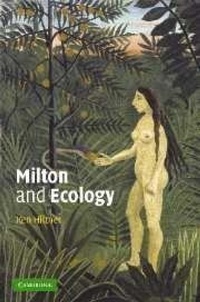
Milton and Ecology
Published on 17. December 2009
Book
Paperback/Softback
176 pages
978-0-521-12374-7 (ISBN)
Description
In Milton and Ecology, Ken Hiltner engages with literary, theoretical, and historic approaches to explore the ideological underpinnings of our prevalent environmental crisis. Focusing on Milton's rejection of dualistic theology, metaphysical philosophy, and early-modern subjectivism, Hiltner argues that Milton anticipates certain prevailing essential ecological arguments. Even more remarkable is that Milton was able to integrate these arguments with biblical sources so seamlessly that his interpretative 'Green' reading of scripture has for over three centuries been entirely plausible. This study considers how Milton, from the earliest edition of the Poems, not only sought to tell the story of how through humanity's folly Paradise on earth was lost, but also sought to tell how it might be regained. This intriguing study will be of interest to eco-critics and Milton specialists alike.
Reviews / Votes
"...bold and wonderfully suggestive." John Bienz, Mount Union College, Renaissance QuarterlyMore details
Language
English
Place of publication
Cambridge
United Kingdom
Target group
Professional and scholarly
Product notice
Paperback (trade)
Illustrations
Worked examples or Exercises
Dimensions
Height: 229 mm
Width: 152 mm
Thickness: 10 mm
Weight
265 gr
ISBN-13
978-0-521-12374-7 (9780521123747)
Copyright in bibliographic data and cover images is held by Nielsen Book Services Limited or by the publishers or by their respective licensors: all rights reserved.
Schweitzer Classification
Other editions
Additional editions
Ken Hiltner
Milton and Ecology
E-Book
12/2004
1st Edition
Cambridge University Press
€36.99
Available for download
Person
Ken Hiltner has published widely on Milton. His articles have been published in Milton Studies, Milton Quarterly, and English Language Notes.
Content
Preface; Introduction; Part I. Having Place: 1. Pace defined: the ecological importance of place; 2. Place given: Eve as the Garden's spirit of place; 3. Place lost: Eve's fall as an uprooting; 4. Place regained: Sabrina puts down roots; Part II. The Underlying Importance of Place: 5. The New Testament's call to place: Paul and Luther's deconstruction; 6. Rejecting the placeless ancient doctrines: confusing paradise regained; 7. The Old Testament's call to place: Job's wisdom in Milton's poetry; 8. The influence of time on place: forbidding unripe fruit; 9. Place, body and spirit joined: the earth-human wound in Paradise Lost.