

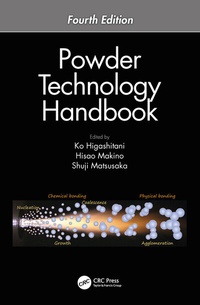
Powder Technology Handbook, Fourth Edition
4th Edition
Published on 31. October 2019
Book
Hardback
647 pages
978-1-138-73922-2 (ISBN)
Description
The Fourth Edition of Powder Technology Handbook continues to serve as the comprehensive guide to powder technology and the fundamental engineering processes of particulate technology, while incorporating significant advances in the field in the decade since publication of the previous edition. The handbook offers a well-rounded perspective on powder technologies in gas and liquid phases that extends from particles and powders to powder beds and from basic problems to actual applications.
This new edition features fully updated and new chapters written by a team of internationally distinguished contributors. All content has been updated and new sections added on.
Powder Technology Handbook provides methodologies of powder and particle handling technology essential to scientific researchers and practical industrial engineers. It contains contemporary and comprehensive information on powder and particle handling technology that is extremely useful not only to newcomers but also to experienced engineers and researchers in the field of powder and particle science and technology.
This new edition features fully updated and new chapters written by a team of internationally distinguished contributors. All content has been updated and new sections added on.
Powder Technology Handbook provides methodologies of powder and particle handling technology essential to scientific researchers and practical industrial engineers. It contains contemporary and comprehensive information on powder and particle handling technology that is extremely useful not only to newcomers but also to experienced engineers and researchers in the field of powder and particle science and technology.
More details
Edition
4th edition
Language
English
Place of publication
London
United Kingdom
Publishing group
Taylor & Francis Ltd
Target group
Professional and scholarly
Illustrations
688 s/w Abbildungen, 136 s/w Tabellen
136 Tables, black and white; 688 Illustrations, black and white
Dimensions
Height: 280 mm
Width: 210 mm
ISBN-13
978-1-138-73922-2 (9781138739222)
Copyright in bibliographic data and cover images is held by Nielsen Book Services Limited or by the publishers or by their respective licensors: all rights reserved.
Schweitzer Classification
Other editions
Additional editions
Ko Higashitani | Hisao Makino | Shuji Matsusaka
Powder Technology Handbook, Fourth Edition
Book
10/2019
4th Edition
CRC Press
€284.74
Shipment within 15-20 days
Ko Higashitani | Hisao Makino | Shuji Matsusaka
Powder Technology Handbook, Fourth Edition
E-Book
10/2019
4th Edition
CRC Press
€324.99
Available for download
Ko Higashitani | Hisao Makino | Shuji Matsusaka
Powder Technology Handbook, Fourth Edition
E-Book
10/2019
4th Edition
CRC Press
€324.99
Available for download
Previous edition
Hiroaki Masuda | Ko Higashitani | Hideto Yoshida
Powder Technology Handbook
Book
01/2006
3rd Edition
Taylor & Francis
€245.12
Article exhausted; check for reprint
Persons
Ko Higashitani is an emeritus professor of Kyoto University. He received BS degree from Kyoto University in 1968, and Ph.D. degree from University of Wisconsin-Madison, USA in 1973 in the field of Chemical Engineering. After he worked in Kyushu Institute of Technology, he moved to Kyoto University as a professor of Chemical Engineering. He is an Editorial Board of Powder Technology and an International Advisory Board of Particuology, and he was the Executive Editor of Chemical Engineering Science and the Editor-in-Chief of Advanced Powder Technology. His present major research interest is the correlation between macroscopic behaviors of colloidal particles in solutions, such as, the particle formation, the coagulation, dispersion, deposition and detachment of colloidal particles, with the molecular-scale characteristics of particles and particle surfaces which can be evaluated by the Atomic Force Microscope.
Hisao Makino is a Research Adviser of Central Research Institute of Electric Power Industry, Japan (CRIEPI) and a Visiting Professor of Kyushu University and Gunma University. He is also a Vice-president of the Association of Powder Process Industry and Engineering, Japan and a Vice-president of the Japan Institute of Energy. He received his B.Sc., M.SC degrees and Ph.D. from Kyoto University. His main research subject is a development of solid fossil fuel utilization technology including coal and biomass for power generation. His current interests are high temperature combustion and gasification reaction of pulverized fossil fuel, dust collection technology and control technology of greenhouse gas emission from thermal power stations.
Shuji Matsusaka is a Professor of Chemical Engineering at Kyoto University. He received his B.Sc. and M.Sc. degrees from Hiroshima University and Ph.D. from Kyoto University. He has held important positions in academic organizations in areas of powder technology, aerosol science, and electrostatics. He has been the editor-in-chief of Advanced Powder Technology since 2013. Dr Matsusaka's current research interests are characterizing particle electrification, adhesion, and flowability, as well as handling micro-particles and nano-particles in gases.
Hisao Makino is a Research Adviser of Central Research Institute of Electric Power Industry, Japan (CRIEPI) and a Visiting Professor of Kyushu University and Gunma University. He is also a Vice-president of the Association of Powder Process Industry and Engineering, Japan and a Vice-president of the Japan Institute of Energy. He received his B.Sc., M.SC degrees and Ph.D. from Kyoto University. His main research subject is a development of solid fossil fuel utilization technology including coal and biomass for power generation. His current interests are high temperature combustion and gasification reaction of pulverized fossil fuel, dust collection technology and control technology of greenhouse gas emission from thermal power stations.
Shuji Matsusaka is a Professor of Chemical Engineering at Kyoto University. He received his B.Sc. and M.Sc. degrees from Hiroshima University and Ph.D. from Kyoto University. He has held important positions in academic organizations in areas of powder technology, aerosol science, and electrostatics. He has been the editor-in-chief of Advanced Powder Technology since 2013. Dr Matsusaka's current research interests are characterizing particle electrification, adhesion, and flowability, as well as handling micro-particles and nano-particles in gases.
Content
Particle Characterization and Measurement. Particle Size. Size Measurement. Particle Shape Characterization. Particle Density.
Hardness and Toughness of Particles. Surface Properties and Analysis. Specific Characteristics of Nanoparticles. Fundamental
Properties of Particles. Diffusion of Particles. Optical Properties. Particle Motion in Fluid. Particle Sedimentation. Particle
Electrification and Electrophoresis. Adhesive Force of a Single Particle. Particle Deposition and Reentrainment. Agglomeration
(Coagulation). Viscosity of Slurry. Particle Impact and Breakage. Sintering. Ignition and Combustion Reaction. Solubility and
Dissolution Rate. Mechanochemistry. Fundamental Properties of Powder Beds.
Adsorption Characteristics. Moisture Content. Electrical Properties. Magnetic Property. Packing Properties. Capillarity of Porous
Media. Permeation (Flow Through Porous Medium). Specific Surface Area. Mechanical Strength of Powder Bed.
Fluidity of Powder. Blockage of Storage Vessels. Segregation of Particles. Vibrational and Acoustic Characteristics. Particle
Generation and Fundamentals. Aerosol Particle Generation. Generation of Particles by Reaction. Crystallization. Design and
Formation of Composite Particles. Dispersion of Particles. Electrical Charge Control. Surface Modification. Standard Powders and
Particles. Powder Handling and Operations. Crushing and Grinding. Classification. Storage(Silo). Feeding.
Transportation. Mixing. Slurry Conditioning. Granulation. Kneading and Plastic Treatment. Drying. Combustion. Dust Collection.
Electrostatic Separation. Magnetic Separation. Gravity Thickening. Filtration. Expression. Flotation. Electrostatic Powder Coating.
Reactors. Handling Technology of Nanoparticles. Simulation. Process Instrumentation. Powder Sampling.
Particle Sampling in Gas Flow. Concentration and Flow Rate Measurement. Level Measurement of Powder Bed. Temperature
Measurement of Powder. Moisture Content Measurement. Tomography. Working Atmospheres and Hazards.
Health Effects due to Particulate Matters. Risk Analysis of Nanoparticles. Respiratory Protective Devices for Particulate Matters.
Detonation and Dust Explosion.
Hardness and Toughness of Particles. Surface Properties and Analysis. Specific Characteristics of Nanoparticles. Fundamental
Properties of Particles. Diffusion of Particles. Optical Properties. Particle Motion in Fluid. Particle Sedimentation. Particle
Electrification and Electrophoresis. Adhesive Force of a Single Particle. Particle Deposition and Reentrainment. Agglomeration
(Coagulation). Viscosity of Slurry. Particle Impact and Breakage. Sintering. Ignition and Combustion Reaction. Solubility and
Dissolution Rate. Mechanochemistry. Fundamental Properties of Powder Beds.
Adsorption Characteristics. Moisture Content. Electrical Properties. Magnetic Property. Packing Properties. Capillarity of Porous
Media. Permeation (Flow Through Porous Medium). Specific Surface Area. Mechanical Strength of Powder Bed.
Fluidity of Powder. Blockage of Storage Vessels. Segregation of Particles. Vibrational and Acoustic Characteristics. Particle
Generation and Fundamentals. Aerosol Particle Generation. Generation of Particles by Reaction. Crystallization. Design and
Formation of Composite Particles. Dispersion of Particles. Electrical Charge Control. Surface Modification. Standard Powders and
Particles. Powder Handling and Operations. Crushing and Grinding. Classification. Storage(Silo). Feeding.
Transportation. Mixing. Slurry Conditioning. Granulation. Kneading and Plastic Treatment. Drying. Combustion. Dust Collection.
Electrostatic Separation. Magnetic Separation. Gravity Thickening. Filtration. Expression. Flotation. Electrostatic Powder Coating.
Reactors. Handling Technology of Nanoparticles. Simulation. Process Instrumentation. Powder Sampling.
Particle Sampling in Gas Flow. Concentration and Flow Rate Measurement. Level Measurement of Powder Bed. Temperature
Measurement of Powder. Moisture Content Measurement. Tomography. Working Atmospheres and Hazards.
Health Effects due to Particulate Matters. Risk Analysis of Nanoparticles. Respiratory Protective Devices for Particulate Matters.
Detonation and Dust Explosion.