

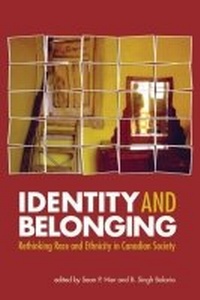
Identity and Belonging
Rethinking Race and Ethnicity in Canadian Society
Published on 30. October 2006
Book
Paperback/Softback
278 pages
978-1-55130-312-3 (ISBN)
Description
Canadian society is rapidly evolving. By 2017, persons belonging to a visible minority group will comprise 20 percent of the population. In Canada's major cities, the proportion of persons classified as visible minority is expected to exceed 50 percent.
Canada is a country that is not very sure of its own identity. Many of our citizens do not know where they fit in the national fabric. As ethno-racial diversity increases, so will our uncertainty of our identity and role in the development of our nation.
While Canada has always been culturally diverse, the continuing ethno-racial diversification will exercise a profound influence on Canadian culture, as well as on Canadian political and social institutions. As the ethno-racial composition becomes more complex, critical understandings of race, ethnicity, identity, and belonging are increasingly important goals for social justice, fairness, and inclusion.
Provocative and ground-breaking, Identity and Belonging addresses these concerns, poses some essential questions about the nature of race and ethnicity, how they differ from one another, and how they might differ from other markers of identity, such as class, gender, or nationality.
Canada is a country that is not very sure of its own identity. Many of our citizens do not know where they fit in the national fabric. As ethno-racial diversity increases, so will our uncertainty of our identity and role in the development of our nation.
While Canada has always been culturally diverse, the continuing ethno-racial diversification will exercise a profound influence on Canadian culture, as well as on Canadian political and social institutions. As the ethno-racial composition becomes more complex, critical understandings of race, ethnicity, identity, and belonging are increasingly important goals for social justice, fairness, and inclusion.
Provocative and ground-breaking, Identity and Belonging addresses these concerns, poses some essential questions about the nature of race and ethnicity, how they differ from one another, and how they might differ from other markers of identity, such as class, gender, or nationality.
Reviews / Votes
This is a well rounded selection of readings. This selection of readings brings together specific extracts, chapters, and articles on a very important topic of 'racial' and ethnic identity and belonging. I am unaware of any comparable reader that touches upon these same themes, so this reader will make a significant contribution."" - Lloyd Wong, University of CalgaryMore details
Language
English
Place of publication
Toronto
Canada
Target group
College/higher education
Dimensions
Height: 248 mm
Width: 171 mm
Thickness: 14 mm
Weight
480 gr
ISBN-13
978-1-55130-312-3 (9781551303123)
Copyright in bibliographic data and cover images is held by Nielsen Book Services Limited or by the publishers or by their respective licensors: all rights reserved.
Schweitzer Classification
Persons
Sean P. Hier is Assistant Professor of Sociology, University of Victoria, where he teaches in the areas of race and social issues. He is also the General Editor of Contemporary Sociological Thought: Themes and Theories (Canadian Scholars' Press).
B. Singh Bolaria is Professor Emeritius of Sociology, University of Saskatchewan, and Adjunct Professor of Sociology, University of Victoria. His career has focused on issues of race and social inequality.
B. Singh Bolaria is Professor Emeritius of Sociology, University of Saskatchewan, and Adjunct Professor of Sociology, University of Victoria. His career has focused on issues of race and social inequality.
Content
Preface
Introduction: Identities without Guarantees
Part I: Situating Race, Ethnicity, and Identity
Chapter 1: Representations of the Other, Robert Miles and Malcolm Brown
Chapter 2: The Social Construction of Primordial Identities, Anton Allahar
Chapter 3: Race, Ethnicity, and Cultural Identity, Carl E. James
Chapter 4: Postmodern Race and Gender Essentialism or a Post-Mortem of Scholarship, Radha Jhappan
Part II: Identity, Nation, Memory, and Belonging
Chapter 5: The Origins of National Consciousness, Benedict Anderson
Chapter 6: Re-membering and Forgetting, Ron Eyerman
Chapter 7: The Racial State, Michael Omi and Howard Winant
Chapter 8: Identity, Belonging, and the Critique of Pure Sameness, Paul Gilroy
PART III: The Negotiation of Difference
Chapter 9: Optional Ethnicities: For Whites Only?, Mary C. Waters
Chapter 10: Between Black and White: Understanding the Biracial Experience, Kerry Ann Rockquemore
Chapter 11: Interrogating the Hyphen-Nation: Canadian Multicultural Policy and ""Mixed Race,"" Minelle Mahtani
Chapter 12: Formation of Ethnic and Racial Identities: Narratives by Young Asian-American Professionals, Pyong Gap Min and Rose Kim
Part IV: Multiculturalism, Politics, and Belonging
Chapter 13: Immigration, Multiculturalism, and Citizenship: The Development of the Canadian Social Justice Infrastructure, Charles S. Ungerleider
Chapter 14: ""Canadian"" as an Ethnic Identity: Implications for Multiculturalism and National Unity, Rhoda E. Howard-Hassman
Chapter 15: Redistribution to Recognition? Dilemmas of Justice in a ""Post-Socialist"" Age, Nancy Fraser
Chapter 16: The Future of Identity, Stuart Hall
Appendix: Relevant Websites
Introduction: Identities without Guarantees
Part I: Situating Race, Ethnicity, and Identity
Chapter 1: Representations of the Other, Robert Miles and Malcolm Brown
Chapter 2: The Social Construction of Primordial Identities, Anton Allahar
Chapter 3: Race, Ethnicity, and Cultural Identity, Carl E. James
Chapter 4: Postmodern Race and Gender Essentialism or a Post-Mortem of Scholarship, Radha Jhappan
Part II: Identity, Nation, Memory, and Belonging
Chapter 5: The Origins of National Consciousness, Benedict Anderson
Chapter 6: Re-membering and Forgetting, Ron Eyerman
Chapter 7: The Racial State, Michael Omi and Howard Winant
Chapter 8: Identity, Belonging, and the Critique of Pure Sameness, Paul Gilroy
PART III: The Negotiation of Difference
Chapter 9: Optional Ethnicities: For Whites Only?, Mary C. Waters
Chapter 10: Between Black and White: Understanding the Biracial Experience, Kerry Ann Rockquemore
Chapter 11: Interrogating the Hyphen-Nation: Canadian Multicultural Policy and ""Mixed Race,"" Minelle Mahtani
Chapter 12: Formation of Ethnic and Racial Identities: Narratives by Young Asian-American Professionals, Pyong Gap Min and Rose Kim
Part IV: Multiculturalism, Politics, and Belonging
Chapter 13: Immigration, Multiculturalism, and Citizenship: The Development of the Canadian Social Justice Infrastructure, Charles S. Ungerleider
Chapter 14: ""Canadian"" as an Ethnic Identity: Implications for Multiculturalism and National Unity, Rhoda E. Howard-Hassman
Chapter 15: Redistribution to Recognition? Dilemmas of Justice in a ""Post-Socialist"" Age, Nancy Fraser
Chapter 16: The Future of Identity, Stuart Hall
Appendix: Relevant Websites