

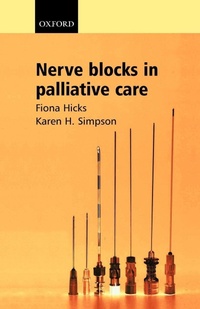
Nerve Blocks in Palliative Care
Published on 9. September 2004
Book
Paperback/Softback
148 pages
978-0-19-852703-9 (ISBN)
Description
In most patients, pain medication, along with physical therapy and supportive counselling, adequately controls the pain of terminal disease, but in some cases pain medication fails or produces unacceptable side effects, and other more invasive interventions may be used. This practical book provides comprehensive and easy-to-follow guidelines on nerve blocking and neuromodulation techniques to help patients and professionals make choices in pain management. Patients selection and appropriate referral are discussed as well as ethical issues and consent.
This book will be an invaluable source of information for a variety of professionals working with patients with advanced disease, including palliative care doctors and specialist nurses, as there is a scarcity of consultants in pain management in the field of palliative care. Some healthcare professionals may not have experience of the full range of techniques that may benefit their patients, therefore limiting the choices available to patients with uncontrolled pain in the context of palliative care. This book will ensure that the full range of techniques are considered to provide excellent care for patients with pain that is difficult to manage.
This book will be an invaluable source of information for a variety of professionals working with patients with advanced disease, including palliative care doctors and specialist nurses, as there is a scarcity of consultants in pain management in the field of palliative care. Some healthcare professionals may not have experience of the full range of techniques that may benefit their patients, therefore limiting the choices available to patients with uncontrolled pain in the context of palliative care. This book will ensure that the full range of techniques are considered to provide excellent care for patients with pain that is difficult to manage.
Reviews / Votes
The authors rightly make the point that the successful use of interventional techniques first requires good patient assessment, and then a cooperative approach by palliative care and pain management teams, followed by clearly articulated plans for aftercare. * Acute Pain, Vol 7 * Karen Simpson and Fiona Hicks have put together their extensive collective experience to produce a clear and succinct text that manages both to set out the clinical problems and also to summarize the various techniques that are used currently . . . This is a short and very readable book which I would recommend as essential reading for any medical or nursing profesional who is involved with the management of patients with cancer-related pain. My copy has sat easily in by brief case since it arrived through the post, and I have used it both for reference and as a teaching aid. It's been much more useful than those large, erudite tomes that are either gathering dust in my office or serving as a doorstop! * British Journal of Anaesthesia *More details
Language
English
Place of publication
Oxford
United Kingdom
Target group
Professional and scholarly
Illustrations
53 black & white photographs and illustrations
Dimensions
Height: 216 mm
Width: 140 mm
Thickness: 8 mm
Weight
196 gr
ISBN-13
978-0-19-852703-9 (9780198527039)
Copyright in bibliographic data and cover images is held by Nielsen Book Services Limited or by the publishers or by their respective licensors: all rights reserved.
Schweitzer Classification
Other editions
Additional editions
Fiona Hicks | Karen H. Simpson
Nerve Blocks in Palliative Care
E-Book
09/2004
1st Edition
OUP eBook
€48.49
Available for download
Persons
Content
1. Philosophy behind the use of interventional pain management techniques in palliative care ; 2. Defining the problem ; 3. Assessment of pain ; 4. Pain syndromes ; 5. Choice of technique ; 6. Simple peripheral nerve blocks and injections ; 7. Regional nerve blocks ; 8. Spinal drug delivery ; 9. Electrical stimulation techniques ; 10. Ethical issues