

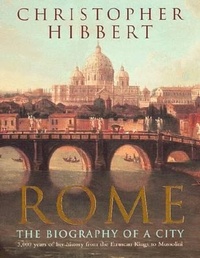
Rome
The Biography of a City
Published on 15. October 1987
Book
Paperback/Softback
400 pages
978-0-14-007078-1 (ISBN)
Description
This beautifully written, informative study is a portrait, a history and a superb guide book, capturing fully the seductive beauty and the many layered past of the Eternal City. It covers 3,000 years of history from the city's quasi-mythical origins, through the Etruscan kings, the opulent glory of classical Rome, the decadence and decay of the Middle Ages and the beauty and corruption of the Renaissance, to its time at the heart of Mussolini's fascist Italy. Exploring the city's streets and buildings, peopled with popes, gladiators, emperors, noblemen and peasants, this volume details the turbulent and dramatic history of Rome in all its depravity and grandeur.
More details
Language
English
Place of publication
London
United Kingdom
Dimensions
Height: 246 mm
Width: 189 mm
Thickness: 31 mm
Weight
1152 gr
ISBN-13
978-0-14-007078-1 (9780140070781)
Copyright in bibliographic data and cover images is held by Nielsen Book Services Limited or by the publishers or by their respective licensors: all rights reserved.
Schweitzer Classification
Other editions
Additional editions
E-Book
10/2001
1st Edition
Penguin Books Ltd
€14.99
Available for download
Person
Christopher Hibbert was born in Leicestershire in 1924 and educated at Radley and Oriel College, Oxford. He served as an infantry officer during the war, was twice wounded and was awarded the Military Cross in 1945. Described by Professor J. H. Plumb as 'a writer of the highest ability' and in the New Statesman as 'a pearl of biographers', he is, in the words of The Times Educational Supplement, 'perhaps the most gifted popular historian we have'. Christopher Hibbert is a Fellow of the Royal Society of Literature. He is married with two sons and a daughter and lives in Henley-on-Thames.
Content
Part 1: myths, monarchs and republicans; imperial Rome; bread and circuses; catacombs and Christians; infamy and anarchy; saints, tyrants and anti-popes; "the refuge of all the nations"; Renaissance and decadence; patrons and parasites; the sack of Rome. Part 2: recovery and reform; Bernini and the Baroque; il settecento; Napoleonic interlude; the Risorgimento and the Roman question; royal Rome; Roma fascista; epilogue - the eternal city. Part 3: notes on topography, buildings and works of art.