

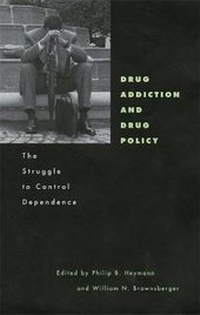
Drug Addiction and Drug Policy
The Struggle to Control Dependence
Published on 15. July 2001
Book
Hardback
288 pages
978-0-674-00327-9 (ISBN)
Description
This book is the culmination of five years of impassioned conversations among distinguished scholars in law, public policy, medicine, and biopsychology, about the most difficult questions in drug policy and the study of addictions. As these intensely argued chapters show, the obvious answers are always alluring but frequently wrong.
Do drug addicts have an illness, or is their addiction under their control? Should they be treated as patients, or as criminals? Challenging the conventional wisdom in both the psychiatric community and the enforcement community, the authors show the falsity of these standard dichotomies. They argue that the real question is how coercion and support can be used together to steer addicts toward productive life.
Written in clear and forceful language, without ideological blinkers and with close attention to empirical data, this book has something to teach both novice and expert in the fields of drug addiction and drug policy. The authors' resistance to sloganeering from right or left will raise the quality of public discussion of a complex issue, and contribute to the management of one of the most painful and enduring problems of American society.
Do drug addicts have an illness, or is their addiction under their control? Should they be treated as patients, or as criminals? Challenging the conventional wisdom in both the psychiatric community and the enforcement community, the authors show the falsity of these standard dichotomies. They argue that the real question is how coercion and support can be used together to steer addicts toward productive life.
Written in clear and forceful language, without ideological blinkers and with close attention to empirical data, this book has something to teach both novice and expert in the fields of drug addiction and drug policy. The authors' resistance to sloganeering from right or left will raise the quality of public discussion of a complex issue, and contribute to the management of one of the most painful and enduring problems of American society.
Reviews / Votes
This book is first-rate. The command of the research literature is impressive and the wide range of contributors ensures that readers will be exposed to all aspects of the current questions concerning drug policy. From the wonderfully inclusive overview of Philip Heymann's introduction to the highly detailed discussion of data by William Brownsberger on drug users and drug dealers, each of the contributions is high quality and addresses a cutting edge issue. -- Mathea Falco, President, Drug Strategies There couldn't be a better selection of American authors on this tortured subject than the authors assembled here, every one a recognized scholar with years of experience. They write with clarity and candor. They reach conclusions. They make sense. What a refreshing experience! -- Thomas C. Schelling, School of Public Affairs, University of MarylandMore details
Series
Language
English
Place of publication
Cambridge, Mass
United States
Target group
Professional and scholarly
US School Grade: College Graduate Student
Illustrations
10 line illustrations, 7 tables
Dimensions
Height: 235 mm
Width: 156 mm
Weight
535 gr
ISBN-13
978-0-674-00327-9 (9780674003279)
Copyright in bibliographic data and cover images is held by Nielsen Book Services Limited or by the publishers or by their respective licensors: all rights reserved.
Schweitzer Classification
Other editions
Additional editions
Philip B. Heymann | William N. Brownsberger
Drug Addiction and Drug Policy
The Struggle to Control Dependence
E-Book
07/2009
Harvard University Press
€189.99
Available for download
Persons
Philip B. Heymann is James Barr Ames Professor of Law at Harvard Law School. William N. Brownsberger is a Massachusetts State Senator. Until 2007 he was Associate Director for Public Policy at the Division on Addictions, Cambridge Health Alliance, an affiliate of Harvard Medical School. Gene M. Heyman is a research psychologist at McLean Hospital and a Lecturer in Psychology at Harvard Medical School. Mark H. Moore is Hauser Professor of Nonprofit Organizations at the Harvard Kennedy School of Government and Herbert A. Simon Professor of Education, Management, and Organizational Behavior at the Harvard Graduate School of Education. He has also been a Visiting Professor of Business Administration at Harvard Business School. George E. Vaillant is Professor of Psychiatry at Harvard Medical School.
Content
Introduction: Drug Policy with a New Focus Philip B. Heymann 1 Toward a Balanced Drug-Prevention Strategy: A Conceptual Map Mark H. Moore 2 Drug Users and Drug Dealers William N. Brownsberger 3 Is Addiction a Chronic, Relapsing Disease? Gene M. Heyman 4 Is Drug Addiction a Brain Disease? Sally L. Satel 5 If Addiction Is Involuntary, How Can Punishment Help? George E. Vaillant 6 Controlling Drug Use and Crime with Testing, Sanctions, and Treatment Mark A. R. Kleiman 7 Limits on the Role of Testing and Sanctions William N. Brownsberger 8 How Should Low-Level Drug Dealers Be Punished? Jonathan P. Caulkins and Philip B. Heymann 9 Reflections on Drug Policy and Social Policy David Boyum and Peter Reuter Postscript Philip B. Heymann Contributors