

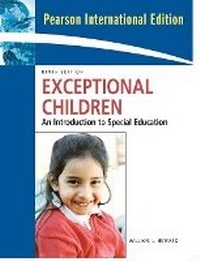
Exceptional Children
An Introduction to Special Education (with MyLab Education): International Edition
9th Edition
Published on 27. August 2008
Book
Mixed media product
656 pages
978-0-13-136286-4 (ISBN)
Description
Widely recognized as a market leader for its innovation, strong research base, and accessibility, the ninth
edition of William L. Heward's Exceptional Children: An Introduction to Special Education continues this
tradition of excellence.
A FOCUS ON EXCEPTIONAL TEACHERS
* Featured Teacher essays
Each chapter begins with a first-person essay by master teachers that
reflects the joys, challenges, and realities of teaching exceptional children. Drawn from urban,
suburban, and rural school districts across the country, the 18 featured teachers share personal
experiences and wisdom gathered from years of instructing children in a variety of school settings.
* MyEducationLab Access to MyEducationLab for this text allows readers to see, hear, and
learn from the teachers featured in the text through video. Throughout the book,
MyEducationLab icons connect key content and concepts practiced by master teachers to
Homework & Exercises on MyEducationLab.
* Tips for Beginning Teachers Each chapter culminates with practical, quick tips for beginning
teachers-offered by the master teacher featured in each chapter-on how to avoid common
pitfalls in the classroom.
A FOCUS ON EFFECTIVE RESEARCH-BASED PRACTICES
* Teaching & Learning features All of the strategies described in the Teaching & Learning features
are classroom-tested, supported by research, and provide clear and practical step-by-step
guidelines for designing, implementing, and evaluating instruction for students with disabilities.
* MyEducationLab Each of the research-based practices discussed in the Teaching & Learning
features are connected to Homework & Exercises or Building Teaching Skills activities in
MyEducationLab that extend and further develop these strategies through video, artifacts,
or articles.
A FOCUS ON ISSUES AND TRENDS
* Current Issues and Future Trends features These essays highlight the ever-changing nature of
special education with the controversial issues, triumphs, struggles, and interventions involved in
special education.
For Future Preparation and Teacher Certification:
* CEC Performance-Based Standards The Common Core standards are printed on the inside front
cover of the text. Margin notes throughout the text link critical content to specific knowledge and
skill statements from CEC's Performance-Based Standards for Beginning Teachers.
* Coverage of PRAXIS IITM Tests A PRAXIS Study Grid in the Appendix shows where content areas
of the PRAXIS II Test, Education of Exceptional Students: Core Principles, are discussed in the text.
A listing of the principles is on the inside back cover of this text.
edition of William L. Heward's Exceptional Children: An Introduction to Special Education continues this
tradition of excellence.
A FOCUS ON EXCEPTIONAL TEACHERS
* Featured Teacher essays
Each chapter begins with a first-person essay by master teachers that
reflects the joys, challenges, and realities of teaching exceptional children. Drawn from urban,
suburban, and rural school districts across the country, the 18 featured teachers share personal
experiences and wisdom gathered from years of instructing children in a variety of school settings.
* MyEducationLab Access to MyEducationLab for this text allows readers to see, hear, and
learn from the teachers featured in the text through video. Throughout the book,
MyEducationLab icons connect key content and concepts practiced by master teachers to
Homework & Exercises on MyEducationLab.
* Tips for Beginning Teachers Each chapter culminates with practical, quick tips for beginning
teachers-offered by the master teacher featured in each chapter-on how to avoid common
pitfalls in the classroom.
A FOCUS ON EFFECTIVE RESEARCH-BASED PRACTICES
* Teaching & Learning features All of the strategies described in the Teaching & Learning features
are classroom-tested, supported by research, and provide clear and practical step-by-step
guidelines for designing, implementing, and evaluating instruction for students with disabilities.
* MyEducationLab Each of the research-based practices discussed in the Teaching & Learning
features are connected to Homework & Exercises or Building Teaching Skills activities in
MyEducationLab that extend and further develop these strategies through video, artifacts,
or articles.
A FOCUS ON ISSUES AND TRENDS
* Current Issues and Future Trends features These essays highlight the ever-changing nature of
special education with the controversial issues, triumphs, struggles, and interventions involved in
special education.
For Future Preparation and Teacher Certification:
* CEC Performance-Based Standards The Common Core standards are printed on the inside front
cover of the text. Margin notes throughout the text link critical content to specific knowledge and
skill statements from CEC's Performance-Based Standards for Beginning Teachers.
* Coverage of PRAXIS IITM Tests A PRAXIS Study Grid in the Appendix shows where content areas
of the PRAXIS II Test, Education of Exceptional Students: Core Principles, are discussed in the text.
A listing of the principles is on the inside back cover of this text.
More details
Edition
9th edition
Language
English
Place of publication
United States
Publishing group
Pearson Education (US)
Target group
College/higher education
Dimensions
Height: 209 mm
Width: 271 mm
Thickness: 29 mm
Weight
1534 gr
ISBN-13
978-0-13-136286-4 (9780131362864)
Copyright in bibliographic data and cover images is held by Nielsen Book Services Limited or by the publishers or by their respective licensors: all rights reserved.
Schweitzer Classification
Other editions
New editions
Book
04/2012
10th Edition
Pearson
€137.63
Article exhausted; check for reprint
Content
Prologue: A Personal View of Special Education
Part I: Foundations for Understanding Special Education
Chapter 1: The Purpose and Promise of Special Education
Who Are Exceptional Children?
How Many Exceptional Children are There?
Why Are Laws Governing the Education of Exceptional Children Necessary?
The Individuals with Disabilities Education Act
What Is Special Education?
Current and Future Challenges
Chapter 2: Planning and Providing Special Education Services
The Process of Special Education
Collaboration and Teaming
Individualized Education Program
Least Restrictive Environment
Inclusive Education
Where Does Special Education Go From Here?
Chapter 3: Collaborating with Parents and Families in a Culturally and Linguistically Diverse Society
Support for Family Involvement
Understanding Families of Children with Disabilities
Developing and Maintaining Family-Professional Partnerships
Working with Culturally and Linguistically Diverse Families
Home-School Communication Models
Other Forms of Parent Involvement
Part II: Educational Needs of Exceptional Students
Chapter 4: Intellectual Disabilities
Definitions and Classification Systems
Identification and Assessment
Characteristics
Prevalence
Causes and Prevention
Educational Approaches
Educational Placement Alternatives
Chapter 5: Learning Disabilities
Definitions
Characteristics
Prevalence
Causes
Identification and Assessment
Educational Approaches
Educational Placement Alternatives
Chapter 6: Emotional or Behavioral Disorders
Definitions
Characteristics
Prevalence
Causes
Identification and Assessment
Educational Approaches
Educational Placement Alternatives
Challenges, Achievements, and Advocacy
Chapter 7: Autism Spectrum Disorders
Definitions
Characteristics
Prevalence
Causes
Identification and Assessment
Educational Approaches
Educational Placement Alternatives
Distinguishing Unproven Interventions from Evidenced-Based Practices for Children with Autism
Chapter 8: Communication Disorders
Definitions
Characteristics
Prevalence
Causes
Identification and Assessment
Educational Approaches
Educational Placement Alternatives
Chapter 9: Deafness and Hard of Hearing
Definitions
Characteristics
Prevalence
Types and Causes of Hearing Loss
Identification and Assessment
Technologies and Supports
Educational Approaches
Educational Placement Alternatives
Chapter 10: Blindness and Low Vision
Definitions
Characteristics
Prevalence
Types and Causes of Visual Impairments
Identification and Assessment
Technologies and Supports
Educational Approaches
Educational Placement Alternatives
Chapter 11: Physical Disabilities, Health Impairments, and ADHD
Definitions of Physical Disabilities and Health Impairments
Prevalence
Types and Causes
Attention Deficit/Hyperactivity Disorder
Characteristics
Educational Approaches
Educational Placement Alternatives
Chapter 12: Low-Incidence Disabilities: Severe/Multiple Disabilities, Deaf-Blindness, and Traumatic Brain Injury
Defining Severe, Profound, and Multiple Disabilities
Characteristics of Students with Severe and Multiple Disabilities
Prevalence of Severe and Multiple Disabilities
Causes of Severe and Multiple Disabilities
Traumatic Brain Injury
Educational Approaches
Chapter 13: Giftedness and Talent (by Jane Piirto and William L. Heward)
Definitions
Characteristics
Prevalence
Identification and Assessment
Educational Approaches
Educational Placement Alternatives and Ability Grouping
Part III: Special Education Across the Lifespan
Chapter 14: Early Childhood Special Education
The Importance of Early Intervention
IDEA and Early Intervention /Early Childhood Special Education
Screening, Identification, and Assessment
Curriculum and Instruction in Early Childhood Special Education
Service-Delivery Alternatives for Early Intervention
Chapter 15: Transitioning to Adulthood
How Do Former Special Education Students Fare as Adults?
Transition Services and Models
Employment
Postsecondary Education
Residential Alternatives
Recreation and Leisure
The Ultimate Transition Goal: A Better Life
Postscript: Developing Your Own Personal View of Special Education
Appendix: Coverage of Praxis II Test
Glossary
References
Name Index
Subject Index
Photo Credits
Part I: Foundations for Understanding Special Education
Chapter 1: The Purpose and Promise of Special Education
Who Are Exceptional Children?
How Many Exceptional Children are There?
Why Are Laws Governing the Education of Exceptional Children Necessary?
The Individuals with Disabilities Education Act
What Is Special Education?
Current and Future Challenges
Chapter 2: Planning and Providing Special Education Services
The Process of Special Education
Collaboration and Teaming
Individualized Education Program
Least Restrictive Environment
Inclusive Education
Where Does Special Education Go From Here?
Chapter 3: Collaborating with Parents and Families in a Culturally and Linguistically Diverse Society
Support for Family Involvement
Understanding Families of Children with Disabilities
Developing and Maintaining Family-Professional Partnerships
Working with Culturally and Linguistically Diverse Families
Home-School Communication Models
Other Forms of Parent Involvement
Part II: Educational Needs of Exceptional Students
Chapter 4: Intellectual Disabilities
Definitions and Classification Systems
Identification and Assessment
Characteristics
Prevalence
Causes and Prevention
Educational Approaches
Educational Placement Alternatives
Chapter 5: Learning Disabilities
Definitions
Characteristics
Prevalence
Causes
Identification and Assessment
Educational Approaches
Educational Placement Alternatives
Chapter 6: Emotional or Behavioral Disorders
Definitions
Characteristics
Prevalence
Causes
Identification and Assessment
Educational Approaches
Educational Placement Alternatives
Challenges, Achievements, and Advocacy
Chapter 7: Autism Spectrum Disorders
Definitions
Characteristics
Prevalence
Causes
Identification and Assessment
Educational Approaches
Educational Placement Alternatives
Distinguishing Unproven Interventions from Evidenced-Based Practices for Children with Autism
Chapter 8: Communication Disorders
Definitions
Characteristics
Prevalence
Causes
Identification and Assessment
Educational Approaches
Educational Placement Alternatives
Chapter 9: Deafness and Hard of Hearing
Definitions
Characteristics
Prevalence
Types and Causes of Hearing Loss
Identification and Assessment
Technologies and Supports
Educational Approaches
Educational Placement Alternatives
Chapter 10: Blindness and Low Vision
Definitions
Characteristics
Prevalence
Types and Causes of Visual Impairments
Identification and Assessment
Technologies and Supports
Educational Approaches
Educational Placement Alternatives
Chapter 11: Physical Disabilities, Health Impairments, and ADHD
Definitions of Physical Disabilities and Health Impairments
Prevalence
Types and Causes
Attention Deficit/Hyperactivity Disorder
Characteristics
Educational Approaches
Educational Placement Alternatives
Chapter 12: Low-Incidence Disabilities: Severe/Multiple Disabilities, Deaf-Blindness, and Traumatic Brain Injury
Defining Severe, Profound, and Multiple Disabilities
Characteristics of Students with Severe and Multiple Disabilities
Prevalence of Severe and Multiple Disabilities
Causes of Severe and Multiple Disabilities
Traumatic Brain Injury
Educational Approaches
Chapter 13: Giftedness and Talent (by Jane Piirto and William L. Heward)
Definitions
Characteristics
Prevalence
Identification and Assessment
Educational Approaches
Educational Placement Alternatives and Ability Grouping
Part III: Special Education Across the Lifespan
Chapter 14: Early Childhood Special Education
The Importance of Early Intervention
IDEA and Early Intervention /Early Childhood Special Education
Screening, Identification, and Assessment
Curriculum and Instruction in Early Childhood Special Education
Service-Delivery Alternatives for Early Intervention
Chapter 15: Transitioning to Adulthood
How Do Former Special Education Students Fare as Adults?
Transition Services and Models
Employment
Postsecondary Education
Residential Alternatives
Recreation and Leisure
The Ultimate Transition Goal: A Better Life
Postscript: Developing Your Own Personal View of Special Education
Appendix: Coverage of Praxis II Test
Glossary
References
Name Index
Subject Index
Photo Credits