

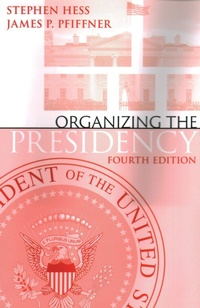
Organizing the Presidency
4th Edition
Published on 20. October 2020
Book
Paperback/Softback
258 pages
978-0-8157-3841-1 (ISBN)
Description
Examining how the White House works?or doesn't?before and after Trump
Donald Trump has reinvented the presidency, transforming it from a well-oiled if sometimes cumbersome institution into what has often seemed to be a one-man show. But even Trump's unorthodox presidency requires institutional support, from a constantly rotating White House staff and cabinet who have sought to carry out?and sometimes resist?the president's direct orders and comply with his many tweets.
Nonetheless, the Trump White House still exhibits many features of its predecessors over the past eight decades. When Franklin D. Roosevelt was inaugurated, the White House staff numbered fewer than fifty people, and most federal department were lightly staffed as well. As the United States became a world power, the staff of the Executive Office increased twentyfold, and the staffing of federal agencies blossomed comparably.
In the fourth edition of Organizing the Presidency, a landmark volume examining the presidency as an institution, Stephen Hess and James P. Pfiffner argue that the successes and failures of presidents from Roosevelt through Trump have resulted in large part from how the president deployed and used White House staffers and other top officials responsible for carrying out Oval Office policy. Drawing on a wealth of analysis and insight, Organizing the Presidency addresses best practices for managing a presidency that is itself a bureaucracy.
Donald Trump has reinvented the presidency, transforming it from a well-oiled if sometimes cumbersome institution into what has often seemed to be a one-man show. But even Trump's unorthodox presidency requires institutional support, from a constantly rotating White House staff and cabinet who have sought to carry out?and sometimes resist?the president's direct orders and comply with his many tweets.
Nonetheless, the Trump White House still exhibits many features of its predecessors over the past eight decades. When Franklin D. Roosevelt was inaugurated, the White House staff numbered fewer than fifty people, and most federal department were lightly staffed as well. As the United States became a world power, the staff of the Executive Office increased twentyfold, and the staffing of federal agencies blossomed comparably.
In the fourth edition of Organizing the Presidency, a landmark volume examining the presidency as an institution, Stephen Hess and James P. Pfiffner argue that the successes and failures of presidents from Roosevelt through Trump have resulted in large part from how the president deployed and used White House staffers and other top officials responsible for carrying out Oval Office policy. Drawing on a wealth of analysis and insight, Organizing the Presidency addresses best practices for managing a presidency that is itself a bureaucracy.
More details
Edition
4th edition
Language
English
Place of publication
United States
Publishing group
Bloomsbury Publishing Plc
Target group
Professional and scholarly
Dimensions
Height: 151 mm
Width: 228 mm
Thickness: 19 mm
Weight
396 gr
ISBN-13
978-0-8157-3841-1 (9780815738411)
Copyright in bibliographic data and cover images is held by Nielsen Book Services Limited or by the publishers or by their respective licensors: all rights reserved.
Schweitzer Classification
Other editions
Additional editions
Stephen Hess | James P. Pfiffner
Organizing the Presidency
E-Book
10/2020
4th Edition
Brookings Institution
€30.99
Available for download
Stephen Hess | James P. Pfiffner
Organizing the Presidency
E-Book
10/2020
4th Edition
Brookings Institution
€30.99
Available for download
Persons
Stephen Hess is a senior fellow emeritus in Governance Studies at the Brookings Institution. His many public service roles include serving on the White House staff during the Eisenhower and Nixon presidencies and as adviser to Presidents Ford and Carter. He is the author of numerous books published by the Brookings Institution Press, including Bit Player, The Professor and the President, and America's Political Dynasties.James P. Pfiffner is University Professor of Public Policy at George Mason University. He has written or edited over a dozen books on the presidency and American government, including The Strategic Presidency: Hitting the Ground Running, Understanding the Presidency, and Power Play: The Bush Presidency and the Constitution.
Content
Contents:
1. The Evolving Modern Presidency
2. Franklin D. Roosevelt
3. Harry S. Truman
4. Dwight D. Eisenhower
5. John F. Kennedy
6. Lyndon B. Johnson
7. Richard M. Nixon, Gerald R. Ford
8. Jimmy Carter, Ronald W. Reagan
9. George H. W. Bush, William J. Clinton
10. George W. Bush
11. Barack H. Obama
12. Donald J. Trump
Conclusion: Fourteen Presidencies
Acknowledgments
Notes
Index
1. The Evolving Modern Presidency
2. Franklin D. Roosevelt
3. Harry S. Truman
4. Dwight D. Eisenhower
5. John F. Kennedy
6. Lyndon B. Johnson
7. Richard M. Nixon, Gerald R. Ford
8. Jimmy Carter, Ronald W. Reagan
9. George H. W. Bush, William J. Clinton
10. George W. Bush
11. Barack H. Obama
12. Donald J. Trump
Conclusion: Fourteen Presidencies
Acknowledgments
Notes
Index