


Kantian Commitments
Essays on Moral Theory and Practice
Published on 24. February 2022
Book
Hardback
240 pages
978-0-19-284496-5 (ISBN)
Description
Kantian Commitments comprises ten essays that represent a series of efforts to rethink many of the fundamentals of Kant's ethics and to draw out some implications for moral theory and practice. The essays of Part One revisit and revise central pieces of Kant's moral framework, offering a new understanding of the formulas of the categorical imperative, revisiting the idea of exceptions to duties, and sharpening the contrast between the value commitments of Kantian theory and other deontologies (especially recent contractualisms). The working hypothesis is to take seriously the idea that the formulas of the categorical imperative frame an account of moral reasoning with standards of validity and soundness that enable moral judgment to explicate the connection between our rational natures and our duties.
Part Two takes on some less central but important topics which are informed by the arguments of Part One: the rationale for Kant's moralized view of history; the implications of a Kantian view of morality for social pluralism; the fit of Kant's conception of moral psychology with affect-centered theories of human development; the motivation behind Kant's argument for indirect duties to animals; and the place of the idea of the highest good in a morally good life. The overall aim of the essays is to explore core Kantian commitments through a program of inquiry that peels away assumptions often brought to Kant's texts that introduce questions their arguments were not meant to answer. Removing these obstacles clarifies the ambition and scale of Kantian theory.
Part Two takes on some less central but important topics which are informed by the arguments of Part One: the rationale for Kant's moralized view of history; the implications of a Kantian view of morality for social pluralism; the fit of Kant's conception of moral psychology with affect-centered theories of human development; the motivation behind Kant's argument for indirect duties to animals; and the place of the idea of the highest good in a morally good life. The overall aim of the essays is to explore core Kantian commitments through a program of inquiry that peels away assumptions often brought to Kant's texts that introduce questions their arguments were not meant to answer. Removing these obstacles clarifies the ambition and scale of Kantian theory.
More details
Language
English
Place of publication
Oxford
United Kingdom
Target group
Professional and scholarly
Product notice
sewn/stitched
Cloth over boards
Dimensions
Height: 237 mm
Width: 160 mm
Thickness: 18 mm
Weight
513 gr
ISBN-13
978-0-19-284496-5 (9780192844965)
Copyright in bibliographic data and cover images is held by Nielsen Book Services Limited or by the publishers or by their respective licensors: all rights reserved.
Schweitzer Classification
Other editions
Additional editions
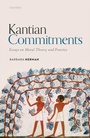
E-Book
02/2022
1st Edition
OUP eBook
€48.99
Available for download
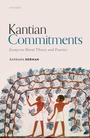
E-Book
02/2022
1st Edition
OUP eBook
€48.99
Available for download
Person
Barbara Herman is the Griffin Professor of Philosophy at UCLA. She previously held appointments at the University of Southern California and the Massachusetts Institute of Technology. She is the author of The Practice of Moral Judgment (Harvard, 1993), Moral Literacy (Harvard, 2007), and The Moral Habitat (OUP, 2021), and was the editor of John Rawls's Lectures on the History of Moral Philosophy (Harvard, 2000).
Content
- PART ONE: Rethinking Kant's Ethics
- 1: Reasoning to Obligation
- 2: The Difference That Ends Make
- 3: Making Exceptions
- 4: A Mismatch of Methods
- 5: Kantian Commitments
- PART TWO: Looking Outside and Within
- 6: A Habitat for Humanity
- 7: Morality Unbounded
- 8: We are Not Alone: A Place for Animals in Kant s Ethics
- 9: Other to Self: Where Love is on the Path to Moral Agency
- 10: Religion and The Highest Good: Speaking to the Heart of Even the Best of Us