

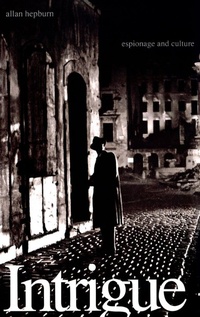
Intrigue
Espionage and Culture
Will be published approx. on 8. March 2005
Book
Hardback
352 pages
978-0-300-10498-1 (ISBN)
Description
An inventive and surprising examination of a century of spy fiction.
Why do spies have such cachet in the twentieth century? Why do they keep reinventing themselves? What do they mean in a political process? This book examines the tradition of the spy narrative from its inception in the late nineteenth century through the present day. Ranging from John le Carre's bestsellers to Elizabeth Bowen's novels, from James Bond to John Banville's contemporary narratives, Allan Hepburn sets the historical contexts of these fictions: the Cambridge spy ring; the Profumo Affair; the witch-hunts against gay men in the civil service and diplomatic corps in the 1950s.
Instead of focusing on the formulaic nature of the genre, Intrigue emphasizes the responsiveness of spy stories to particular historical contingencies. Hepburn begins by offering a systematic theory of the conventions and attractions of espionage fiction and then examines the British and Irish tradition of spy novels. A final section considers the particular form that American spy narratives have taken as they have cross-fertilized with the tradition of American romance in works such as Joan Didion's Democracy andJohn Barth's Sabbatical.
Why do spies have such cachet in the twentieth century? Why do they keep reinventing themselves? What do they mean in a political process? This book examines the tradition of the spy narrative from its inception in the late nineteenth century through the present day. Ranging from John le Carre's bestsellers to Elizabeth Bowen's novels, from James Bond to John Banville's contemporary narratives, Allan Hepburn sets the historical contexts of these fictions: the Cambridge spy ring; the Profumo Affair; the witch-hunts against gay men in the civil service and diplomatic corps in the 1950s.
Instead of focusing on the formulaic nature of the genre, Intrigue emphasizes the responsiveness of spy stories to particular historical contingencies. Hepburn begins by offering a systematic theory of the conventions and attractions of espionage fiction and then examines the British and Irish tradition of spy novels. A final section considers the particular form that American spy narratives have taken as they have cross-fertilized with the tradition of American romance in works such as Joan Didion's Democracy andJohn Barth's Sabbatical.
Reviews / Votes
"Intrigue is a masterful work-a learned, insightful, and elegant account of a significant genre of twentieth-century fiction. It will certainly be read for decades to come and will be an indispensable reference for any future study of spy fiction."-Pericles Lewis, Yale University "Intrigue, informed by wide reading in espionage literature, history, political and cultural theory, is literary and ideological criticism of the most sophisticated and nuanced kind."-Maria DiBattista, Princeton University "Intrigue, informed by wide reading in espionage literature, history, political and cultural theory, is literary and ideological criticism of the most sophisticated and nuanced kind."-Maria DiBattista, Princeton University -- Maria DiBattista "Intrigue is a masterful work-a learned, insightful, and elegant account of a significant genre of twentieth century fiction. It will certainly be read for decades to come and will be an indispensable reference for any future study of spy fiction."-Pericles Lewis, Yale University-- Pericles Lewis
More details
Language
English
Place of publication
United States
Product notice
Cloth over boards
Dimensions
Height: 245 mm
Width: 164 mm
Thickness: 34 mm
Weight
617 gr
ISBN-13
978-0-300-10498-1 (9780300104981)
Copyright in bibliographic data and cover images is held by Nielsen Book Services Limited or by the publishers or by their respective licensors: all rights reserved.
Schweitzer Classification
Other editions
Additional editions
E-Book
10/2008
1st Edition
Yale University Press
€69.49
Available for download
Person
Allan Hepburn teaches English literature at McGill University. He has published widely on twentieth-century literature and culture. He has also written for such Canadian publications as The National Post, The Financial Post, and The Globe & Mail.