

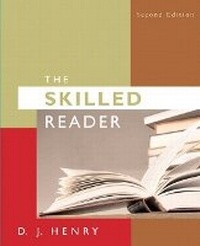
Skilled Reader, The (with MyReadingLab Student Access Code Card)
2nd Edition
Published on 25. September 2010
Book
Hardback
656 pages
978-0-205-72809-1 (ISBN)
Description
The Skilled Reader integrates reading skills with the reading process (SQ3R) to produce more effective readers and help students discover the power and pleasure of reading. Providing step-by-step reading instruction, a wide range of practice and test materials, and a rich selection of readings from textbooks and other sources, the author combines solid skill instruction with an abundance of guided practice to develop the quintessential abilities students need to become skilled readers and critical thinkers.
More details
Edition
2nd edition
Language
English
Place of publication
New Jersey
United States
Publishing group
Pearson Education (US)
Target group
College/higher education
Dimensions
Height: 235 mm
Width: 191 mm
Weight
1021 gr
ISBN-13
978-0-205-72809-1 (9780205728091)
Copyright in bibliographic data and cover images is held by Nielsen Book Services Limited or by the publishers or by their respective licensors: all rights reserved.
Schweitzer Classification
Other editions
Previous edition
D. J. Henry
The Skilled Reader
Book
12/2007
2nd Edition
Pearson
€50.94
Article exhausted; check for reprint
Content
Preface.
Introduction: Active Reading.
I. BECOMING A SKILLED READER.
1. A Reading System for Skilled Readers
Prior Knowledge.
The Reading Process.
Textbook Skills: Before, During, and After Reading-Asking Questions and Recording Answers.
2. Vocabulary in Context.
The Importance of Words.
Context Clues: A SAGE Approach.
Textbook Skills: Visual Vocabulary.
3. Vocabulary-Building Skills.
Word Parts.
Additional Word Parts.
The Dictionary.
Textbook Skills: Textbook Aids for Learning Content Words.
4. Topics and Main Ideas.
Topics.
Main Ideas.
Supporting Details.
Textbook Skills: Topics in Headings.
5. Locating Stated Main Ideas.
The Flow of Ideas and Placement of Topic Sentences.
Textbook Skills: The Central Point and the Thesis Statement.
6. Supporting Details, Outlines, and Concept Maps.
Questions for Locating Supporting Details.
Major and Minor Details.
Textbook Skills: Ideas from General to Specific: Creating a Summary.
7. Outlines and Concept Maps.
Outlines.
Concept Maps.
Textbooks Skills: The Table of Contents in a Textbook.
8. Transitions and Thought Patterns.
The Purpose of Transitions and Thought Patterns.
Transition Words: Relationships Within a Sentence.
Thought Patterns: Relationships Between Sentences.
Textbook Skills: Transitions and Clear Information.
9. More Thought Patterns.
Comparison and Contrast Patterns.
Cause and Effect Pattern.
The Generalization-and-Example. Pattern.
Textbook Skills: The Definition Pattern.
Final Note: Though Patterns and Textbooks.
10. Implied Main Ideas.
An Introduction to Implied Main Ideas
Studying Supporting Details to Identify the State and Topic
Using Topics, Supporting Details, and Thought Patterns to Determine the Implied Main Idea.
Annotating the Paragraph to Determine the Implied Main Idea.
Creating a One-Sentence Summary from Supporting Details.
Textbook Skills: Pictures as Details.
11. Inferences.
Inferences: Educated Guesses.
What is a Valid Inference?
Making VALID Inferences and Avoiding Invalid Conclusions.
Thinking Through an Inference and Drawing Conclusions.
Textbook Skills: Inferences and Photos.
II. ADDITIONAL READINGS.
The Connection Between Reading and Writing.
1. Shoulders, Nel Gould.
2. Finding My Voice, Maria Housden.
3. A Dad at the Final Frontier, Marc Parent.
4. Close Again, Marion Bond West.
5. I've Seen the Worst That War Can Do, Nikolay Palchikoff.
6. Growing Up With Two Moms, Megan McGuire.
7. Want to Do Better on the Job? Listen Up!, Diane Cole.
8. Sojourner Truth, John A. Garraty and Mark C. Carnes.
9. Confessions, Amy Tan.
10. To Walk in Beauty, Bear Heart.
III. COMBINED SKILLS TESTS.
IV. READING ENRICHMENT
Appendix A: ESL Reading Tips.
Appendix B: Reading Graphics.
Appendix C: Word Parts.
Introduction: Active Reading.
I. BECOMING A SKILLED READER.
1. A Reading System for Skilled Readers
Prior Knowledge.
The Reading Process.
Textbook Skills: Before, During, and After Reading-Asking Questions and Recording Answers.
2. Vocabulary in Context.
The Importance of Words.
Context Clues: A SAGE Approach.
Textbook Skills: Visual Vocabulary.
3. Vocabulary-Building Skills.
Word Parts.
Additional Word Parts.
The Dictionary.
Textbook Skills: Textbook Aids for Learning Content Words.
4. Topics and Main Ideas.
Topics.
Main Ideas.
Supporting Details.
Textbook Skills: Topics in Headings.
5. Locating Stated Main Ideas.
The Flow of Ideas and Placement of Topic Sentences.
Textbook Skills: The Central Point and the Thesis Statement.
6. Supporting Details, Outlines, and Concept Maps.
Questions for Locating Supporting Details.
Major and Minor Details.
Textbook Skills: Ideas from General to Specific: Creating a Summary.
7. Outlines and Concept Maps.
Outlines.
Concept Maps.
Textbooks Skills: The Table of Contents in a Textbook.
8. Transitions and Thought Patterns.
The Purpose of Transitions and Thought Patterns.
Transition Words: Relationships Within a Sentence.
Thought Patterns: Relationships Between Sentences.
Textbook Skills: Transitions and Clear Information.
9. More Thought Patterns.
Comparison and Contrast Patterns.
Cause and Effect Pattern.
The Generalization-and-Example. Pattern.
Textbook Skills: The Definition Pattern.
Final Note: Though Patterns and Textbooks.
10. Implied Main Ideas.
An Introduction to Implied Main Ideas
Studying Supporting Details to Identify the State and Topic
Using Topics, Supporting Details, and Thought Patterns to Determine the Implied Main Idea.
Annotating the Paragraph to Determine the Implied Main Idea.
Creating a One-Sentence Summary from Supporting Details.
Textbook Skills: Pictures as Details.
11. Inferences.
Inferences: Educated Guesses.
What is a Valid Inference?
Making VALID Inferences and Avoiding Invalid Conclusions.
Thinking Through an Inference and Drawing Conclusions.
Textbook Skills: Inferences and Photos.
II. ADDITIONAL READINGS.
The Connection Between Reading and Writing.
1. Shoulders, Nel Gould.
2. Finding My Voice, Maria Housden.
3. A Dad at the Final Frontier, Marc Parent.
4. Close Again, Marion Bond West.
5. I've Seen the Worst That War Can Do, Nikolay Palchikoff.
6. Growing Up With Two Moms, Megan McGuire.
7. Want to Do Better on the Job? Listen Up!, Diane Cole.
8. Sojourner Truth, John A. Garraty and Mark C. Carnes.
9. Confessions, Amy Tan.
10. To Walk in Beauty, Bear Heart.
III. COMBINED SKILLS TESTS.
IV. READING ENRICHMENT
Appendix A: ESL Reading Tips.
Appendix B: Reading Graphics.
Appendix C: Word Parts.