


Earth Science: An Introduction
4th Edition
Will be published approx. on 1. April 2026
Book
Paperback/Softback
640 pages
979-8-214-44740-7 (ISBN)
Description
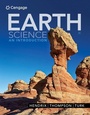
Designed in direct response to student surveys, focus groups and interviews, Hendrix's "Earth Science: An Introduction," 4th Edition, brings Earth Science to life by delivering easy-to-read text illustrated with conceptual diagrams, field photos and images from major recent events in Earth Science. The text's framework for understanding the solid Earth, oceans and atmosphere and their dynamics, emphasizes the interconnectedness of these systems with Earth's life forms, including humans. The final three chapters view Earth as a planetary body by investigating the Earth-Moon pair, solar system, Sun and surrounding universe. Current, cutting-edge research is integrated into the text, while Digging Deeper sections provide descriptions of key related topics. Conceptual diagrams, artwork, original field photos and MindTap, the digital learning solution, enables you to learn on your own terms.
More details
Edition
4th edition
Language
English
Place of publication
CA
United States
Publishing group
Cengage Learning, Inc
Target group
College/higher education
Product notice
Paperback (trade)
Unsewn / adhesive bound
Dimensions
Height: 275 mm
Width: 217 mm
Thickness: 27 mm
Weight
1451 gr
ISBN-13
979-8-214-44740-7 (9798214447407)
Copyright in bibliographic data is held by Nielsen Book Services Limited or its licensors: all rights reserved.
Schweitzer Classification
Other editions
Previous edition
Book
01/2020
3rd Edition
Brooks/Cole
€80.50
Shipment within 15-20 days
Person
Marc S. Hendrix is a Professor of Geology at the University of Montana in Missoula, Montana. Growing up in Gettysburg, Pennsylvania, he developed an early love of geology in the 1970s while working as a field assistant for his father, a biology professor at Gettysburg College. He earned a bachelor's degree in geology from Wittenberg University in Springfield Ohio in 1985, a master's degree in geology and geophysics from the University of Wisconsin-Madison in 1987 and a Ph.D. in applied earth sciences in 1992 from Stanford University, where he conducted research on the geologic record of mountain building and ancient climate in western China. As a postdoctoral researcher at Stanford, he analyzed the geologic history of Mongolia. In 1994 Dr. Hendrix joined the faculty at the University of Montana where he has developed a field-based research program focused on the geology of the northern Rocky Mountains. He and his students have published a variety of technical papers on the geology of North America, Asia and Africa, and in 2011 he authored and illustrated GEOLOGY UNDERFOOT IN YELLOWSTONE COUNTRY. Dr. Hendrix has served as an expert witness and consultant in the field of geology, and he continues to travel broadly to conduct geologic research. He lives in Missoula with his wife and two sons.
Content
1. Earth Systems.
Unit I: EARTH MATERIALS AND TIME.
2. Minerals.
3. Rocks.
4. Geologic Time: A Story in the Rocks.
5. Geologic Resources. Unit II: INTERNAL PROCESSES.
6. The Active Earth: Plate Tectonics.
7. Earthquakes and the Earth's Structure.
8. Volcanoes and Plutons.
9. Mountains.
Unit III: SURFACE PROCESSES.
10. Weathering, Soil, and Erosion.
11. Fresh Water: Streams, Lakes, Ground Water, and Wetlands.
12. Water Resources.
13. Glaciers and Ice Ages.
14. Deserts and Wind.
Unit IV: THE OCEANS.
15. Ocean Basins.
16. Oceans and Coastlines.
Unit V: THE ATMOSPHERE.
17. The Atmosphere.
18. Energy Balance in the Atmosphere.
19. Moisture, Clouds, and Weather.
20. Climate and Climate Change
Unit VI: ASTRONOMY.
21. Motions in the Heavens.
22. Planets and their Moons.
23. Stars, Space, and Galaxies.
Unit I: EARTH MATERIALS AND TIME.
2. Minerals.
3. Rocks.
4. Geologic Time: A Story in the Rocks.
5. Geologic Resources. Unit II: INTERNAL PROCESSES.
6. The Active Earth: Plate Tectonics.
7. Earthquakes and the Earth's Structure.
8. Volcanoes and Plutons.
9. Mountains.
Unit III: SURFACE PROCESSES.
10. Weathering, Soil, and Erosion.
11. Fresh Water: Streams, Lakes, Ground Water, and Wetlands.
12. Water Resources.
13. Glaciers and Ice Ages.
14. Deserts and Wind.
Unit IV: THE OCEANS.
15. Ocean Basins.
16. Oceans and Coastlines.
Unit V: THE ATMOSPHERE.
17. The Atmosphere.
18. Energy Balance in the Atmosphere.
19. Moisture, Clouds, and Weather.
20. Climate and Climate Change
Unit VI: ASTRONOMY.
21. Motions in the Heavens.
22. Planets and their Moons.
23. Stars, Space, and Galaxies.