

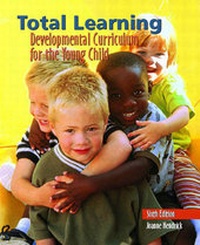
Total Learning
Developmental Curriculum for the Young Child
6th Edition
Published on 14. October 2003
Book
Paperback/Softback
520 pages
978-0-13-042070-1 (ISBN)
Description
'Total Learning' advocates constructing curriculum based on the emerging interests within a practical, flexible, thoughtful, teacher-made plan. The text advocates curriculum that is age-appropriate, nourished by play, and intended to encourage children to become independent, creative, thoughtful people.
More details
Edition
6th Revised edition
Language
English
Place of publication
Harlow
United Kingdom
Publishing group
Pearson Education Limited
Target group
Professional and scholarly
College/higher education
Edition type
Revised edition
Illustrations
illustrations
Dimensions
Height: 240 mm
Width: 190 mm
Thickness: 25 mm
Weight
805 gr
ISBN-13
978-0-13-042070-1 (9780130420701)
Copyright in bibliographic data and cover images is held by Nielsen Book Services Limited or by the publishers or by their respective licensors: all rights reserved.
Schweitzer Classification
Other editions
New editions
Book
09/2006
7th Edition
Pearson
€48.27
Article exhausted; check for reprint
Previous edition

Book
09/1997
5th Edition
Pearson
€54.46
Article exhausted; check for reprint
Content
I. BUILDING A SECURE FOUNDATION FOR LEARNING 1. The Purpose of Curriculum. 2. Including the Families in the Life of the School. 3. Play: The Integrative Force in Learning. II. PLANNING FOR TOTAL LEARNING. 4. Designing the Supportive Environment. 5. Planning for Total Learning: Creating Supportive Curriculum Plans and Schedules. 6. Getting to Know the Children by Keeping Track of What They're Learning. 7. Planning with Individual Children in Mind: Using Behavioral Objectives in the Preschool. III. HELPING YOUNG CHILDREN RELISH LIFE AND DEVELOP HEALTHY BODIES. 8. Keeping Children Safe and Well Fed. 9. Developing Physical Competence. 10. Helping Children Understand and Value Life. IV. FOSTERING EMOTIONAL HEALTH IN YOUNG CHILDREN. 11. Achieving Emotional Competence. V. DEVELOPING SOCIAL COMPETENCE AND HEALTHY SELF-IDENTITIES. 12. Getting Along Together: Achieving Competence in Interpersonal Relations. 13.Who Am I? Who Are You? Coming to Terms with Multicultural, Gender, and Disability Issues. VI. ENCOURAGING CHILDREN TO BE CREATIVE. 14. Freeing Children to Be Creative. VII. FOSTERING THE USE OF LANGUAGE. 15. Developing Verbal Competence. 16. Taking the First Steps on the Road to Reading. VIII. HELPING CHILDREN LEARN TO THINK FOR THEMSELVES. 17. Helping Children Learn to Think for Themselves: Using the Emergent Approach. 18. Building for Future Academic Competence: Developing Mid-Level Mental Abilities. Appendices. References. Author Index. Subject Index.