

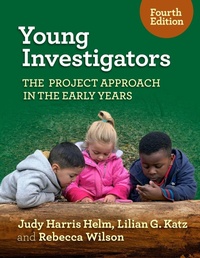
Young Investigators
The Project Approach in the Early Years
4th Edition
Will be published approx. on 23. June 2023
Book
Hardback
240 pages
978-0-8077-6797-9 (ISBN)
Description
Young Investigators has been expanded to guide today's teachers through the process of conducting meaningful investigations with young children. This fourth edition of the bestseller begins with a new chapter, "How Children Really Learn," which summarizes insights from mind-brain education research, showing how experiences firmly rooted in children's curiosity and interest build intellectual capacity. The book then introduces the Project Approach with step-by-step guidance for incorporating child initiation and direction into curriculum while simultaneously addressing content standards. A new focus on critical Teacher Decision Points uses fresh-from-the-classroom examples to show how teachers think through project work. The emphasis on STEM experiences has been expanded to include STEAM through a new chapter, "The Role of Project Work in the Arts." This book makes project-based learning possible with the youngest children (toddlers through 2nd grade) who are not yet proficient in reading and writing, but capable of deep, focused thinking. Throughout, readers empathize with teachers' concerns, witness how they find solutions to challenges, and feel the excitement of children during project work. Young Investigators is appropriate for teachers new to using the Project Approach, as well as for those who already have experience.
Book Features:
Examples of projects from child care centers and preschool, K-2, and special education classrooms.
Instructions for incorporating standards and STEAM skills into project work.
A variety of experiences to help children connect to the natural world.
Toddler projects that reflect knowledge from recent mind-brain research.
Tools for integrating required curriculum goals and for assessing achievement.
A Teacher Project Planning Journal that leads teachers through the major decision points of project work.
Full-color photographs of children engaged with projects.
A study guide for pre- and inservice teachers (available at www.tcpress.com).
Book Features:
Examples of projects from child care centers and preschool, K-2, and special education classrooms.
Instructions for incorporating standards and STEAM skills into project work.
A variety of experiences to help children connect to the natural world.
Toddler projects that reflect knowledge from recent mind-brain research.
Tools for integrating required curriculum goals and for assessing achievement.
A Teacher Project Planning Journal that leads teachers through the major decision points of project work.
Full-color photographs of children engaged with projects.
A study guide for pre- and inservice teachers (available at www.tcpress.com).
More details
Series
Edition
Fourth Edition
Language
English
Place of publication
New York
United States
Target group
Professional and scholarly
Edition type
New edition
Product notice
sewn/stitched
Cloth over boards
Dimensions
Height: 282 mm
Width: 216 mm
Thickness: 18 mm
Weight
816 gr
ISBN-13
978-0-8077-6797-9 (9780807767979)
Copyright in bibliographic data and cover images is held by Nielsen Book Services Limited or by the publishers or by their respective licensors: all rights reserved.
Schweitzer Classification
Persons
Judy Harris Helm is the author of 10 books on project work, neuroscience applications, and early childhood programs.
Lilian G. Katz is past president of the National Association for the Education of Young Children (NAEYC) and professor emerita at the University of Illinois, Urbana-Champaign.
Rebecca Wilson has a specialization in bilingual education and teaches pre-K in the Van Meter Community School District, Iowa.
Lilian G. Katz is past president of the National Association for the Education of Young Children (NAEYC) and professor emerita at the University of Illinois, Urbana-Champaign.
Rebecca Wilson has a specialization in bilingual education and teaches pre-K in the Van Meter Community School District, Iowa.
Content
Contents
Preface ?xi
Acknowledgments ?xv
Introduction: How Children Really Learn ?1
Potatoes, Potatoes, Potatoes ?1
Learning Is in the Brain ?2
Connected Learning ?3
Synaptic Junctions ?5
Brain Structures ?6
Pruning ?8
Respecting Child Thinking ?9
Play as Mental Development ?10
Pillars of the Mind ?11
Using What We Know ?14
1. ?Projects and Young Children ?15
The Project Approach ?16
Intellectual Competencies of the Early Years ?22
More on Building Mind and Brain Capacity ?23
Guiding Projects With Young Children ?25
2. ?Getting Started ?29
Issues in Selecting Topics for Projects ?29
Anticipatory Teacher Planning ?38
Building Common Experiences ?44
Finding Out What Children Already Know ?45
Developing Questions for Investigation ?48
Setting Up the Classroom for Investigation ?48
The Next Phase ?51
3. ?Developing the Project ?53
Beginning Phase II ?53
Preparing for Investigation ?56
Moving Into Investigation ?62
4. ?Investigation ?63
Field-Site Visits ?63
Debriefing ?70
Moving Into Phase III ?80
5. ?Concluding the Project ?81
Culminating the Project ?81
The Power of Documentation ?86
Types of Documentation ?87
Using Materials and Equipment for Documentation ?95
Distilling Documentation ?96
Evaluating the Project ?97
6. ?Preschoolers Engaged and Learning ?99
The Camera Project ?99
Learning as a Journey ?112
7. ?Using the Project Approach With Toddlers ?113
The Fire Hydrant Project ?113
The Sign Project ?122
Diverse Pathways to Rich Experiences ?125
8. ?How Projects Can Connect Children With Nature ?127
Thinking About Children's Contact With Nature ?127
Finding a Project Topic on Nature ?128
Overcoming Teachers' Fears of Science ?130
Investigating Nature ?131
Sharing Nature Projects to Educate Others ?134
The Canada Goose Project ?135
9. ?Project Investigations as STEAM Experiences ?141
STEAM and the Project Approach ?141
STEAM Disciplines ?143
The Airplane Project ?147
STEAM in the Airplane Project ?150
10. ?Responding to Challenges Teachers Face in Project Work ?153
"Yes, But" Thinking ?153
Focusing on Teacher Decision Points ?156
Final Thoughts From the Authors ?172
References ?175
Index ?181
About the Authors ?190
Project Planning Journal
Preface ?xi
Acknowledgments ?xv
Introduction: How Children Really Learn ?1
Potatoes, Potatoes, Potatoes ?1
Learning Is in the Brain ?2
Connected Learning ?3
Synaptic Junctions ?5
Brain Structures ?6
Pruning ?8
Respecting Child Thinking ?9
Play as Mental Development ?10
Pillars of the Mind ?11
Using What We Know ?14
1. ?Projects and Young Children ?15
The Project Approach ?16
Intellectual Competencies of the Early Years ?22
More on Building Mind and Brain Capacity ?23
Guiding Projects With Young Children ?25
2. ?Getting Started ?29
Issues in Selecting Topics for Projects ?29
Anticipatory Teacher Planning ?38
Building Common Experiences ?44
Finding Out What Children Already Know ?45
Developing Questions for Investigation ?48
Setting Up the Classroom for Investigation ?48
The Next Phase ?51
3. ?Developing the Project ?53
Beginning Phase II ?53
Preparing for Investigation ?56
Moving Into Investigation ?62
4. ?Investigation ?63
Field-Site Visits ?63
Debriefing ?70
Moving Into Phase III ?80
5. ?Concluding the Project ?81
Culminating the Project ?81
The Power of Documentation ?86
Types of Documentation ?87
Using Materials and Equipment for Documentation ?95
Distilling Documentation ?96
Evaluating the Project ?97
6. ?Preschoolers Engaged and Learning ?99
The Camera Project ?99
Learning as a Journey ?112
7. ?Using the Project Approach With Toddlers ?113
The Fire Hydrant Project ?113
The Sign Project ?122
Diverse Pathways to Rich Experiences ?125
8. ?How Projects Can Connect Children With Nature ?127
Thinking About Children's Contact With Nature ?127
Finding a Project Topic on Nature ?128
Overcoming Teachers' Fears of Science ?130
Investigating Nature ?131
Sharing Nature Projects to Educate Others ?134
The Canada Goose Project ?135
9. ?Project Investigations as STEAM Experiences ?141
STEAM and the Project Approach ?141
STEAM Disciplines ?143
The Airplane Project ?147
STEAM in the Airplane Project ?150
10. ?Responding to Challenges Teachers Face in Project Work ?153
"Yes, But" Thinking ?153
Focusing on Teacher Decision Points ?156
Final Thoughts From the Authors ?172
References ?175
Index ?181
About the Authors ?190
Project Planning Journal