

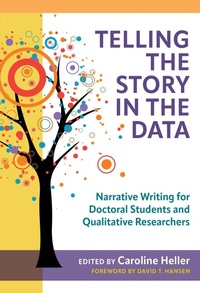
Telling the Story in the Data
Narrative Writing for Doctoral Students and Qualitative Researchers
Published on 25. November 2022
Book
Paperback/Softback
208 pages
978-0-8077-6734-4 (ISBN)
Description
Traditional dissertations aiming to illuminate the landscapes of education are often too turgid and poorly written to have far-reaching readership. This book examines the inner workings of a doctoral course focused on teaching qualitative researchers strong narrative writing. By the time doctoral students finish their dissertation research, bolstered by theoretical grounding and time in the field, they are in a unique position to offer insights about education that should be heard in the public arena, not just during dissertation defenses. For this to happen, doctoral students need to know how to achieve their writerly goals. This book focuses on helping doctoral students and all qualitative researchers do just that. It is also an excellent resource for professors teaching narrative writing. Readers will learn how to use narrative writing to "tell the story in the data" so their research will be read and potentially infuse policy decisions with the complexity such decisions deserve. Book Features:
Assists students and qualitative researchers with writing research in an engaging and informative manner.
Focuses on the craft and ethics of writing as an essential constituent of good research.
Offers practical guidance appropriate for self-study or for professors of education who teach writing.
Assists students and qualitative researchers with writing research in an engaging and informative manner.
Focuses on the craft and ethics of writing as an essential constituent of good research.
Offers practical guidance appropriate for self-study or for professors of education who teach writing.
More details
Language
English
Place of publication
New York
United States
Target group
Professional and scholarly
Dimensions
Height: 155 mm
Width: 230 mm
Thickness: 14 mm
Weight
296 gr
ISBN-13
978-0-8077-6734-4 (9780807767344)
Copyright in bibliographic data and cover images is held by Nielsen Book Services Limited or by the publishers or by their respective licensors: all rights reserved.
Schweitzer Classification
Person
Caroline Heller is a professor and director of the Individually Designed PhD specialization at the Graduate School of Education, Lesley University.
Content
Contents
Foreword Susan Groundwater-Smith ?vii
Introduction: Student Voice: Reframing School Change by Repositioning Educational Research ?1
Marc Brasof and Joseph Levitan
PART I: The Student Voice Research Framework and Philosophical Underpinnings
1. ?The Student Voice Research Framework ?13
Marc Brasof and Joseph Levitan
2. ?Epistemological Issues in Student Voice Research ?38
Joseph Levitan and Marc Brasof
PART II: Preparing for Student Voice Work
3. ?The Ethics of Student Voice Research ?57
William C. Frick
4. ?Considering Space and Time: Power Dynamics and Relationships Between Children and Adults ?68
Kate Wall, Claire Cassidy, Carol Robinson, Mhairi C. Beaton, Lorna Arnott, and Elaine Hall
5. ?Student Voice: Assessing Research in the Field ?84
Lindsay Lyons, Ellen MacCannell, and Vanessa Gold
6. ?Reflection and Reflexion on Student Participation and System Change ?100
Pat Thomson
PART III: Student Voice Methods in Action
7. ?Making Meaning and Planning Change with Students Using Photo-Cued Interviewing ?117
Kayla M. Johnson
8. ?Participatory Visual Data Analysis: Tools for Empowering Students Toward Social Change ?138
Lisa J. Starr
9. ?Listening to Relations of Power and Potential with Material Methods ?153
Eve Mayes
10. ?Balancing Breadth and Depth: Using Mixed Methods in Scale Development Research ?168
Lindsay Lyons
11. ?Intersecting Voices: An Integrative Approach to Applying the Student Voice Research Framework in Teacher Education ?183
Alison Cook-Sather, Heather Curl, and Chanelle Wilson
Conclusion: The Past, Present, and Future of Student Voice Research ?201
Joseph Levitan and Marc Brasof
References ?207
About the Editors and Contributors ?231
Index ?235
Foreword Susan Groundwater-Smith ?vii
Introduction: Student Voice: Reframing School Change by Repositioning Educational Research ?1
Marc Brasof and Joseph Levitan
PART I: The Student Voice Research Framework and Philosophical Underpinnings
1. ?The Student Voice Research Framework ?13
Marc Brasof and Joseph Levitan
2. ?Epistemological Issues in Student Voice Research ?38
Joseph Levitan and Marc Brasof
PART II: Preparing for Student Voice Work
3. ?The Ethics of Student Voice Research ?57
William C. Frick
4. ?Considering Space and Time: Power Dynamics and Relationships Between Children and Adults ?68
Kate Wall, Claire Cassidy, Carol Robinson, Mhairi C. Beaton, Lorna Arnott, and Elaine Hall
5. ?Student Voice: Assessing Research in the Field ?84
Lindsay Lyons, Ellen MacCannell, and Vanessa Gold
6. ?Reflection and Reflexion on Student Participation and System Change ?100
Pat Thomson
PART III: Student Voice Methods in Action
7. ?Making Meaning and Planning Change with Students Using Photo-Cued Interviewing ?117
Kayla M. Johnson
8. ?Participatory Visual Data Analysis: Tools for Empowering Students Toward Social Change ?138
Lisa J. Starr
9. ?Listening to Relations of Power and Potential with Material Methods ?153
Eve Mayes
10. ?Balancing Breadth and Depth: Using Mixed Methods in Scale Development Research ?168
Lindsay Lyons
11. ?Intersecting Voices: An Integrative Approach to Applying the Student Voice Research Framework in Teacher Education ?183
Alison Cook-Sather, Heather Curl, and Chanelle Wilson
Conclusion: The Past, Present, and Future of Student Voice Research ?201
Joseph Levitan and Marc Brasof
References ?207
About the Editors and Contributors ?231
Index ?235