

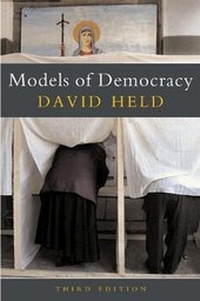
Models of Democracy
3rd Edition
Published on 20. June 2006
Book
Paperback/Softback
408 pages
978-0-7456-3147-9 (ISBN)
Description
The first two editions of Models of Democracy have provenimmensely popular among students and specialists worldwide. In asuccinct and far-reaching analysis, David Held provides anintroduction to central accounts of democracy from classical Greeceto the present and a critical discussion of what democracy shouldmean today.
This new edition has been extensively revised and updated totake account of significant transformations in world politics, anda new chapter has been added on deliberative democracy whichfocuses not only on how citizen participation can be increased inpolitics, but also on how that participation can become moreinformed.
Like its predecessor, the third edition of Models ofDemocracy combines lucid exposition and clarity of expressionwith careful scholarship and originality, making it highlyattractive to students and experts in the field. The third editionwill prove essential reading for all those interested in politics,political theory and political philosophy.
A companion website to Models of Democracy provideslecturer and student resources; including a study guide, aninterview with the author and links to develop the reader'sunderstanding of the topics covered.
Reviews / Votes
"The great global struggles today are not over democracy versusother forms of government but over the meanings and practices ofdemocracy themselves. There is no better critical and engagedsurvey of the complex histories and contemporary struggles overthis deeply contested concept than David Held's third and improvededition of Models of Democracy, precisely because it iswritten in awareness of its own contestability." James Tully, University of Victoria "Models is the kind of established classic which bothdemands and merits revision every decade or so." David Beetham, University of Leeds "Everyone who has used Models will welcome this newedition. Newcomers will find a wide-ranging and reliable analysisof past and present debates about democracy and gain anunderstanding of what is at issue in current globalarguments." Carole Pateman, Cardiff University and University ofCalifornia at Los AngelesMore details
Other editions
Additional editions

David Held
Models of Democracy
Book
06/2006
3rd Edition
Polity Press
€100.47
Article not available at the moment
Previous edition
David Held
Models of Democracy
Book
11/1996
2nd Edition
Polity Press
€39.80
Article exhausted; check for reprint
Person
David Held is Graham Wallas Professor of Political Science at the London School of Economics and Political Science.
Content
List of Figures and Tables
Preface
Introduction
Part One: Classic Models
Chapter 1 - Classical Democracy: Athens
Political ideas and aims
Institutional features
The exclusivity of an ancient democracy
The critics
In sum: Model I
Chapter 2 - Republicanism: Liberty, Self-Government and the Active Citizen
The eclipse and re-emergence of homo politicus
The reforging of republicanism
Republicanism, elective government and popular sovereignty
From civic life to civic glory
In sum: Model IIa
The republic and the general will
In sum: model IIb
The public and the private
Chapter 3 - The Development of Liberal Democracy: For and Against the State
Power and Sovereignty
Citizenship and the Constitutional State
Separation of Powers
The problem of factions
Accountability and Markets
In sum: model IIIa
Liberty and the development of democracy
The dangers of despotic power and an overgrown state
Representative government
The subordination of women
Competing conceptions of the 'ends of government'
In sum: Model IIIb
Chapter 4 - Direct Democracy and the End of Politics
Class and class conflict
History as evolution and the development of captialism
Two theories of the state
The end of politics
Competing conceptions of Marxism
Part Two: Variants from the Twentieth Century
Chapter 5 - Competitive ELitism and the Technocratic Vision
Classes, power and conflict
Bureaucracy, parliaments and nation-states
Competitive elitist democracy
Liberal democracy at the crossroads
The last vestige of democracy?
Democracy, capitalism and socialism
'Classical' v. modern democracy
A technocratic vision
In sum: model V
Chapter 6 - Pluralism, Corporate Capitalism and the State
Group politics, government and power
Politics, consensus and the distribution of power
Democracy, corporate capitalism and the state
In sum: Model VI
Accumulation, legitimation and the restricted sphere of the political
The changing form of representative institutions
Chapter 7 - From Post-War Stability to Political Crisis: The Polarization of Political Ideas
A legitimate democratic order or a repressive regime?
Overloaded state or legitimation crisis?
Crisis theories: an assessment
Law, liberty and democracy
In sum: model VII
Participation, liberty and democracy
In sum: model VII
Chapter 8 - Democracy after Soviet Communism
The historical backdrop
The triumph of economic and political liberalism
The renewed necessity of Marxism and democracy from 'below'?
Chapter 9 - Deliberative Democracy and the Defence of the Public Realm
Reason and Participation
The limits of democratic theory
The aims of deliberative democracy
What is sound about public reasoning? Impartialism and it's critics
Institutions of deliberative democracy
Value pluralism and democracy
In sum: Model IX
Part Three: What Should Democracy Mean Today?
Chapter 10 - Democratic Autonomy
The appeal of democracy
The principle of autonomy
Enacting the principle
The heritage of classic and twentieth-century democratic theory
Democracy: A double-sided process
Democratic autonomy: compatibilities and incompatibilities
In sum: Model Xa
Chapter 11 - Democracy, the Nation-State and the Global System
Democratic legitimacy and borders
Regional and global flows: old and new
Sovereignty, autonomy and disjunctures
Rethinking democracy for a more global age: the cosmopolitan model
In sum: model Xb
Acknowledgements
References and Select Bibliography
Index
Preface
Introduction
Part One: Classic Models
Chapter 1 - Classical Democracy: Athens
Political ideas and aims
Institutional features
The exclusivity of an ancient democracy
The critics
In sum: Model I
Chapter 2 - Republicanism: Liberty, Self-Government and the Active Citizen
The eclipse and re-emergence of homo politicus
The reforging of republicanism
Republicanism, elective government and popular sovereignty
From civic life to civic glory
In sum: Model IIa
The republic and the general will
In sum: model IIb
The public and the private
Chapter 3 - The Development of Liberal Democracy: For and Against the State
Power and Sovereignty
Citizenship and the Constitutional State
Separation of Powers
The problem of factions
Accountability and Markets
In sum: model IIIa
Liberty and the development of democracy
The dangers of despotic power and an overgrown state
Representative government
The subordination of women
Competing conceptions of the 'ends of government'
In sum: Model IIIb
Chapter 4 - Direct Democracy and the End of Politics
Class and class conflict
History as evolution and the development of captialism
Two theories of the state
The end of politics
Competing conceptions of Marxism
Part Two: Variants from the Twentieth Century
Chapter 5 - Competitive ELitism and the Technocratic Vision
Classes, power and conflict
Bureaucracy, parliaments and nation-states
Competitive elitist democracy
Liberal democracy at the crossroads
The last vestige of democracy?
Democracy, capitalism and socialism
'Classical' v. modern democracy
A technocratic vision
In sum: model V
Chapter 6 - Pluralism, Corporate Capitalism and the State
Group politics, government and power
Politics, consensus and the distribution of power
Democracy, corporate capitalism and the state
In sum: Model VI
Accumulation, legitimation and the restricted sphere of the political
The changing form of representative institutions
Chapter 7 - From Post-War Stability to Political Crisis: The Polarization of Political Ideas
A legitimate democratic order or a repressive regime?
Overloaded state or legitimation crisis?
Crisis theories: an assessment
Law, liberty and democracy
In sum: model VII
Participation, liberty and democracy
In sum: model VII
Chapter 8 - Democracy after Soviet Communism
The historical backdrop
The triumph of economic and political liberalism
The renewed necessity of Marxism and democracy from 'below'?
Chapter 9 - Deliberative Democracy and the Defence of the Public Realm
Reason and Participation
The limits of democratic theory
The aims of deliberative democracy
What is sound about public reasoning? Impartialism and it's critics
Institutions of deliberative democracy
Value pluralism and democracy
In sum: Model IX
Part Three: What Should Democracy Mean Today?
Chapter 10 - Democratic Autonomy
The appeal of democracy
The principle of autonomy
Enacting the principle
The heritage of classic and twentieth-century democratic theory
Democracy: A double-sided process
Democratic autonomy: compatibilities and incompatibilities
In sum: Model Xa
Chapter 11 - Democracy, the Nation-State and the Global System
Democratic legitimacy and borders
Regional and global flows: old and new
Sovereignty, autonomy and disjunctures
Rethinking democracy for a more global age: the cosmopolitan model
In sum: model Xb
Acknowledgements
References and Select Bibliography
Index