

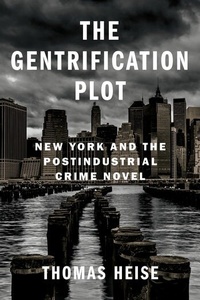
The Gentrification Plot
New York and the Postindustrial Crime Novel
Published on 21. December 2021
Book
Paperback/Softback
312 pages
978-0-231-20019-6 (ISBN)
Description
For decades, crime novelists have set their stories in New York City, a place long famed for decay, danger, and intrigue. What happens when the mean streets of the city are no longer quite so mean? In the wake of an unprecedented drop in crime in the 1990s and the real-estate development boom in the early 2000s, a new suspect is on the scene: gentrification.
Thomas Heise identifies and investigates the emerging "gentrification plot" in contemporary crime fiction. He considers recent novels that depict the sweeping transformations of five iconic neighborhoods-the Lower East Side, Chinatown, Red Hook, Harlem, and Bedford-Stuyvesant-that have been central to African American, Latinx, immigrant, and blue-collar life in the city. Heise reads works by Richard Price, Henry Chang, Gabriel Cohen, Reggie Nadelson, Ivy Pochoda, Grace Edwards, Ernesto Quinonez, Wil Medearis, and Brian Platzer, tracking their representations of "broken-windows" policing, cultural erasure, racial conflict, class grievance, and displacement. Placing their novels in conversation with oral histories, urban planning, and policing theory, he explores crime fiction's contradictory and ambivalent portrayals of the postindustrial city's dizzying metamorphoses while underscoring the material conditions of the genre. A timely and powerful book, The Gentrification Plot reveals how today's crime writers narrate the death-or murder-of a place and a way of life.
Thomas Heise identifies and investigates the emerging "gentrification plot" in contemporary crime fiction. He considers recent novels that depict the sweeping transformations of five iconic neighborhoods-the Lower East Side, Chinatown, Red Hook, Harlem, and Bedford-Stuyvesant-that have been central to African American, Latinx, immigrant, and blue-collar life in the city. Heise reads works by Richard Price, Henry Chang, Gabriel Cohen, Reggie Nadelson, Ivy Pochoda, Grace Edwards, Ernesto Quinonez, Wil Medearis, and Brian Platzer, tracking their representations of "broken-windows" policing, cultural erasure, racial conflict, class grievance, and displacement. Placing their novels in conversation with oral histories, urban planning, and policing theory, he explores crime fiction's contradictory and ambivalent portrayals of the postindustrial city's dizzying metamorphoses while underscoring the material conditions of the genre. A timely and powerful book, The Gentrification Plot reveals how today's crime writers narrate the death-or murder-of a place and a way of life.
Reviews / Votes
Compelling and sophisticated, The Gentrification Plot offers richly detailed readings of recent NYC crime fiction that delineate and critique the destructive effects of gentrification. Heise's attention to shifts in geography and genre adds to the critical framework for reading, understanding, and appreciating the ethical stakes of contemporary fiction. -- Kathy Knapp, author of <i>American Unexceptionalism: The Everyman and the Suburban Novel After 9/11</i> In this excellent book, Thomas Heise argues that gentrification transformed not just the neighborhoods of New York City but also the city's crime novels. Providing a new and inventive lens for reading crime fiction, Heise convincingly shows how the quintessentially urban genre of the crime novel found itself unavoidably implicated in the politics of gentrification and real estate speculation. At once an innovative history of contemporary crime fiction and an eye-opening account of gentrification's impact on individual neighborhoods and communities, The Gentrification Plot is a major work in an important field. -- Theodore Martin, author of <i>Contemporary Drift: Genre, Historicism, and the Problem of the Present</i> In this groundbreaking book, Heise unlocks the multiple meanings of "plot" to cast new light on the complex links among crime, property, policing, race, and literature. With a diverse group of contemporary novelists as his guide, he brilliantly shows us how the gentrification of New York City stands in for and enacts the logic of crime as much as murder and theft. One of the best books on its subject I have ever read. -- Andrew Pepper, author of <i>Unwilling Executioner: Crime Fiction and the State</i> The range of Heise's scholarship is impressive and diverse, and his analyses are intelligently presented. He writes with assurance about and passion for his subject. The Gentrification Plot is a significant contribution to crime fiction scholarship. * Choice Reviews * [A] highly recommended read for those who are fascinated by New York City as a matter of investigation. Readers who loved the meta-detective stories in The New York Trilogy by Paul Auster, or essay collections like The Lonely City by Olivia Laing particularly for the discourse around Manhattan law-and-order policing of the 2000s, will find in The Gentrification Plot new, precious insights about contemporary socio-spatial transformations. * LSE Review of Books * The Gentrification Plot provides a nuanced, expertly read literary account of neoliberalization, changing modes of production, racial capitalism, and the social production of space. It is a book that could only be written by someone deeply intimate with New York City itself-able to see its impasses all the more clearly because of love[.] * American Literary History *More details
Series
Language
English
Place of publication
New York
United States
Target group
Professional and scholarly
Product notice
Paperback (trade)
Dimensions
Height: 229 mm
Width: 152 mm
ISBN-13
978-0-231-20019-6 (9780231200196)
Copyright in bibliographic data and cover images is held by Nielsen Book Services Limited or by the publishers or by their respective licensors: all rights reserved.
Schweitzer Classification
Other editions
Additional editions
E-Book
03/2023
1st Edition
Columbia University Press
€33.99
Available for download
Person
Thomas Heise is an assistant professor of English at Pennsylvania State University, Abington. He is the author of Urban Underworlds: A Geography of Twentieth-Century American Literature and Culture (2011), as well as the novel Moth; or how I came to be with you again (2013) and Horror Vacui: Poems (2006).
Content
Introduction: Death and Life in Postindustrial New York
1. The Lower East Side: Cops, Culture, and the Creative Class
2. Chinatown: Policing the Ethnic Enclave
3. Red Hook: Blood on the Industrial Waterfront
4. Harlem: Uptown Dead Zones
5. Bedford-Stuyvesant: White Boys in the Hood
Epilogue: Escape from New York
Acknowledgments
Notes
Bibliography
Index
1. The Lower East Side: Cops, Culture, and the Creative Class
2. Chinatown: Policing the Ethnic Enclave
3. Red Hook: Blood on the Industrial Waterfront
4. Harlem: Uptown Dead Zones
5. Bedford-Stuyvesant: White Boys in the Hood
Epilogue: Escape from New York
Acknowledgments
Notes
Bibliography
Index