

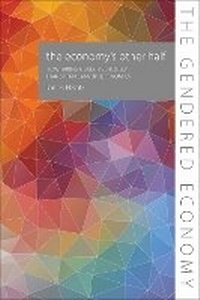
The Economy's Other Half
How Taking Gender Seriously Transforms Macroeconomics
Published on 21. December 2018
Book
Paperback/Softback
112 pages
978-1-78821-063-8 (ISBN)
Description
Choices made in macroeconomic policies - such as government spending, taxation, monetary policy and financial regulation - have distinct distributive consequences for women and men. They also shape the constraints within which efforts to advance gender equality must operate. The implications of gender dynamics for macroeconomics extends beyond consideration of distributive outcomes. The unpaid and non-market work that women perform - running a household, bringing up children - is unrecognized and uncounted in macroeconomic variables used to formulate policy. Yet the economic consequences of these unpaid activities are far-reaching: contributing to the well-being of society, affecting productive activities in the market economy and creating the foundation for the long-run sustainability of our economies.
It has long been assumed that economic growth and women's growing participation in the paid workforce would eventually take care of gender inequalities, and yet there is little evidence that faster growth will achieve this. In addition it ignores the valuable and quantifiable role that the unpaid work of women for their families contributes to the economy.
James Heintz tackles the shortcomings of macroeconomics in relation to gender dynamics and challenges the dominant methods and measurements, suggesting new ways of framing macroeconomic concepts. He concludes by considering implications for how this new way of thinking could transform policymaking in the future.
It has long been assumed that economic growth and women's growing participation in the paid workforce would eventually take care of gender inequalities, and yet there is little evidence that faster growth will achieve this. In addition it ignores the valuable and quantifiable role that the unpaid work of women for their families contributes to the economy.
James Heintz tackles the shortcomings of macroeconomics in relation to gender dynamics and challenges the dominant methods and measurements, suggesting new ways of framing macroeconomic concepts. He concludes by considering implications for how this new way of thinking could transform policymaking in the future.
More details
Series
Language
English
Place of publication
United Kingdom
Publishing group
Edinburgh University Press
Target group
College/higher education
Dimensions
Height: 234 mm
Width: 156 mm
ISBN-13
978-1-78821-063-8 (9781788210638)
Copyright in bibliographic data and cover images is held by Nielsen Book Services Limited or by the publishers or by their respective licensors: all rights reserved.
Schweitzer Classification
Other editions
Additional editions
E-Book
12/2018
1st Edition
Agenda Publishing
from
€69.99
Available for download
Person
James Heintz is Andrew Glyn Professor of Economics at the University of Massachusetts, Amherst.
Content
Foreword by Series Editors
Introduction
1. Gender inequality and macroeconomic policy
2. The mis-measured economy: incorporating feminist ideas into macroeconomic accounting
3. Reimagining macro: gender and economics in the long run
4. Revamping macroeconomics so that people count
Introduction
1. Gender inequality and macroeconomic policy
2. The mis-measured economy: incorporating feminist ideas into macroeconomic accounting
3. Reimagining macro: gender and economics in the long run
4. Revamping macroeconomics so that people count