


Nature, History, State
1933-1934
Published on 26. February 2015
Book
Paperback/Softback
216 pages
978-1-4411-1617-8 (ISBN)
Description
Nature, History, State: 1933-1934 presents the first complete English-language translation of Heidegger's seminar 'On the Essence and Concepts of Nature, History and State', together with full introductory material and interpretive essays by five leading thinkers and scholars: Robert Bernasconi, Peter Eli Gordon, Marion Heinz, Theodore Kisiel and Slavoj Zizek.
The seminar, which was held while Heidegger was serving as National Socialist rector of the University of Freiburg, represents important evidence of the development of Heidegger's political thought. The text consists of ten 'protocols' on the seminar sessions, composed by students and reviewed by Heidegger. The first session's protocol is a rather personal commentary on the atmosphere in the classroom, but the remainder have every appearance of being faithful transcripts of Heidegger's words, in which he raises a variety of fundamental questions about nature, history and the state. The seminar culminates in an attempt to sketch a political philosophy that supports the 'Fuehrer state'. The text is important evidence for anyone considering the tortured question of Heidegger's Nazism and its connection to his philosophy in general.
The seminar, which was held while Heidegger was serving as National Socialist rector of the University of Freiburg, represents important evidence of the development of Heidegger's political thought. The text consists of ten 'protocols' on the seminar sessions, composed by students and reviewed by Heidegger. The first session's protocol is a rather personal commentary on the atmosphere in the classroom, but the remainder have every appearance of being faithful transcripts of Heidegger's words, in which he raises a variety of fundamental questions about nature, history and the state. The seminar culminates in an attempt to sketch a political philosophy that supports the 'Fuehrer state'. The text is important evidence for anyone considering the tortured question of Heidegger's Nazism and its connection to his philosophy in general.
Reviews / Votes
There is no more disturbing or haunting event in philosophy's recent history than that defined by Heidegger's political activities in the 1930s. Those activities and the questions they raise will cast a shadow for a long time to come. The protocols of Heidegger's seminar - precisely translated and thoughtfully introduced - coupled with the excellent critical essays that constitute this volume are decisive texts for those who seek to understand this difficult matter. -- Dennis J. Schmidt, The Pennsylvania State University This collection ... is an important document in the battle for determining Heidegger's legacy as either one of the most profound minds of the 20th century, or a charlatan abusing his philosophical credentials to provide intellectual justification for Nazism. With this accessible translation re-published in paperback form, English audiences can read the primary text and wade into this important debate in Heidegger scholarship for themselves ... [T]his publication does a service in filling a vital part of the picture. -- Richard J. Elliott * Philosophy *More details
Series
Language
English
Place of publication
New York
United States
Publishing group
Bloomsbury Publishing Plc
Target group
College/higher education
Professional and scholarly
Dimensions
Height: 198 mm
Width: 129 mm
Thickness: 12 mm
Weight
235 gr
ISBN-13
978-1-4411-1617-8 (9781441116178)
DOI
CBID165986
Copyright in bibliographic data and cover images is held by Nielsen Book Services Limited or by the publishers or by their respective licensors: all rights reserved.
Schweitzer Classification
Other editions
Additional editions
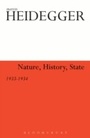
E-Book
10/2013
1st Edition
Bloomsbury Academic USA
€27.49
Available for download
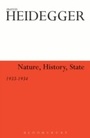
E-Book
10/2013
1st Edition
Bloomsbury Academic USA
€27.49
Available for download
Persons
Martin Heidegger (1889-1976) is regarded as one of the twentieth century's most important philosophers.
Gregory Fried is Professor of Philosophy at Suffolk University, Boston, USA.
Richard Polt is Professor of Philosophy at Xavier University, Cincinnati, USA.
Contributors: Marion Heinz, Theodore Kisiel, Peter Eli Gordon, Robert Bernasconi, and Slavoj Zizek.
Gregory Fried is Professor of Philosophy at Suffolk University, Boston, USA.
Richard Polt is Professor of Philosophy at Xavier University, Cincinnati, USA.
Contributors: Marion Heinz, Theodore Kisiel, Peter Eli Gordon, Robert Bernasconi, and Slavoj Zizek.
Content
About the Contributors
Editors' Introduction
Part I: On the Essence and Concept of Nature, History, and State
Session 1
Session 2
Session 3
Session 4
Session 5
Session 6
Session 7
Session 8
Session 9
Session 10
Part II: Interpretive Essays
Volk and Fuehrer Marion Heinz
Heidegger in Purgatory Peter E. Gordon
Who Belongs? Heidegger's Philosophy of the Volk in 1933-34 Robert Bernasconi
The Seminar of Winter Semester 1933-34 Within Heidegger's Three Concepts of the Political Theodore Kisiel
Heidegger in the Foursome of Struggle, Historicity, Will, and Gelassenheit Slavoj Zizek
Endnotes
Index
Editors' Introduction
Part I: On the Essence and Concept of Nature, History, and State
Session 1
Session 2
Session 3
Session 4
Session 5
Session 6
Session 7
Session 8
Session 9
Session 10
Part II: Interpretive Essays
Volk and Fuehrer Marion Heinz
Heidegger in Purgatory Peter E. Gordon
Who Belongs? Heidegger's Philosophy of the Volk in 1933-34 Robert Bernasconi
The Seminar of Winter Semester 1933-34 Within Heidegger's Three Concepts of the Political Theodore Kisiel
Heidegger in the Foursome of Struggle, Historicity, Will, and Gelassenheit Slavoj Zizek
Endnotes
Index