

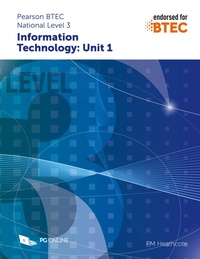
Pearson BTEC Level 3 in Information Technology: Unit 1
Component Unit 1 External Assessment
Published on 25. February 2019
Book
Paperback/Softback
192 pages
978-1-910523-15-5 (ISBN)
Description
The aim of this book is to provide comprehensive coverage of topics in Unit 1 of the BTEC Level 3 course in Information Technology in an interesting and approachable manner. If you are studying this course, you need to notice, read about, experience and analyse the impact and implications of current and emerging digital technologies. Examples and case studies from scenarios and events that have recently been in the news are used to bring the subject to life. Reading and discussing articles from quality newspapers, whether printed or online, discussing relevant TV documentaries, noticing and analysing the use of digital technology in countless aspects of life, as well as learning from a textbook, are all going to contribute to a successful exam result.
The book is divided into six sections corresponding to the six Learning Aims outlined in the specification, complementing each of the PG Online teaching resource packs. These sections are divided into between four and eight chapters, each containing material that can be covered in one or two lessons. The chapters have in-text questions which can be used as discussion points in a lesson. An extra chapter at the end of Learning Aim B on "Drawing System Diagrams" will be useful for students faced with a question on the exam for which they are required to draw such a diagram.
In addition to almost 100 in-text questions and discussion points, there are over 80 end-of-chapter exercises that are designed to give practice in answering exam-style questions, using command words such as state, describe, explain, analyse. As much practice as possible is needed in answering such questions and getting feedback from the teacher so as to understand how to gain the maximum possible marks in the final exam.
The book is divided into six sections corresponding to the six Learning Aims outlined in the specification, complementing each of the PG Online teaching resource packs. These sections are divided into between four and eight chapters, each containing material that can be covered in one or two lessons. The chapters have in-text questions which can be used as discussion points in a lesson. An extra chapter at the end of Learning Aim B on "Drawing System Diagrams" will be useful for students faced with a question on the exam for which they are required to draw such a diagram.
In addition to almost 100 in-text questions and discussion points, there are over 80 end-of-chapter exercises that are designed to give practice in answering exam-style questions, using command words such as state, describe, explain, analyse. As much practice as possible is needed in answering such questions and getting feedback from the teacher so as to understand how to gain the maximum possible marks in the final exam.
More details
Language
English
Place of publication
Tolpuddle
United Kingdom
Target group
Primary & secondary/elementary & high school
Adult education
Dimensions
Height: 280 mm
Width: 216 mm
Thickness: 13 mm
Weight
738 gr
ISBN-13
978-1-910523-15-5 (9781910523155)
Copyright in bibliographic data and cover images is held by Nielsen Book Services Limited or by the publishers or by their respective licensors: all rights reserved.
Schweitzer Classification
Other editions
Additional editions

E-Book
02/2019
PG Online Ltd
€19.49
Available for download
Person
Pat Heathcote is a well-known and successful author of Computer Science textbooks. She has spent many years as a teacher of A Level Computing courses with significant examining experience. She has also worked as a programmer and systems analyst, and was Managing Director of Payne-Gallway Publishers until 2005.
Content
Learning Aim A: Digital devices in IT Systems
Chapter 1 Digital devices in IT systems
Chapter 2 The function and use of digital devices
Chapter 3 Peripheral devices and media
Chapter 4 Operating systems
Chapter 5 Choice and use of operating system
Chapter 6 Utility and application software
Chapter 7 Emerging technologies
Chapter 8 Choosing IT systems
Learning Aim B: Transmitting data
Chapter 9 Connectivity
Chapter 10 Implications and impact of connection types
Chapter 11 Types of network
Chapter 12 Factors affecting the choice of network
Chapter 13 Features and processes of data transmission
Chapter 14 Drawing system diagrams
Learning Aim C: Operating online
Chapter 15 Online systems
Chapter 16 Use and selection of online systems
Chapter 17 Interacting with online communities
Chapter 18 Organisations and online communities
Learning Aim D: Protecting data and information
Chapter 19 Threats to data
Chapter 20 Impact of threats to data, information and systems
Chapter 21 Methods of protecting data
Chapter 22 Encryption, protocols and digital certificates
Chapter 23 Role of legislation in protecting data
Chapter 24 Access control, backup and recovery
Learning Aim E: Impact of IT systems
Chapter 25 Online services
Chapter 26 IT systems in organisations
Chapter 27 Impact of IT systems on organisations
Chapter 28 Sourcing and collecting data
Chapter 29 Using and manipulating data
Learning Aim F: Moral, ethical and legal issues
Chapter 30 Privacy and ethical behaviour
Chapter 31 Global and environmental issues
Chapter 32 Current legislation
Chapter 33 Moral and ethical factors
Chapter 34 Equality and accessibility
Index
Chapter 1 Digital devices in IT systems
Chapter 2 The function and use of digital devices
Chapter 3 Peripheral devices and media
Chapter 4 Operating systems
Chapter 5 Choice and use of operating system
Chapter 6 Utility and application software
Chapter 7 Emerging technologies
Chapter 8 Choosing IT systems
Learning Aim B: Transmitting data
Chapter 9 Connectivity
Chapter 10 Implications and impact of connection types
Chapter 11 Types of network
Chapter 12 Factors affecting the choice of network
Chapter 13 Features and processes of data transmission
Chapter 14 Drawing system diagrams
Learning Aim C: Operating online
Chapter 15 Online systems
Chapter 16 Use and selection of online systems
Chapter 17 Interacting with online communities
Chapter 18 Organisations and online communities
Learning Aim D: Protecting data and information
Chapter 19 Threats to data
Chapter 20 Impact of threats to data, information and systems
Chapter 21 Methods of protecting data
Chapter 22 Encryption, protocols and digital certificates
Chapter 23 Role of legislation in protecting data
Chapter 24 Access control, backup and recovery
Learning Aim E: Impact of IT systems
Chapter 25 Online services
Chapter 26 IT systems in organisations
Chapter 27 Impact of IT systems on organisations
Chapter 28 Sourcing and collecting data
Chapter 29 Using and manipulating data
Learning Aim F: Moral, ethical and legal issues
Chapter 30 Privacy and ethical behaviour
Chapter 31 Global and environmental issues
Chapter 32 Current legislation
Chapter 33 Moral and ethical factors
Chapter 34 Equality and accessibility
Index