

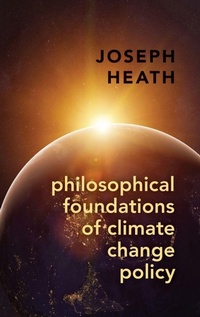
Philosophical Foundations of Climate Change Policy
Published on 29. September 2021
Book
Hardback
348 pages
978-0-19-756798-2 (ISBN)
Description
There is widespread agreement that something must be done to combat anthropogenic climate change. And yet what is the extent of our obligations? It would clearly be unjust for us to allow global warming to reach dangerous levels. But what is the nature of this injustice? Providing a plausible philosophical specification of the wrongness of our present inaction has proven surprisingly difficult. Much of this is due to the temporal structure of the problem, or the fact that there is such a significant delay between our actions and the effects that they produce. Many normative theories that sound plausible when applied to contemporaneous problems generate surprising or perverse results when applied to problems that extend over long periods of time, involving effects on individuals who have not yet been born. So while states have a range of sensible climate change policies at their disposal, the philosophical foundations of these policies remains indeterminate.
By far the most influential philosophical position has been the variant of utilitarianism most popular among economists, which maintains that we have an obligation to maximize the well-being of all people, from now until the end of time. Climate change represents an obvious failure of maximization. Many environmental philosophers, however, find this argument unpersuasive, because it also implies that we have an obligation to maximize economic growth. Yet their attempts to provide alternative foundations for policy have proven unpersuasive. Joseph Heath presents an approach to thinking about climate change policy grounded in social contract theory, which focuses on the fairness of existing institutions, not the welfare of future generations, in order to generate a set of plausible policy prescriptions.
By far the most influential philosophical position has been the variant of utilitarianism most popular among economists, which maintains that we have an obligation to maximize the well-being of all people, from now until the end of time. Climate change represents an obvious failure of maximization. Many environmental philosophers, however, find this argument unpersuasive, because it also implies that we have an obligation to maximize economic growth. Yet their attempts to provide alternative foundations for policy have proven unpersuasive. Joseph Heath presents an approach to thinking about climate change policy grounded in social contract theory, which focuses on the fairness of existing institutions, not the welfare of future generations, in order to generate a set of plausible policy prescriptions.
Reviews / Votes
One needs not to share the author's ambition to build new normative principles accounting for climate change policy to appreciate the book. The reader will be pleased to find here solid knowledge and very well backed points about prominent debates lying at the core of philosophy of economics such as cost-benefit analysis or discount rate. * Laurene Seca, Oeconomia * In this way, as with many other claims, I think that Heath is doing interesting work, testing some of the limits of common claims by climate ethicists... Whether Heath's is the best basis to do so is up for debate, but I believe the project is exciting and worthy of critical scrutiny and discussion. * Kian Mintz-Woo, University College Cork and International Institute for Applied Systems Analysis, Cork, Ireland *More details
Language
English
Place of publication
New York
United States
Target group
College/higher education
Dimensions
Height: 240 mm
Width: 161 mm
Thickness: 23 mm
Weight
687 gr
ISBN-13
978-0-19-756798-2 (9780197567982)
Copyright in bibliographic data and cover images is held by Nielsen Book Services Limited or by the publishers or by their respective licensors: all rights reserved.
Schweitzer Classification
Other editions
Additional editions
Joseph Heath
Philosophical Foundations of Climate Change Policy
Book
11/2025
Oxford University Press Inc
€30.50
Shipment within 15-20 days

Joseph Heath
Philosophical Foundations of Climate Change Policy
E-Book
06/2021
OUP eBook
€43.49
Available for download

Joseph Heath
Philosophical Foundations of Climate Change Policy
E-Book
06/2021
OUP eBook
€43.49
Available for download
Person
Joseph Heath is Professor in the Department of Philosophy and the Munk School of Global Affairs and Public Policy at the University of Toronto. A fellow of the Royal Society of Canada and the Trudeau Foundation, Heath is the author of several books, both popular and academic. His most recent, The Machinery of Government (Oxford, 2020), is a study of the ethics of public administration. He is also the author of Enlightenment 2.0, which won the Shaughnessy Cohen prize for Political Writing in Canada.
Content
Introduction 1. False Starts
1.1 Traditional environmental ethics
1.2 Liberal environmentalism
1.3 Conclusion 2. Climate Change and Growth
2.1 The undemandingness problem
2.2 Limits to growth
2.3 Impacts of climate change
2.4 Sustainability and fungibility
2.5 Catastrophe
2.6 Conclusion 3. Intergenerational Justice
3.1 The consequentialist challenge
3.2 The structure of intergenerational cooperation
3.3 Applications and objections
3.4 Just savings
3.5. Conclusion 4. Carbon Pricing
4.1 Market reciprocity
4.2 Carbon pricing
4.3 Example: food
4.4 Complementary policies
4.5 Conclusion 5. The Social Cost of Carbon
5.1 Embedded CBA
5.2 Basic principles of CBA
5.3 CBA and regulation
5.4 Objections and replies
5.5 Climate change
5.6 Compensating the losers 6. Positive Social Time Preference
6.1 The case for temporal neutrality
6.2 Reflective equilibrium
6.3 Institutionalized responsibility
6.4 Thinking politically
6.5 Discounting for deontologists
6.6 Conclusion Conclusion
Notes
Bibliography
1.1 Traditional environmental ethics
1.2 Liberal environmentalism
1.3 Conclusion 2. Climate Change and Growth
2.1 The undemandingness problem
2.2 Limits to growth
2.3 Impacts of climate change
2.4 Sustainability and fungibility
2.5 Catastrophe
2.6 Conclusion 3. Intergenerational Justice
3.1 The consequentialist challenge
3.2 The structure of intergenerational cooperation
3.3 Applications and objections
3.4 Just savings
3.5. Conclusion 4. Carbon Pricing
4.1 Market reciprocity
4.2 Carbon pricing
4.3 Example: food
4.4 Complementary policies
4.5 Conclusion 5. The Social Cost of Carbon
5.1 Embedded CBA
5.2 Basic principles of CBA
5.3 CBA and regulation
5.4 Objections and replies
5.5 Climate change
5.6 Compensating the losers 6. Positive Social Time Preference
6.1 The case for temporal neutrality
6.2 Reflective equilibrium
6.3 Institutionalized responsibility
6.4 Thinking politically
6.5 Discounting for deontologists
6.6 Conclusion Conclusion
Notes
Bibliography