

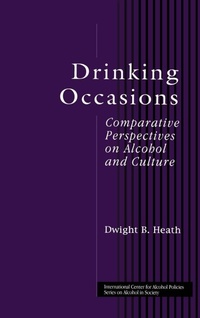
Drinking Occasions
Comparative Perspectives on Alcohol and Culture
1st Edition
Published on 7. April 2000
Book
Hardback
256 pages
978-1-58391-047-4 (ISBN)
Description
The main purpose of this book is to describe the variety of drinking occasions that exist around the world, primarily in modern, industrialized countries. As such, it celebrates the diversity of normal drinking behavior and illustrates a wide range of beneficial drinking patterns. Attention is also paid to the relations between drink and culture that prevail in non-Western societies and in developing countries. The aims of the book are twofold: to deal directly with the challenge of how to define responsible drinking in the face of the world's many different drinking styles, and to portray the many ways in which people have thought about or used alcohol as an integral part of their culture
More details
Series
Language
English
Place of publication
New York
United States
Publishing group
Taylor & Francis Ltd
Target group
College/higher education
Dimensions
Height: 235 mm
Width: 157 mm
Thickness: 19 mm
Weight
529 gr
ISBN-13
978-1-58391-047-4 (9781583910474)
Copyright in bibliographic data and cover images is held by Nielsen Book Services Limited or by the publishers or by their respective licensors: all rights reserved.
Schweitzer Classification
Other editions
Additional editions
Book
06/2015
1st Edition
Routledge
€74.50
Shipment within 10-20 days
E-Book
12/2012
1st Edition
Routledge
€68.49
Available for download
E-Book
12/2012
1st Edition
Routledge
€68.49
Available for download
Person
Heath, Dwight B.
Content
Chapter 1: "To Everyone There is a Season...": When Do People Drink? Chapter 2: Everything in It's Place: Where Do People Drink. Chapter 3: Cast if Characters: Who Drinks, and Who Doesn't? Chapter 4: "There's More Than One Way...": How Do People Drink? Chapter 5: "A Rose By Any Other Name...": What Do People Drink? Chapter 6: "The Heart Has Its Reasons:: Why Do People Drink? Chapter 7: Conclusions and Implications. References.