

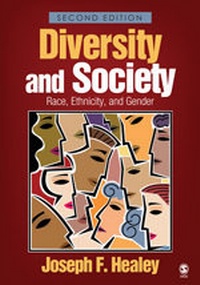
Diversity and Society
Race, Ethnicity, and Gender
2nd Edition
Published on 6. February 2007
Book
Paperback/Softback
384 pages
978-1-4129-4067-2 (ISBN)
Description
For use as a basic text in courses on race and ethnic relations where an instructor wishes to supplement the core text with other books, particular readings books. Race, Ethnicity, and Gender will be a paperback version of Joe Healey's successful Race, Ethnicity, Gender and Class 4/e. For the sake of length and cost, the major features from the bigger hardback - Narrative Portraits and Current Debates - will be expanded and part of an accompanying reader.Key Features:The brevity and cost allow an instructor to supplement the text with other books. Chapter opening photos with captions will set the stage for the chapter contents. Unlike the big book there will not be photo essays. . "Focus" boxes in chapters offer enhanced coverage of gender and comparative issues. Review questions at the ends of chapters help focus students on the key ideas. Additionally, there will be end-of-chapter Web-based research exercises. "Whiteness," a growing research area in this field, will be the subject of analysis in Ch.9. Accompanying reader will have expanded versions of Narrative Portraits and Current Debates from the big book, as well as additional readings. The reader is intended to be sold as a stand-alone or as part of a bundled kit.
More details
Edition
2nd Revised edition
Language
English
Place of publication
Thousand Oaks
United States
Target group
College/higher education
Edition type
Revised edition
Dimensions
Height: 254 mm
Width: 178 mm
Weight
664 gr
ISBN-13
978-1-4129-4067-2 (9781412940672)
Copyright in bibliographic data and cover images is held by Nielsen Book Services Limited or by the publishers or by their respective licensors: all rights reserved.
Schweitzer Classification
Other editions
Previous edition

Book
10/2003
1st Edition
SAGE Publications Inc
€53.42
Article exhausted; check for reprint
Person
Joseph F. Healey is Professor Emeritus of Sociology at Christopher Newport University in Virginia. He received his PhD in sociology and anthropology from the University of Virginia. An innovative and experienced teacher of numerous race and ethnicity courses, he has written articles on minority groups, the sociology of sport, social movements, and violence, and he is also the author of Statistics: A Tool for Social Research (10th ed., 2014).
Content
PART I: AN INTRODUCTION TO THE STUDY OF MINORITY GROUPS IN THE UNITED STATES
Preface
1. Diversity in the United States: Questions and Concepts
The Increasing Variety of American Minority Groups
The Goals of This Text
What Is a Minority Group?
Key Concepts in Dominant-Minority Relations
2. Assimilation and Pluralism
Assimilation
Pluralism
The Twilight if White Ethnicity?
Contemporary Immigrants: Segmented Assimilation?
COMPARATIVE FOCUS: Immigration, Emigration, and Ireland
Other Group Goals
Implications for Examining Dominant-Minority Relations
PART II: THE EVOLUTION OF DOMINANT-MINORITY GROUP RELATIONS IN THE UNITED STATES
3. The Development of Dominant-Minority Group Relations in Preindustrial America:
The Origins of Slavery in America
The Creation of Minority Status for Native Americans and Mexican
COMPARATIVE FOCUS: Mexico, Canada, and the United States
Comparing Minority Groups
4. Industrialization and Dominant-Minority Relations: From Slavery to Segregation and the Coming of Postindustrial Society
Industrialization and the Shift From Paternalistic to Rigid Competitive
The Impact of Industrialization on African Americans: From Slavery
The "Great Migration"
The Origins of Black Protest
Applying Concepts
Industrialization, the Shift to Postindustrial Society, and
The Shift From Rigid to Fluid Competitive Relationships
Social Change and Minority Group Activism
PART III: UNDERSTANDING DOMINANT-MINORITY RELATIONS IN THE UNITED STATES TODAY
5. African Americans: From Segregation to Modern Institutional Discrimination and Modern Racism
The End of De Jure Segregation
Developments Outside the South
Protest, Power and Pluralism
Black-White Relations Since the 1960s
Is the Glass Half Empty or Half Full?
6. Native Americans: From Conquest to Tribal Survival in a Postindustrial Society
Native American Cultures
Relations With the Federal Government After the 1890s
Protest and Resistance
The Continuing Struggle for Development in Contemporary
COMPARATIVE FOCUS: Australian Aborigines and Native Americans
Contemporary Native American-White Relations
Comparing Minority Groups
Progress and Challenges
7. Hispanic Americans: Colonization, Immigration, and Ethnic Enclaves
Mexican Americans
Puerto Ricans
Cuban Americans
Contemporary Hispanic-White Relations
Assimilation and Hispanic Americans
8. Asian Americans: Are Chinese Americans and Japanese Americans "Model Minorities"?
Asian Americans and Pacific Islanders
Origins and Cultures
Contact Situations and the Development of the Chinese
American and Japanese American Communities
COMPARATIVE FOCUS: Japan's "Invisible" Minority
Contemporary Relations
Comparing Minority Groups: Explaining Asian American Success
9. New Americans: Immigration and Assimilation
Recent Immigration From Latin America, South America, and the Caribbean
Contemporary Immigration From Asia and The Pacific Islands
Arab Americans
Immigrants from Africa
Summary: Modes of Incorporation
Immigration: Issues and Controversies
10. White Ethnic Groups: Assimilation and Identity-The Twilight of Ethnicity?
Assimilation and Equality: Should White Ethnic Groups Be Considered "Minority Groups"?
Industrialization and Immigration
European Origins, Conditions of Entry, and the Campaign Against Immigration
Comparative Focus: Immigration and Assimilation in Canada
Developments in the 20th Century: Mobility and Integration
Comparing European Immigrants and Colonized Minority Groups
Will White Ethnicity Survive?
White Racial Identity
Comparing Minority Groups: Immigration vs. Colonization
PART IV: A GLOBAL VIEW, SOME CONCLUSIONS, AND A LOOK TO THE FUTURE
11. Dominant-Minority Relations in Cross-National Perspective
A Brief Review of Major Analytical Themes
A Global Tour
Analyzing Group Relations
12. Minority Groups and U.S. Society: Themes, Patterns, and the Future
The Importance of Subsistence Technology
The Importance of the Contact Situation, Group Competition, and Power
Diversity Within Minority Groups
Assimilation and Pluralism
Minority Group Progress and the Ideology of American Individualism
A Final Word
Preface
1. Diversity in the United States: Questions and Concepts
The Increasing Variety of American Minority Groups
The Goals of This Text
What Is a Minority Group?
Key Concepts in Dominant-Minority Relations
2. Assimilation and Pluralism
Assimilation
Pluralism
The Twilight if White Ethnicity?
Contemporary Immigrants: Segmented Assimilation?
COMPARATIVE FOCUS: Immigration, Emigration, and Ireland
Other Group Goals
Implications for Examining Dominant-Minority Relations
PART II: THE EVOLUTION OF DOMINANT-MINORITY GROUP RELATIONS IN THE UNITED STATES
3. The Development of Dominant-Minority Group Relations in Preindustrial America:
The Origins of Slavery in America
The Creation of Minority Status for Native Americans and Mexican
COMPARATIVE FOCUS: Mexico, Canada, and the United States
Comparing Minority Groups
4. Industrialization and Dominant-Minority Relations: From Slavery to Segregation and the Coming of Postindustrial Society
Industrialization and the Shift From Paternalistic to Rigid Competitive
The Impact of Industrialization on African Americans: From Slavery
The "Great Migration"
The Origins of Black Protest
Applying Concepts
Industrialization, the Shift to Postindustrial Society, and
The Shift From Rigid to Fluid Competitive Relationships
Social Change and Minority Group Activism
PART III: UNDERSTANDING DOMINANT-MINORITY RELATIONS IN THE UNITED STATES TODAY
5. African Americans: From Segregation to Modern Institutional Discrimination and Modern Racism
The End of De Jure Segregation
Developments Outside the South
Protest, Power and Pluralism
Black-White Relations Since the 1960s
Is the Glass Half Empty or Half Full?
6. Native Americans: From Conquest to Tribal Survival in a Postindustrial Society
Native American Cultures
Relations With the Federal Government After the 1890s
Protest and Resistance
The Continuing Struggle for Development in Contemporary
COMPARATIVE FOCUS: Australian Aborigines and Native Americans
Contemporary Native American-White Relations
Comparing Minority Groups
Progress and Challenges
7. Hispanic Americans: Colonization, Immigration, and Ethnic Enclaves
Mexican Americans
Puerto Ricans
Cuban Americans
Contemporary Hispanic-White Relations
Assimilation and Hispanic Americans
8. Asian Americans: Are Chinese Americans and Japanese Americans "Model Minorities"?
Asian Americans and Pacific Islanders
Origins and Cultures
Contact Situations and the Development of the Chinese
American and Japanese American Communities
COMPARATIVE FOCUS: Japan's "Invisible" Minority
Contemporary Relations
Comparing Minority Groups: Explaining Asian American Success
9. New Americans: Immigration and Assimilation
Recent Immigration From Latin America, South America, and the Caribbean
Contemporary Immigration From Asia and The Pacific Islands
Arab Americans
Immigrants from Africa
Summary: Modes of Incorporation
Immigration: Issues and Controversies
10. White Ethnic Groups: Assimilation and Identity-The Twilight of Ethnicity?
Assimilation and Equality: Should White Ethnic Groups Be Considered "Minority Groups"?
Industrialization and Immigration
European Origins, Conditions of Entry, and the Campaign Against Immigration
Comparative Focus: Immigration and Assimilation in Canada
Developments in the 20th Century: Mobility and Integration
Comparing European Immigrants and Colonized Minority Groups
Will White Ethnicity Survive?
White Racial Identity
Comparing Minority Groups: Immigration vs. Colonization
PART IV: A GLOBAL VIEW, SOME CONCLUSIONS, AND A LOOK TO THE FUTURE
11. Dominant-Minority Relations in Cross-National Perspective
A Brief Review of Major Analytical Themes
A Global Tour
Analyzing Group Relations
12. Minority Groups and U.S. Society: Themes, Patterns, and the Future
The Importance of Subsistence Technology
The Importance of the Contact Situation, Group Competition, and Power
Diversity Within Minority Groups
Assimilation and Pluralism
Minority Group Progress and the Ideology of American Individualism
A Final Word