

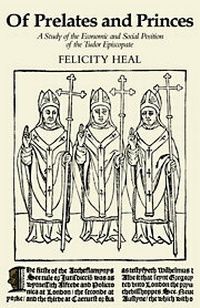
Of Prelates and Princes
A Study of the Economic and Social Position of the Tudor Episcopate
Published on 11. September 1980
Book
Hardback
368 pages
978-0-521-22950-0 (ISBN)
Description
The Tudor bishops were men of power and influence within the English realm, both because they possessed spiritual authority and because they exercised lordship over great estates. This book examines their activities as temporal lords: it seeks to discover how wealthy they were and to what uses their revenues were put. Dr Heal draws upon much research undertaken by other scholars in particular dioceses and for particular prelates. The bishops possessed considerable wealth, but they had little security, for the crown effectively controlled their economic destiny, especially after the break with Rome in 1534. No study of the episcopate can therefore ignore the effects of royal policy, and this book combines an investigation into the attitudes and behaviour of the Tudor monarchs with its close examination of the fortunes of the bishops.
More details
Language
English
Place of publication
Cambridge
United Kingdom
Target group
College/higher education
Illustrations
Worked examples or Exercises
Dimensions
Height: 216 mm
Width: 138 mm
Thickness: 27 mm
Weight
610 gr
ISBN-13
978-0-521-22950-0 (9780521229500)
Copyright in bibliographic data and cover images is held by Nielsen Book Services Limited or by the publishers or by their respective licensors: all rights reserved.
Schweitzer Classification
Other editions
New editions
Felicity Heal
Of Prelates and Princes
A Study of the Economic and Social Position of the Tudor Episcopate
Book
12/2008
Cambridge University Press
€68.00
Shipment within 15-20 days
Additional editions
Felicity Heal
Of Prelates and Princes
A Study of the Economic and Social Position of the Tudor Episcopate
Book
12/2008
Cambridge University Press
€68.00
Shipment within 15-20 days
Content
1. The bishops and the prelude to Reformation; 2. Land and social authority before the Reformation; 3. The revenues of the bishops and the Valor Ecclesiasticus; 4. Expenditure and conspicuous consumption; 5. Henry VIII and the beginnings of appropriation; 6. Change and restitution; 7. The consequences of the break with Rome: the bishops and society; 8. The consequences of the break with Rome: financial problems; 9. The Elizabethan Settlement and its aftermath; 10. The social responsibilities of the Elizabethan bishops; 11. The resources of the Elizabethan bishops; 12. Conclusion.