

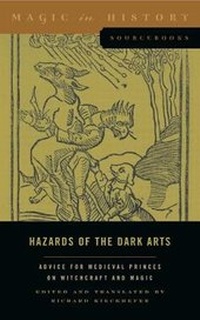
Hazards of the Dark Arts
Advice for Medieval Princes on Witchcraft and Magic
Pennsylvania State University Press
Published on 31. May 2022
Book
Paperback/Softback
168 pages
978-0-271-07840-3 (ISBN)
Description
This volume comprises English translations of two fundamentally important texts on magic and witchcraft in the fifteenth century: Johannes Hartlieb's Book of All Forbidden Arts and Ulrich Molitoris's On Witches and Pythonesses. Written by laymen and aimed at secular authorities, these works advocated that town leaders and royalty alike should vigorously uproot and prosecute practitioners of witchcraft and magic.
Though inquisitors and theologians promulgated the witch trials of late medieval times, lay rulers saw the prosecutions through. But local officials, princes, and kings could be unreliable; some were skeptical about the reality and danger of witchcraft, while others dabbled in the occult themselves. Borrowing from theological and secular sources, Hartlieb and Molitoris agitated against this order in favor of zealously persecuting occultists. Organized as a survey of the seven occult arts, Hartlieb's text is a systematic treatise on the dangers of superstition and magic. Molitoris's text presents a dialogue on the activities of witches, including vengeful sorcery, the transformation of humans into animals, and fornication with the devil. Taken together, these tracts show that laymen exerted significant influence on ridding society of their imagined threat.
Precisely translated by Richard Kieckhefer, Hazards of the Dark Arts includes an insightful introduction that discusses the authors, their sources and historical environments, the writings themselves, and the influence they had in the development of ideas about witchcraft.
Though inquisitors and theologians promulgated the witch trials of late medieval times, lay rulers saw the prosecutions through. But local officials, princes, and kings could be unreliable; some were skeptical about the reality and danger of witchcraft, while others dabbled in the occult themselves. Borrowing from theological and secular sources, Hartlieb and Molitoris agitated against this order in favor of zealously persecuting occultists. Organized as a survey of the seven occult arts, Hartlieb's text is a systematic treatise on the dangers of superstition and magic. Molitoris's text presents a dialogue on the activities of witches, including vengeful sorcery, the transformation of humans into animals, and fornication with the devil. Taken together, these tracts show that laymen exerted significant influence on ridding society of their imagined threat.
Precisely translated by Richard Kieckhefer, Hazards of the Dark Arts includes an insightful introduction that discusses the authors, their sources and historical environments, the writings themselves, and the influence they had in the development of ideas about witchcraft.
Reviews / Votes
"These two little-known fifteenth-century texts are here expertly translated into English for the first time by one of the world's leading authorities on medieval magic and witchcraft. They document the involvement of laymen in the early prosecution of witchcraft and provide valuable context for more famous works such as the Malleus maleficarum. The introduction deftly introduces the authors and places the works in the long tradition of manuals for princes. Highly recommended for anyone interested in the history of magic, witchcraft, heresy, or 'aberrant' beliefs."-Daniel Hobbins, author of Authorship and Publicity Before Print "The two essays presented for the first time in English in Richard Kieckhefer's Hazards of the Dark Arts show a comparable but refracted view of early modern opinion, reminding us to never underrate its intricacy."
-Camille Ralphs Times Literary Supplement "This is a very useful and engaging volume, and deserves to be widely used in teaching on magic, witchcraft, and courtly culture in the medieval and early modern periods. As a model for similar Magic in History Sourcebooks we might hope to see in the future, it is very encouraging."
-Catherine Rider Speculum "A great boon to the study of witchcraft."
-Cliff Cunningham Sun News Austin
More details
Series
Language
English
Place of publication
University Park
United States
Target group
Professional and scholarly
Product notice
Paperback (trade)
Illustrations
7 Halftones, black and white
Dimensions
Height: 216 mm
Width: 140 mm
Thickness: 12 mm
Weight
249 gr
ISBN-13
978-0-271-07840-3 (9780271078403)
Copyright in bibliographic data and cover images is held by Nielsen Book Services Limited or by the publishers or by their respective licensors: all rights reserved.
Schweitzer Classification
Person
Richard Kieckhefer is Sarah Rebecca Roland Professor of Religious Studies at Northwestern University and author of Forbidden Rites: A Necromancer's Manual of the Fifteenth Century (Penn State, 1998).
Content
Contents
List of illustrations
List of Abbreviations
Acknowledgements
Introduction
Johannes Hartlieb, The Book of All Forbidden Arts
[A.] Prologue
[B.] Powers of the Devil
[C.] An example from Caesarius of Heisterbach
[D.] Moral exhortation
[E.] Nygramancy (necromancy)
[F.] Geomancy
[G.] Correlation of arts with elements
[H.] Hydromancy
[I.] Aeromancy
[J.] Pyromancy
[K.] Chiromancy
[L.] Spatulamancy
[M.] General prohibition
Ulrich Molitoris, On witches and pythonesses, in German "Unholden" or "Hexen"
Letter
[Part I]
1. Weather magic
2. Harm to humans and infants
3. Impotence
4. Change of form
5. Riding on sticks or wolves
6. Intercourse of Devil with women
7. Children born to demons and witches
8. Foretelling future things
[Part II]
Chaps. 1-3 resumed
Chap. 4 resumed
Chap. 5 resumed
Chaps. 6-7 resumed
Epilogue
Short bibliography
List of illustrations
List of Abbreviations
Acknowledgements
Introduction
Johannes Hartlieb, The Book of All Forbidden Arts
[A.] Prologue
[B.] Powers of the Devil
[C.] An example from Caesarius of Heisterbach
[D.] Moral exhortation
[E.] Nygramancy (necromancy)
[F.] Geomancy
[G.] Correlation of arts with elements
[H.] Hydromancy
[I.] Aeromancy
[J.] Pyromancy
[K.] Chiromancy
[L.] Spatulamancy
[M.] General prohibition
Ulrich Molitoris, On witches and pythonesses, in German "Unholden" or "Hexen"
Letter
[Part I]
1. Weather magic
2. Harm to humans and infants
3. Impotence
4. Change of form
5. Riding on sticks or wolves
6. Intercourse of Devil with women
7. Children born to demons and witches
8. Foretelling future things
[Part II]
Chaps. 1-3 resumed
Chap. 4 resumed
Chap. 5 resumed
Chaps. 6-7 resumed
Epilogue
Short bibliography