


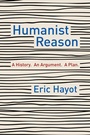
Humanist Reason
A History. An Argument. A Plan
Published on 16. February 2021
Book
Paperback/Softback
232 pages
978-0-231-19785-4 (ISBN)
Description
Ask just about any humanist, and you will hear that the humanities are in a crisis. Facing utilitarian approaches to education, the corporatization of the university, plummeting enrollments, budget cuts, and political critiques from right, left, and center, humanists find themselves on the defensive. Eric Hayot argues that it is time to make a positive case for what the humanities are and what they can become.
Hayot challenges scholars and students in the humanities to rethink and reconsider the work they do. Examining the origins of the humanist ethos in nineteenth-century Germany and tracing its philosophical roots back to Immanuel Kant, Hayot returns to the history of justifications for the humanities in order to build the groundwork for their future development. He develops the concept of "humanist reason" to understand the nature of humanist intellectual work and lays out a series of principles that undergird this core idea. Together, they constitute a provocative intellectual and practical program for a new way of thinking about the humanities, humanist thought, and their role in the university and beyond. Rather than appealing to familiar ethical or moral rationales for the importance of the humanities, Humanist Reason lays out a new vision that moves beyond traditional disciplines to demonstrate what the humanities can tell us about our world.
Hayot challenges scholars and students in the humanities to rethink and reconsider the work they do. Examining the origins of the humanist ethos in nineteenth-century Germany and tracing its philosophical roots back to Immanuel Kant, Hayot returns to the history of justifications for the humanities in order to build the groundwork for their future development. He develops the concept of "humanist reason" to understand the nature of humanist intellectual work and lays out a series of principles that undergird this core idea. Together, they constitute a provocative intellectual and practical program for a new way of thinking about the humanities, humanist thought, and their role in the university and beyond. Rather than appealing to familiar ethical or moral rationales for the importance of the humanities, Humanist Reason lays out a new vision that moves beyond traditional disciplines to demonstrate what the humanities can tell us about our world.
Reviews / Votes
Eric Hayot writes so beautifully, and with such breathless command of a central epistemological dilemma, that the book's excitement reaches well beyond the confines of German philosophy. Witty, thrilling, and even moving in the depth of its commitment, this short book is about nothing less than rethinking the university. -- William Germano, coauthor of <i>Syllabus: The Remarkable, Unremarkable Document That Changes Everything</i> In Humanist Reason, Eric Hayot brings a distinctive mix of chutzpah and erudition to bear on what have seemed to be intractable debates about the role of the humanities in public life, the organization of academic disciplines, and the future of higher education. With clarity of purpose, bravery, and admirable pragmatism, he calls not only for new thinking-but also for new action. -- Rebecca L. Walkowitz, author of <i>Born Translated: The Contemporary Novel in an Age of World Literature</i> The history of the humanities is a catalogue of grand moral claims and ethical exhortations. The humanities shape souls, form democratic citizens, reveal a common humanity. They are said to do whatever they are needed to do for any given group at any given time. With pithy prose, careful argument, and obvious excitement, Hayot casts these mythological accounts aside in order to draw our attention on the practice of humanist reason. By focusing on what humanist scholars do and not what they or their self-appointed spokespeople say they do, he reminds us that whatever consolations and succor the humanities might afford, humanities scholarship is a distinct form of reason that helps us know, understand, and care for this world and the people and objects that constitute it. This book is not another anxious apology or resentful jeremiad about the decline of the humanities. This is a confident and liberating gift that shows us how and why to practice humanist reason now. -- Chad Wellmon, coauthor of <i>Permanent Crisis: The Humanities in a Disenchanted Age</i> Humanist Reason proves that it is possible to launch a full-blown defense of the humanities that is centered not around discrete humanistic results or skills, but around what they contribute to the way in which we view and construct knowledge altogether. * 3 Quarks Daily * Students presently earning degrees in humanities and interdisciplinary studies will benefit from the situational awareness this text brings to the seemingly endless debates regarding the role of the humanities. But the book will be most useful to chairs, deans, and university leadership defending the liberal arts in the trenches. For them, Hayot's innovative reorganization of undergraduate courses of study and his 'nine articles of humanist reason' will be excellent grist for the mill. * Choice Reviews * Hayot writes with the lucidity that matches his commitment to rational debate. He bravely threads the needle where others might stay vague. * Public Books * Challenges us to think anew about what it might mean to engage in a practice overtly identified as humanist reason. * German Quarterly * This book is a clarion call for institutions to overcome the departmental and disciplinary divides that have distorted public understanding by privileging disciplines that generate laws, generalizations and data over and above those that emphasize interpretation and contextualization. * Inside Higher Ed *More details
Language
English
Place of publication
New York
United States
Target group
Professional and scholarly
Product notice
Paperback (trade)
Dimensions
Height: 229 mm
Width: 152 mm
ISBN-13
978-0-231-19785-4 (9780231197854)
Copyright in bibliographic data and cover images is held by Nielsen Book Services Limited or by the publishers or by their respective licensors: all rights reserved.
Schweitzer Classification
Other editions
Additional editions
E-Book
02/2021
1st Edition
Columbia University Press
€24.49
Available for download

Book
02/2021
Columbia University Press
€99.50
Shipment within 10-20 days
Person
Eric Hayot is distinguished professor of comparative literature and Asian studies at the Pennsylvania State University. His books include The Elements of Academic Style: Writing for the Humanities (Columbia, 2014) and On Literary Worlds (2012).
Content
Acknowledgments
Introduction
1. The Rise of Idiographism: Or the Origins of Humanist Metadiscourse
2. The Future OF Singularity: Sentimental Value After Kant
3. Articles of Reason: How Humanists Really (Ought to?) Think
4. Classrooms, Universities, Methods
Notes
Works Cited
Index
Introduction
1. The Rise of Idiographism: Or the Origins of Humanist Metadiscourse
2. The Future OF Singularity: Sentimental Value After Kant
3. Articles of Reason: How Humanists Really (Ought to?) Think
4. Classrooms, Universities, Methods
Notes
Works Cited
Index