

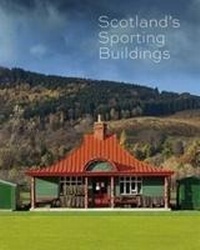
Scotland's Sporting Buildings
Published on 8. May 2014
Book
Paperback/Softback
108 pages
978-1-84917-150-2 (ISBN)
Description
In the year that Scotland plays host to the Commonwealth Games for the third time, this new book celebrates the diverse range and outstanding quality of historic purpose-built sporting architecture that exists across the country. With a focus on listed buildings - showcasing the results of a landmark, nationwide study undertaken by Historic Scotland - it charts the development of everything from sporting arenas and venues, to places where people gather to socialise after the game.
Some of the nation's earliest sporting buildings are associated with grand properties and estates. A strong link existed between the nobility and the development of recreational pursuits - going all the way back to Scotland's oldest remaining sporting structure, the royal tennis court at Falkland Palace, built in the mid sixteenth century for James V. At the same time, many of Scotland's traditional sports can be traced to more popular and anarchic gameplaying. Early versions of golf, shinty and football were typically played in kirkyards, streets and public commons in the fifteenth to eighteenth centuries. Famously, curling was played by all ranks of society, but in rural areas it was particularly popular with farmers, masons and others whose work was disrupted by hard frost and freezing temperatures.
Athletics, bowling, cricket, curling, football, golf, Highland games, horse-racing, swimming and tennis are just some of the sports that saw a huge groundswell of popular interest and participation in the late nineteenth century, accompanied by feverish building of stadia, grandstands, clubhouses, pavilions, huts and swimming pools. Using stunning photography Scotland's Sporting Buildings brings the special interest of these sites and structures to life for the first time in a fascinating and accessible guide.
Some of the nation's earliest sporting buildings are associated with grand properties and estates. A strong link existed between the nobility and the development of recreational pursuits - going all the way back to Scotland's oldest remaining sporting structure, the royal tennis court at Falkland Palace, built in the mid sixteenth century for James V. At the same time, many of Scotland's traditional sports can be traced to more popular and anarchic gameplaying. Early versions of golf, shinty and football were typically played in kirkyards, streets and public commons in the fifteenth to eighteenth centuries. Famously, curling was played by all ranks of society, but in rural areas it was particularly popular with farmers, masons and others whose work was disrupted by hard frost and freezing temperatures.
Athletics, bowling, cricket, curling, football, golf, Highland games, horse-racing, swimming and tennis are just some of the sports that saw a huge groundswell of popular interest and participation in the late nineteenth century, accompanied by feverish building of stadia, grandstands, clubhouses, pavilions, huts and swimming pools. Using stunning photography Scotland's Sporting Buildings brings the special interest of these sites and structures to life for the first time in a fascinating and accessible guide.
More details
Language
English
Place of publication
Edinburgh
United Kingdom
Illustrations
illustrations (chiefly colour, some black and white), 2 plans (1 colour, 1 black and white), 1 portrait (black and white)
Dimensions
Height: 217 mm
Width: 269 mm
Thickness: 11 mm
Weight
526 gr
ISBN-13
978-1-84917-150-2 (9781849171502)
Copyright in bibliographic data and cover images is held by Nielsen Book Services Limited or by the publishers or by their respective licensors: all rights reserved.
Schweitzer Classification
Person
Nick Haynes is an architectural historian and historic buildings consultant. In 2011 he was the winner of the Yale Pevsner 60th Anniversary Photographic Competition, and he has previously authored Building Knowledge: An Architectural History of the University of Glasgow and Perth and Kinross: An Illustrated Architectural Guide.