


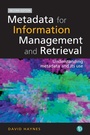
Metadata for Information Management and Retrieval
1st Edition
Published on 15. June 2004
Book
Hardback
200 pages
978-1-85604-489-9 (ISBN)
Description
Readership: This book will be essential reading for network-oriented librarians and information workers in all sectors and for LIS students. In addition, it will provide useful background reading for computer staff supporting information services. Publishers, policy makers and practitioners in other curatorial traditions such as museums work or archiving will also find much of relevance.
What is metadata and what do I need to know about it? These are two key questions for the information professional operating in the digital age as more and more information resources are available in electronic format. This is a thought-provoking introduction to metadata written by one of its leading advocates. It assesses the current theory and practice of metadata and examines key developments - including global initiatives and multilingual issues - in terms of both policy and technology.
Subjects discussed include:
What is metadata? definitions and concepts
Retrieval environments: web; library catalogues; documents and records management; GIS; e-Learning
Using metadata to enhance retrieval: pointing to content; subject retrieval; language control and indexing
Information management issues: interoperability; information security; authority control; authentication and legal admissibility of evidence; records management and document lifecycle; preservation issues
Application of metadata to information management: document and records management; content management systems for the internet
Managing metadata: how to develop a schema
Standards development: Dublin Core; UK Government metadata standards (eGIF); IFLA FRBR Model for cataloguing resources
Looking forward: the semantic web; the Web Ontology Working Group.
What is metadata and what do I need to know about it? These are two key questions for the information professional operating in the digital age as more and more information resources are available in electronic format. This is a thought-provoking introduction to metadata written by one of its leading advocates. It assesses the current theory and practice of metadata and examines key developments - including global initiatives and multilingual issues - in terms of both policy and technology.
Subjects discussed include:
What is metadata? definitions and concepts
Retrieval environments: web; library catalogues; documents and records management; GIS; e-Learning
Using metadata to enhance retrieval: pointing to content; subject retrieval; language control and indexing
Information management issues: interoperability; information security; authority control; authentication and legal admissibility of evidence; records management and document lifecycle; preservation issues
Application of metadata to information management: document and records management; content management systems for the internet
Managing metadata: how to develop a schema
Standards development: Dublin Core; UK Government metadata standards (eGIF); IFLA FRBR Model for cataloguing resources
Looking forward: the semantic web; the Web Ontology Working Group.
More details
Other editions
New editions
Book
01/2018
2nd Edition
Facet Publishing
€100.47
Shipment within 3-4 weeks
Person
David Haynes is a visiting lecturer on the Library and Information Science programme at City University London.
Content
1. Introduction 2. Describing and expressing metadata 3. Standards and data models 4. Purpose i: Resource description 5. Purpose ii: Information retrieval 6. Purpose iii: Management of information 7. Purpose iv: Rights management, ownership and authenticity 8. Purpose v: Interoperability and e-commerce 9. Managing metadata 10. Looking forward - the future