

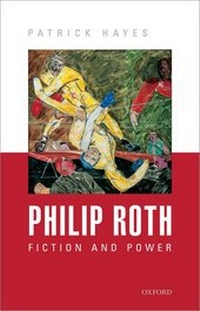
Philip Roth
Fiction and Power
Published on 19. June 2014
Book
Hardback
260 pages
978-0-19-968912-5 (ISBN)
Description
When we try to find words to express our most visceral and primary responses to literature, we are often inclined to speak of its power. But in academic contexts, that intuitive feeling for the vividness, energy, and special intensity of literary experience is all too often subdued, and exchanged for a supposedly more sophisticated discussion of its ethical or political significance. Philip Roth has long thumbed his nose at the 'virtue racket', as one of his characters called it, and his fiction has repeatedly satirised the moralistic idiom that tends to rule the public discussion of literature. In doing so he has earned the disapproval of an unusually wide range of university teachers and intellectuals. Philip Roth: Fiction and Power argues that Roth's importance derives precisely from his revaluation of what counts as sophisticated and serious in our response to literature. As well as examining how Roth emerged as a writer, and defining the main lines of influence on him, the book measures his impact on the dominant ways of thinking about literary value in post-war America. Attention is given to particular questions: about the place of emotion and affective experience, the nature and value of tragedy, the relevance of art to life, the relationship between literature and the unconscious, the concept of the author, the idea of a literary canon, and the ways that fiction illuminates America's complex post-war history. The book will be of importance to readers of modern American literature, and indeed to anyone interested in why literature matters.
Reviews / Votes
Hayes makes a persuasive case ... a highly successful book. Hayes's argument is grounded in compelling and perceptive close readings of Roth's work ... Philip Roth: Fiction and Power remains one of the most exciting works on Roth to appear in recent years, suggesting fruitful directions for how we might read a career as lengthy and complicated as Roth's. More broadly, the book illustrates how Roth's long engagement with the function of literature remains particularly valuable as we continue to speculate on how and why we read fiction. * Matthew Shipe, Review of English Studies * In his account of Roth's allies and adversaries, Hayes leaves few stones unturned. The study incorporates a staggering scope and mixture of influences ... The close readings are generous, perceptive, and strong ... a rich and interrogative study that will surely make an impact both within and outside of Roth scholarship. * Ola Joensson, Studia Neophilologica * Philip Roth: Fiction and Power offers a wealth of complex readings across Roth's entire oeuvre. It also shows an illuminating view on this prominent author's intricate creative and intellectual process by tracing the genesis of his work through the use of archival material. Hayes makes a timely, insightful, and compelling contribution to existing criticism on Roth, but he also adds to theoretical discourses about aesthetic and ethical dimensions in literature, such that not only scholars interested in Roth but also others will find this book useful. * Melissa Schuha, Textual Practice *More details
Language
English
Place of publication
Oxford
United Kingdom
Target group
College/higher education
Dimensions
Height: 222 mm
Width: 151 mm
Thickness: 26 mm
Weight
456 gr
ISBN-13
978-0-19-968912-5 (9780199689125)
Copyright in bibliographic data and cover images is held by Nielsen Book Services Limited or by the publishers or by their respective licensors: all rights reserved.
Schweitzer Classification
Other editions
Additional editions
E-Book
06/2014
1st Edition
OUP eBook
€66.49
Available for download
Person
Patrick Hayes is Associate Professor of English Literature at the University of Oxford, and a Fellow of St John's College. His previous work includes J.M. Coetzee and the Novel: Writing and Politics After Beckett (2010).
Content
1. Philip Roth and Ethics Talk ; 2. Beginnings, (Goodbye, Columbus) ; 3. Tragedy, (Letting Go, My Life as a Man, Sabbath's Theater) ; 4. Experience, (Portnoy's Complaint, American Pastoral) ; 5. Life as Literature, (The Counterlife, Deception, The Humbling) ; 6. The Author, (The Ghost Writer) ; 7. The Unconscious, (Operation Shylock, The Plot Against America) ; 8. The Canon, (The Human Stain)