

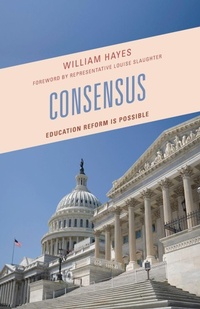
Consensus
Education Reform Is Possible
Published on 1. July 2013
Book
Paperback/Softback
176 pages
978-1-61048-840-2 (ISBN)
Description
As we consider the current status of educational reform, it is clear that the United States lacks a clear vision as to how to improve our schools. In the recent past, we have been able to gain support for ideas such as the need for special education programs, free and reduced lunches, pre-school programs, and equal educational opportunities for both boys and girls. While programs such as these were possible because of a national consensus, our challenge today is to agree on the way to move forward. Although it is most obvious in our inability to act on No Child Left Behind, the failure to define a common vision is true of many other issues in the field of education. Without an agreed-upon vision which includes the support of those working in our schools, true reform will be extremely difficult. The purpose of this book is to help the reader understand our differences and to suggest a way that we can reach a consensus on education reform.
Reviews / Votes
This "spot on" work by Professor Hayes offers a thorough analysis of the views on educational reform of the politicians on both sides of the aisle. The book will help readers to better understand the complexity of issues facing our schools and colleges as they attempt reform. Equally important, it offers a plan for moving forward to improve our current programs. Anyone concerned with the future of education should consider this a "must read." -- John Walker Professor Hayes clearly describes the dilemmas that school districts in this country are dealing with as a result of failing to reauthorize No Child Left Behind. As an administrator working in the area of Special Education, the new initiatives, Common Core State Standards, and standardized assessments do not take into consideration that one size does not fit all. The objectives that Professor Hayes outlines are a tall order for our government at both the federal and state level, but he does offer a way forward. Our national leadership would be well advised to read this book as it will help readers to see that educational reform is indeed possible! -- Dr. Donna M. Moscicki, Director of Special Education, Byron-Bergen Central School, NY A must read for educators and politicians alike. Professor Bill Hayes leaves no stone uncovered as he masterfully analyzes the topic of education reform from both liberal and conservative perspectives. His well-researched work transcends the traditional historical rhetoric used to either defend or refute educational reform at the highest levels of government by actually proposing a common sense solution to the topic of educational reform -- that being the adoption of a logical bipartisan consensus approach to the myriad of current pressing educational issues we face in America. -- Dr. Joseph D. Scanlan, Principal, Notre Dame High School, Batavia, NYMore details
Language
English
Place of publication
United States
Publishing group
Bloomsbury Publishing Plc
Dimensions
Height: 260 mm
Width: 168 mm
Thickness: 10 mm
Weight
332 gr
ISBN-13
978-1-61048-840-2 (9781610488402)
Copyright in bibliographic data and cover images is held by Nielsen Book Services Limited or by the publishers or by their respective licensors: all rights reserved.
Schweitzer Classification
Other editions
Additional editions
E-Book
07/2013
1st Edition
Rowman & Littlefield Education
€40.49
Available for download
Person
William Hayes has been a high school social studies teacher, assistant principal, high school principal, superintendent of schools, adjunct professor, associate professor, and chairman of the Teacher Education Division at Roberts Wesleyan College in Rochester, NY. He is the father of three children and the grandfather of two.
Content
Foreword
Acknowledgment
Introduction
1 Setting the Scene
2 No Child Left Behind: An Attempt at Consensus
3 The Positive Aspects of No Child Left Behind
4 The Criticisms of No Child Left Behind
5 The Obama Blueprint for Reform
6 The Long, Frustrating Struggle to Reauthorize
7 The Primary Season
8 The Waiver Program
9 The Election Campaign
10 Critics of the Current Educational Reform Initiative
11 Other Factors Affecting School Success
12 Other Countries as Models for Education Reform
13 The Problems of Higher Education
14 The Home Stretch of the Campaign
15 Reaching a Consensus
Index
About the Author
Acknowledgment
Introduction
1 Setting the Scene
2 No Child Left Behind: An Attempt at Consensus
3 The Positive Aspects of No Child Left Behind
4 The Criticisms of No Child Left Behind
5 The Obama Blueprint for Reform
6 The Long, Frustrating Struggle to Reauthorize
7 The Primary Season
8 The Waiver Program
9 The Election Campaign
10 Critics of the Current Educational Reform Initiative
11 Other Factors Affecting School Success
12 Other Countries as Models for Education Reform
13 The Problems of Higher Education
14 The Home Stretch of the Campaign
15 Reaching a Consensus
Index
About the Author