

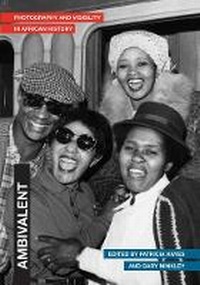
Ambivalent
Photography and Visibility in African History
Published on 12. November 2019
Book
Hardback
376 pages
978-0-8214-2393-6 (ISBN)
Description
Going beyond photography as an isolated medium to engage larger questions and interlocking forms of expression and historical analysis, Ambivalent gathers a new generation of scholars based on the continent to offer an expansive frame for thinking about questions of photography and visibility in Africa. The volume presents African relationships with photography-and with visibility more generally-in ways that engage and disrupt the easy categories and genres that have characterized the field to date. Contributors pose new questions concerning the instability of the identity photograph in South Africa; ethnographic photographs as potential history; humanitarian discourse from the perspective of photographic survivors of atrocity photojournalism; the nuanced passage from studio to screen in postcolonial digital portraiture; and the burgeoning visual activism in West Africa.
As the contributors show, photography is itself a historical subject: it involves arrangement, financing, posture, positioning, and other kinds of work that are otherwise invisible. By moving us outside the frame of the photograph itself, by refusing to accept the photograph as the last word, this book makes photography an engaging and important subject of historical investigation. Ambivalent's contributors bring photography into conversation with orality, travel writing, ritual, psychoanalysis, and politics, with new approaches to questions of race, time, and postcolonial and decolonial histories.
Contributors: George Emeka Agbo, Isabelle de Rezende, Jung Ran Forte, Ingrid Masondo, Phindi Mnyaka, Okechukwu Nwafor, Vilho Shigwedha, Napandulwe Shiweda, Drew Thompson
As the contributors show, photography is itself a historical subject: it involves arrangement, financing, posture, positioning, and other kinds of work that are otherwise invisible. By moving us outside the frame of the photograph itself, by refusing to accept the photograph as the last word, this book makes photography an engaging and important subject of historical investigation. Ambivalent's contributors bring photography into conversation with orality, travel writing, ritual, psychoanalysis, and politics, with new approaches to questions of race, time, and postcolonial and decolonial histories.
Contributors: George Emeka Agbo, Isabelle de Rezende, Jung Ran Forte, Ingrid Masondo, Phindi Mnyaka, Okechukwu Nwafor, Vilho Shigwedha, Napandulwe Shiweda, Drew Thompson
Reviews / Votes
"Ambivalent develops a powerful and coherent set of arguments about the inherent ambiguities of photographs and photographic interpretations, in both colonial and post-colonial settings. These arguments are especially impressive in the ways in which they both draw on 'classic' photographic theory and engage with contemporary debates in the field of African visual studies, unsettling received wisdoms about African histories, governance, and 'modern' personhood." - Richard Vokes, University of Western Australia "Scholars interested in further understanding the ways in which photography can be used as a historical source will be inspired and motivated by the diversity of approaches within this book. While this volume is not necessarily a handbook for beginning scholars, its significance, nonetheless, lies in its critical approach and in the new questions it raises regarding the theorization of visibility, photography, and African History." (H/Soz/Kult)More details
Series
Language
English
Place of publication
Athens
United States
Target group
Professional and scholarly
Product notice
Paper over boards
Dimensions
Height: 254 mm
Width: 178 mm
ISBN-13
978-0-8214-2393-6 (9780821423936)
Copyright in bibliographic data and cover images is held by Nielsen Book Services Limited or by the publishers or by their respective licensors: all rights reserved.
Schweitzer Classification
Persons
Patricia Hayes is National Research Foundation SARChI (South African Research Chairs Initiative) Chair in Visual History and Theory at the Centre for Humanities Research, University of the Western Cape in South Africa. She has published extensively on colonial and documentary photography in southern Africa.
Gary Minkley is National Research Foundation SARChI (South African Research Chairs Initiative) Chair in Social Change in the History Department at the University of Fort Hare in South Africa. Recent publications include the coauthored Unsettled History: Making South African Public Pasts.
Gary Minkley is National Research Foundation SARChI (South African Research Chairs Initiative) Chair in Social Change in the History Department at the University of Fort Hare in South Africa. Recent publications include the coauthored Unsettled History: Making South African Public Pasts.
Content
List of Illustrations
Acknowledgments
Introduction Africa and the Ambivalence of Seeing (patricia hayes and gary minkley)
PART 1 UNFIXING RACE AND VISUALITY: THE COLONIAL TEMPORARY
Chapter 1 Ambivalent Mediations: Photographic Desire, Anxiety, and Knowledge in Nineteenth-Century Central Africa (isabelle de rezende)
Chapter 2 Empty Photographs: Ethnography and the Lacunae of African History (patricia hayes)
Chapter 3 Unstable Forms
Photography, Race, and the Identity Document in South Africa (ingrid masondo)
Chapter 4 The Pass Photograph and the Intimate Photographic Event in South Africa (gary minkley)
Chapter 5 Photographic Genres and Alternate Histories of Independence in Mozambique (drew thompson)
Chapter 6 Photography, Mass Violence, and Survivors: The Cassinga Massacre of 1978 (vilho shigwedha)
PART 2 OSCILLATIONS: SURFACES AND DEPTHS
Chapter 7 Images of Ambivalence: Photography in the Making of Omhedi, Northern Namibia (napandulwe shiweda)
Chapter 8 The Profane and the Prophetic at a South African Beach (phindi mnyaka)
Chapter 9 Photographing Aso. Ebi Of Surfacism and Digitality (okechukwu nwafor)
Chapter 10 Boko Haram Insurgency and a New Mode of War in Nigeria (george emeka agbo)
Chapter 11 Mirrors and Waters: the Practice and the Visual in Beninese Mami Wata Cults (jung ran forte)
An Expanded Milieu
Selected Bibliography
Contributors
Index
Acknowledgments
Introduction Africa and the Ambivalence of Seeing (patricia hayes and gary minkley)
PART 1 UNFIXING RACE AND VISUALITY: THE COLONIAL TEMPORARY
Chapter 1 Ambivalent Mediations: Photographic Desire, Anxiety, and Knowledge in Nineteenth-Century Central Africa (isabelle de rezende)
Chapter 2 Empty Photographs: Ethnography and the Lacunae of African History (patricia hayes)
Chapter 3 Unstable Forms
Photography, Race, and the Identity Document in South Africa (ingrid masondo)
Chapter 4 The Pass Photograph and the Intimate Photographic Event in South Africa (gary minkley)
Chapter 5 Photographic Genres and Alternate Histories of Independence in Mozambique (drew thompson)
Chapter 6 Photography, Mass Violence, and Survivors: The Cassinga Massacre of 1978 (vilho shigwedha)
PART 2 OSCILLATIONS: SURFACES AND DEPTHS
Chapter 7 Images of Ambivalence: Photography in the Making of Omhedi, Northern Namibia (napandulwe shiweda)
Chapter 8 The Profane and the Prophetic at a South African Beach (phindi mnyaka)
Chapter 9 Photographing Aso. Ebi Of Surfacism and Digitality (okechukwu nwafor)
Chapter 10 Boko Haram Insurgency and a New Mode of War in Nigeria (george emeka agbo)
Chapter 11 Mirrors and Waters: the Practice and the Visual in Beninese Mami Wata Cults (jung ran forte)
An Expanded Milieu
Selected Bibliography
Contributors
Index