

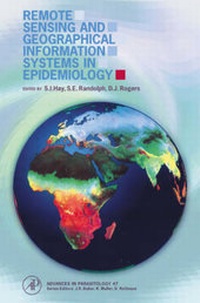
Remote Sensing and Geographical Information Systems in Epidemiology: Volume 47
Published on 25. August 2000
Book
Paperback/Softback
357 pages
978-0-12-333560-9 (ISBN)
Description
Global problems require global information, which satellites can now provide. With ever more sophisticated control methods being developed for infectious diseases, our ability to map spatial and temporal variation in risk is more important than ever. Only then may we plan control campaigns and deliver novel interventions and remedies where the need is greatest, and sustainable success is most likely. This book presents a comprehensive guide to using the very latest methods of surveillance from satellites, including analysing spatial data within geographical information systems, interpreting complex biological patterns, and predicting risk both today and as it may change in the future. Of all infectious disease systems, those that involve free-living invertebrate vectors or intermediate hosts are most susceptible to changing environmental conditions, and have hitherto received most attention from the marriage of analytical biology with this new space technology. Accordingly, this volume presents detailed case studies on malaria, African trypanosomiasis (sleeping sickness), tick-borne infections and helminths (worms). For those who are unfamiliar with this science, and unsure how to start, the book ends with a chapter of practical advice on where to seek hands-on instruction. The lessons to be learned from these studies are applicable to many other epidemiological and ecological problems that face us today, most significantly the preservation of the world's biodiversity.
More details
Series
Language
English
Place of publication
San Diego
United States
Publishing group
Elsevier Science Publishing Co Inc
Target group
Professional and scholarly
Research level epidemiologists, parasitologists, infectious disease researchers, public health, tropical medicine, ecology, remote sensing, geodesy. Global/government organizations, eg. world health organization
Dimensions
Height: 229 mm
Width: 152 mm
Weight
690 gr
ISBN-13
978-0-12-333560-9 (9780123335609)
Copyright in bibliographic data and cover images is held by Nielsen Book Services Limited or by the publishers or by their respective licensors: all rights reserved.
Schweitzer Classification
Persons
Professor David Rollinson is a Merit Research Scientist at the Natural History Museum in London, where he leads a research team in the Wolfson Wellcome Biomedical Laboratories and directs the WHO Collaborating Centre for schistosomiasis. He has had a long fascination with parasites and the diseases that they cause, this has involved him in many overseas projects especially in Africa. He is on the WHO Expert Advisory Panel of parasitic diseases, the editor of Advances in Parasitology and a former President of the World Federation of Parasitologists. His research group uses a multidisciplinary approach, which combines detailed molecular studies in the laboratory with ongoing collaborative studies in endemic areas of disease, to explore the intriguing world of parasites in order to help control and eliminate parasitic diseases. David F. Rogers, Ph.D., is the author of two computer graphics classics, Mathematical Elements for Computer Graphics and Procedural Elements for Computer Graphics, as well as works on fluid dynamics. His early research on the use of B-splines and NURBS for dynamic manipulation of ship hull surfaces led to significant commercial and scientific advances in a number of fields. Founder and former director of the Computer Aided Design/Interactive Graphics Group at the U.S. Naval Academy, Dr. Rogers was an original member of the USNA's Aerospace Engineering Department. He sits on the editorial boards of The Visual Computer and Computer Aided Design and serves on committees for SIGGRAPH, Computer Graphics International, and other conferences.