

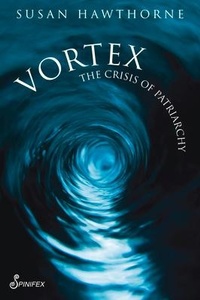
Vortex
The Crisis of Patriarchy
Published on 11. January 2020
Book
Paperback/Softback
30 pages
978-1-925950-16-8 (ISBN)
Description
Do we want to live in a world without birdsong? The pesticides, the coal mines, the clear-felling forestry industry, the industrial farmers are destroying the earth with their insistence on profit. But what point is profit on a dead and silent planet?
In this enlightening yet devastating book, Susan Hawthorne writes with clarity and incisiveness on how patriarchy is wreaking destruction on the planet and on communities. The twin mantras of globalisation and growth expounded by the neoliberalism that has hijacked the planet are revealed in all their shabby deception.
Backed by meticulous research, the author shows how so-called advances in technology are, like a Trojan horse, used to mask sinister political agendas that sacrifice the common good for the shallow profiteering of corporations and mega-rich individuals.
The biotechnologists see the lure of cure, rising share prices and profits.
She details how women, lesbians, people with disabilities, Indigenous peoples, the poor, refugees and the very earth itself are being damaged by the crisis of patriarchy that is sucking everyone into its vortex. Importantly, this precise and insightful volume also shows what is needed to get ourselves out of this spiral of destruction: a radical feminist approach with compassion and empathy at its core.
Shame is an emotion of the powerless because they cannot change the rules.
The book shows a way out of the vortex: it is now up to the collective imagination and action of people everywhere to take up the challenges Susan Hawthorne shows are needed.
This is a vital book for a world in crisis and should be read by everyone who cares about our future.
In this enlightening yet devastating book, Susan Hawthorne writes with clarity and incisiveness on how patriarchy is wreaking destruction on the planet and on communities. The twin mantras of globalisation and growth expounded by the neoliberalism that has hijacked the planet are revealed in all their shabby deception.
Backed by meticulous research, the author shows how so-called advances in technology are, like a Trojan horse, used to mask sinister political agendas that sacrifice the common good for the shallow profiteering of corporations and mega-rich individuals.
The biotechnologists see the lure of cure, rising share prices and profits.
She details how women, lesbians, people with disabilities, Indigenous peoples, the poor, refugees and the very earth itself are being damaged by the crisis of patriarchy that is sucking everyone into its vortex. Importantly, this precise and insightful volume also shows what is needed to get ourselves out of this spiral of destruction: a radical feminist approach with compassion and empathy at its core.
Shame is an emotion of the powerless because they cannot change the rules.
The book shows a way out of the vortex: it is now up to the collective imagination and action of people everywhere to take up the challenges Susan Hawthorne shows are needed.
This is a vital book for a world in crisis and should be read by everyone who cares about our future.
More details
Language
English
Place of publication
Australia
Product notice
Paperback (trade)
Unsewn / adhesive bound
Dimensions
Height: 226 mm
Width: 152 mm
Thickness: 18 mm
Weight
417 gr
ISBN-13
978-1-925950-16-8 (9781925950168)
Copyright in bibliographic data and cover images is held by Nielsen Book Services Limited or by the publishers or by their respective licensors: all rights reserved.
Schweitzer Classification
Other editions
Additional editions
E-Book
11/2020
Spinifex Press
€18.49
Available for download
Person
Susan Hawthorne joined the Women's Liberation Movement in 1973. She quickly volunteered at Melbourne's Rape Crisis Centre and was active in student politics. She has organised writers' festivals, been an aerialist in two women's circuses and written on topics as diverse as war, friendship with animals, and mythic traditions. She writes non-fiction, fiction and poetry and her books have been translated into multiple languages. She has taught English to Arabic-speaking women, worked in Aboriginal education and had teaching roles across a number of subject areas in universities including Philosophy, Women's Studies, Literature, Publishing Studies and Creative Writing. She is Adjunct Professor in the School of Humanities at James Cook University, Townsville. She has won awards in writing, publishing, the gay and lesbian community and in 2017 was winner of the Penguin Random House Best Achievement in Writing in the Inspire Awards for her work increasing people's awareness of disability.
Content
Preface: The Year of the Pandemic
Introduction
A note on truth
A note on words
Key terms in this book
Chapter One: The Crisis of Economics: Patriarchal Wars against People and the Planet
Appropriation of politics
How has criticism of globalisation shifted sides?
The speeding vortex: every failure is a new business opportunity
Understanding neoliberalism
Resistance
Markets, work and the Universal Basic Income
Chapter Two: Less Than Perfect: Medical Wars against People with Disabilities
Feminism
Ruling classes
Infantilisation
Colonisation
Harm minimisation
Normalisation
Erasure
The technology of bodies
Money
The personal is political
Chapter Three: Feminist Cassandras: Men's Patriotic Wars against Women's Intimate Lives
War and the institution of heterosexuality intersect
War and masculinity, torture and heterosexuality
Intimacy and war
To counter war is to counter the militarism embedded in daily life
Postmodern war
Money
What would it take for a woman to be free of injury and to live without fear for her safety?
Chapter Four: Biocolonialism and Bioprospecting: Wars against Indigenous Peoples and Women
What is bioprospecting?
What is biopiracy?
Biopiracy of earth-based resources
Biopiracy and value
Biopiracy of body-based resources
Separation
Microcolonialism of Indigenous bodies
Gynocolonialism
Bodies with disabilities
Heterocolonialism
Intergenerational sustainability and cultural integrity
Money
What practices and laws can be implemented to prevent knowledge theft and biocolonialism?
Chapter Five: Deterritoriality and Breaking the Spirit: Land, Refugees and Trauma
Being homeless in the body
Dispossession
Land as relationship
Land as relationship in prehistory
Trauma
Refusing refugees
Money
What systems could be put in place to end planetary theft?
Chapter Six: Colonisation, Erasure and Torture: Wars against Lesbians
Globalisation
The politics of shame
The phallus and the penis
Origins of patriarchy and violence against lesbians
Nationalism and exile
Global recolonisation
Lesbian refugees
Money
Guidelines for officials interviewing lesbian refugees
Chapter Seven:Breaking the Spirit of the Women's Liberation Movement: The War against Biology
Trans v cis
Trans vs intersex
Trans vs lesbian
Trans vs women
Women's Circus
Oppression
Postmodernism and queer theory
Silence
Trauma
Hatred and shame
Breaking the spirit
Theft of a future and a past
Commodification
Strategies used by the trans lobby
Violence against trans people
Institutionalising trans laws
Money for astroturfing and transgender causes
Why sexual orientation not gender identity?
Chapter Eight:Breaking the Spirit of the Planet: Climate Catastrophe
Breaking the spirit of the planet
Temperate zone: bushfires
Dry zone: drought and water wars
Wet zone: coral death, cyclones, floods
Money
Breaking the heart of the planet
Chapter Nine: Sovereignty and the Spirit of Nature
Uncultivated
Sovereignty
Introduction
A note on truth
A note on words
Key terms in this book
Chapter One: The Crisis of Economics: Patriarchal Wars against People and the Planet
Appropriation of politics
How has criticism of globalisation shifted sides?
The speeding vortex: every failure is a new business opportunity
Understanding neoliberalism
Resistance
Markets, work and the Universal Basic Income
Chapter Two: Less Than Perfect: Medical Wars against People with Disabilities
Feminism
Ruling classes
Infantilisation
Colonisation
Harm minimisation
Normalisation
Erasure
The technology of bodies
Money
The personal is political
Chapter Three: Feminist Cassandras: Men's Patriotic Wars against Women's Intimate Lives
War and the institution of heterosexuality intersect
War and masculinity, torture and heterosexuality
Intimacy and war
To counter war is to counter the militarism embedded in daily life
Postmodern war
Money
What would it take for a woman to be free of injury and to live without fear for her safety?
Chapter Four: Biocolonialism and Bioprospecting: Wars against Indigenous Peoples and Women
What is bioprospecting?
What is biopiracy?
Biopiracy of earth-based resources
Biopiracy and value
Biopiracy of body-based resources
Separation
Microcolonialism of Indigenous bodies
Gynocolonialism
Bodies with disabilities
Heterocolonialism
Intergenerational sustainability and cultural integrity
Money
What practices and laws can be implemented to prevent knowledge theft and biocolonialism?
Chapter Five: Deterritoriality and Breaking the Spirit: Land, Refugees and Trauma
Being homeless in the body
Dispossession
Land as relationship
Land as relationship in prehistory
Trauma
Refusing refugees
Money
What systems could be put in place to end planetary theft?
Chapter Six: Colonisation, Erasure and Torture: Wars against Lesbians
Globalisation
The politics of shame
The phallus and the penis
Origins of patriarchy and violence against lesbians
Nationalism and exile
Global recolonisation
Lesbian refugees
Money
Guidelines for officials interviewing lesbian refugees
Chapter Seven:Breaking the Spirit of the Women's Liberation Movement: The War against Biology
Trans v cis
Trans vs intersex
Trans vs lesbian
Trans vs women
Women's Circus
Oppression
Postmodernism and queer theory
Silence
Trauma
Hatred and shame
Breaking the spirit
Theft of a future and a past
Commodification
Strategies used by the trans lobby
Violence against trans people
Institutionalising trans laws
Money for astroturfing and transgender causes
Why sexual orientation not gender identity?
Chapter Eight:Breaking the Spirit of the Planet: Climate Catastrophe
Breaking the spirit of the planet
Temperate zone: bushfires
Dry zone: drought and water wars
Wet zone: coral death, cyclones, floods
Money
Breaking the heart of the planet
Chapter Nine: Sovereignty and the Spirit of Nature
Uncultivated
Sovereignty