

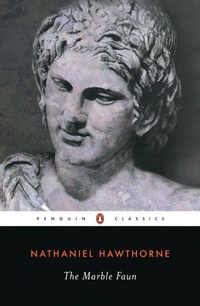
The Marble Faun
or, The Romance of Monte Beni
Published on 1. November 1990
Book
Paperback/Softback
528 pages
978-0-14-039077-3 (ISBN)
Description
Hawthorne's novel of Americans abroad, the first novel to explore the influence of European cultural ideas on American morality. Although it is set in Rome, the fictive world of The Marble Faun depends not on Italy's social or historical significance, but rather on its aesthetic importance as a definer of 'civilization'. As in The Scarlet Letter, Hawthorne is concerned here with the nature of transgression and guilt. A murder, motivated by love, affects not only Donatello, the murderer, but his beloved Miriam and their friends Hilda and Kenyon. As he explores the reactions of each to the crime, Hawthorne dramatizes both the freedoms a new cultural model inspires and the self-censoring conformities it requires. His examination of the influence of European culture on American travellers lay the groundwork for such later works of American fiction as Mark Twain's The Innocents Abroad and Henry James' The Portrait of a Lady.
Reviews / Votes
"Describ[es] Rome and Italian scenes as few others have." -Anthony TrollopeMore details
Language
English
Place of publication
London
United Kingdom
Product notice
Paperback (trade)
Dimensions
Height: 197 mm
Width: 129 mm
Thickness: 29 mm
Weight
552 gr
ISBN-13
978-0-14-039077-3 (9780140390773)
Copyright in bibliographic data and cover images is held by Nielsen Book Services Limited or by the publishers or by their respective licensors: all rights reserved.
Schweitzer Classification
Other editions
Additional editions
E-Book
11/1990
Penguin Classics
€12.49
Available for download
Previous edition

Nathaniel Hawthorne
The Marble Faun
Book
12/1961
Penguin Books Ltd
€23.66
Article exhausted; check for reprint
Persons
Nathaniel Hawthorne was born on July 4, 1804, in Salem, Massachusetts, the son and grandson of proud New England seafarers. He lived in genteel poverty with his widowed mother and two young sisters in a house filled with Puritan ideals and family pride in a prosperous past. His boyhood was, in most respects, pleasant and normal. In 1825 he was graduated from Bowdoin College, Brunswick, Maine, and he returned to Salem determined to become a writer of short stories. For the next twelve years he was plagued with unhappiness and self-doubts as he struggled to master his craft. He finally secured some small measure of success with the publication of his Twice-Told Tales (1837). His marriage to Sophia Peabody in 1842 was a happy one. The Scarlet Letter (1850), which brought him immediate recognition, was followed by The House of the Seven Gables (1851). After serving four years as the American Consul in Liverpool, England, he traveled in Italy; he returned home to Massachusetts in 1860. Depressed, weary of writing, and failing in health, he died on May 19, 1864, at Plymouth, New Hampshire.