

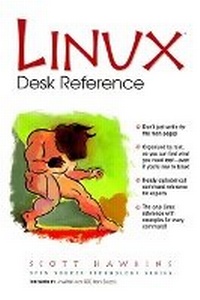
Linux Desk Reference
Published on 5. January 2000
Book
Paperback/Softback
545 pages
978-0-13-016391-2 (ISBN)
Description
This Linux command reference will be published in the new Open Source series. Designed for power users, developers, and sys admins, it will provide a user-friendly guide to the Linux operating system. All commands will be listed alphabetically by functional area, so all file structure commands will be grouped, all networking commands grouped, etc. This is ideal for beginners who can locate commands based on the tasks they are trying to accomplish. In addition, a "roadmap" which lists all commands by alpha at the front of the book is ideal for more advanced users who know the command name and simply need to know a page number. Another feature will be a guide to interpreting Linux's confusing command output, what you see after you execute an initial command.
More details
Language
English
Place of publication
Upper Saddle River
United States
Publishing group
Pearson Education (US)
Target group
College/higher education
Dimensions
Height: 229 mm
Width: 154 mm
Thickness: 22 mm
Weight
676 gr
ISBN-13
978-0-13-016391-2 (9780130163912)
Copyright in bibliographic data and cover images is held by Nielsen Book Services Limited or by the publishers or by their respective licensors: all rights reserved.
Schweitzer Classification
Other editions
New editions
Scott Hawkins
Linux Desk Reference
Book
09/2001
2nd Edition
Prentice Hall
€27.22
Article is exhausted; no reprint
Person
Scott Hawkins has been a Linux user since 1992. He is a developer for Glenayre, Inc., and resides in Braselton, GA.
Content
1. Documentation.
apropos, info, locate, man, makewhatis, manpath, updatedb, whatis, whereis.
I. SYSTEM STRUCTURES.
2. Files.
chgrp, chmod, chown, cksum, cp, dd, file, install, ln lockfile, ls, lsattr, mv, pathchk, rm, stat, sum, symlinks, touch.
3. Process.
&, ^Z, bg, fg, fuser, jobs, kill, killall, nice, nohup, pidof, ps, pstree, renice, top.
4. Standard Input, Output and Error.
>, <, 2>, >>, |, tee, script, xargs.
5. Directories.
cd, mkdir, pwd, rmdir, symlinks.
6. Users.
chfn, chpasswd, finger, groupmod, grpck, id, passwd, pwck, su, useradd, userdel, usermod, users, who.
7. Paths.
basename, dirname, namei, pathchk.
8. The bash Shell.
Invoking bash, Startup Files, Aliases, Command History, Command Completion, Command Line Editing, Word Designators, Shell Variables, Shell Prompt, Shell Arithmetic, Looping Statements, Conditional Statements, Shell Functions, Builtins.
9. Terminal & Keyboard.
captoinfo, clear, dumpkeys, getkeycodes, getty, infocmp, loadkeys, login, setterm, stty, tic, tput, tset.
10. Disks.
badblocks, cfdisk, du, fdformat, fdisk, quota, setfdprm.
11. Filesystems.
debugfs, df, dumpe2fs, e2fsck, fsck, fsck.minix, fuser, lsattr, lsof, mke2fs, mkfs, mkfs.minix, mklost+found, mkswap, mount, rdev, swapoff, swapon, sync, tune2fs, umount.
12. Printers & Print Queues.
lpc, lpd, lpq, lpr, lprm, pr, tunelp.
13. Daemons.
fingerd, ftpd, gated, gdc, identd, imapd, inetd, klogd, lpd, mountd, named, pppd, rexecd, rlogind, rcmd, rshd, rwhod, syslogd, talkd, tcpd, telnetd, tftpd, yppasswdd.
14. Machine Information.
arch, hostname, hwclock, uname.
15. Kernel.
depmod, modprobe, insmod, kerneld, ksyms, lsmod, bdflush, rmmod.
II. MANIPULATING DATA & TEXT FILES.
16. Displaying Files.
cat, head, less, look, rev, tac, tail.
17. Comparing & Merging Files.
comm, cmp, diff, diff3, sdiff.
18. Data Files.
column, colrm, csplit, cut, expand, fmt, fold, merge, paste, sort, split, tr, unexpand, uniq.
19. Document Formatting.
colcrt, eqn, gs, grog, gxditview, tbl, tex, troff, xdvi.
20. The vi Editor.
Just Enough to Get By, Stopping and Starting vi, Position Within a File, Searching & Replacing, Adding & Deleting Text, Yanking & Putting, Shell Interaction.
21. Archiving & Compression.
compress, cpio, dump, gzexe, gzip, gunzip, restore, shar, uncompress, uuencode, uudecode, zcmp, zdiff, zgrep, zmore, znew.
III. COMMON TASKS.
22. Startup & Shutdown.
dmesg, halt, reboot, poweroff, lilo, rdev, runlevel, shutdown, swapon, swapoff, sync, init, telinit.
23. X Window System.
XF86Setup, X, startx, xdm, xf86config, xinit, xmseconfig, xterm, xvidtune.
24. Scheduling.
at, atq, atrm, batch, crontab, sleep, usleep.
25. Finding Stuff.
egrep, find, finger, fgrep, grep, locate, updatedb, which.
26. Diagnostics & System Performance.
df, dmesg, free, ipcs, ps, pstree, runlevel, tload, top, vmstat, who.
27. Security.
ipfwadm, pgpe, pgpk, pgps, pgpv.
28. Miscellaneous.
cal, date, fortune, ispell, rpm, strfile.
IV. NETWORKING.
29. TCP/IP.
arp, bootpd, bootptab, bootpgw, bootptest, dip, hostname, gated, gdc, ifconfig, in.identd, netstat, nslookup, rmail, route, routed, rusers, tcpdchk, tcpdmatch, traceroute.
30. Networking Applications.
ftp, hostname, netstat, ping, rarp, rcp, rdate, rdist, rlogin, rsh,rusers, rwall, rwho, telnet, tftp.
31. NIS & NFS.
domainname, nisdomainname, ypdomainname, makedbm, ypbind, ypcat, yppasswd, ypinit, yppoll, yppush, ypserv, ypset, ypwhich, ypxfer.
32. DOS & Windows Connectivity.
mattrib, mbadblocks, mcd, mdel, mdeltree, mdir, mdu, mformat, mlabel, mmd, mrd, mmove, mtype, xcopy, nmbd, smbclient, smbd, smbmount, smbstatus, smbumount, testparm.
33. Mail & Other Communication.
biff, elm, fetchmail, formail, mail, makemap, mesg, mimencode, rmail, rwall, sendmail, talk, uuencode, wall, write.
Glossary.
Index.
apropos, info, locate, man, makewhatis, manpath, updatedb, whatis, whereis.
I. SYSTEM STRUCTURES.
2. Files.
chgrp, chmod, chown, cksum, cp, dd, file, install, ln lockfile, ls, lsattr, mv, pathchk, rm, stat, sum, symlinks, touch.
3. Process.
&, ^Z, bg, fg, fuser, jobs, kill, killall, nice, nohup, pidof, ps, pstree, renice, top.
4. Standard Input, Output and Error.
>, <, 2>, >>, |, tee, script, xargs.
5. Directories.
cd, mkdir, pwd, rmdir, symlinks.
6. Users.
chfn, chpasswd, finger, groupmod, grpck, id, passwd, pwck, su, useradd, userdel, usermod, users, who.
7. Paths.
basename, dirname, namei, pathchk.
8. The bash Shell.
Invoking bash, Startup Files, Aliases, Command History, Command Completion, Command Line Editing, Word Designators, Shell Variables, Shell Prompt, Shell Arithmetic, Looping Statements, Conditional Statements, Shell Functions, Builtins.
9. Terminal & Keyboard.
captoinfo, clear, dumpkeys, getkeycodes, getty, infocmp, loadkeys, login, setterm, stty, tic, tput, tset.
10. Disks.
badblocks, cfdisk, du, fdformat, fdisk, quota, setfdprm.
11. Filesystems.
debugfs, df, dumpe2fs, e2fsck, fsck, fsck.minix, fuser, lsattr, lsof, mke2fs, mkfs, mkfs.minix, mklost+found, mkswap, mount, rdev, swapoff, swapon, sync, tune2fs, umount.
12. Printers & Print Queues.
lpc, lpd, lpq, lpr, lprm, pr, tunelp.
13. Daemons.
fingerd, ftpd, gated, gdc, identd, imapd, inetd, klogd, lpd, mountd, named, pppd, rexecd, rlogind, rcmd, rshd, rwhod, syslogd, talkd, tcpd, telnetd, tftpd, yppasswdd.
14. Machine Information.
arch, hostname, hwclock, uname.
15. Kernel.
depmod, modprobe, insmod, kerneld, ksyms, lsmod, bdflush, rmmod.
II. MANIPULATING DATA & TEXT FILES.
16. Displaying Files.
cat, head, less, look, rev, tac, tail.
17. Comparing & Merging Files.
comm, cmp, diff, diff3, sdiff.
18. Data Files.
column, colrm, csplit, cut, expand, fmt, fold, merge, paste, sort, split, tr, unexpand, uniq.
19. Document Formatting.
colcrt, eqn, gs, grog, gxditview, tbl, tex, troff, xdvi.
20. The vi Editor.
Just Enough to Get By, Stopping and Starting vi, Position Within a File, Searching & Replacing, Adding & Deleting Text, Yanking & Putting, Shell Interaction.
21. Archiving & Compression.
compress, cpio, dump, gzexe, gzip, gunzip, restore, shar, uncompress, uuencode, uudecode, zcmp, zdiff, zgrep, zmore, znew.
III. COMMON TASKS.
22. Startup & Shutdown.
dmesg, halt, reboot, poweroff, lilo, rdev, runlevel, shutdown, swapon, swapoff, sync, init, telinit.
23. X Window System.
XF86Setup, X, startx, xdm, xf86config, xinit, xmseconfig, xterm, xvidtune.
24. Scheduling.
at, atq, atrm, batch, crontab, sleep, usleep.
25. Finding Stuff.
egrep, find, finger, fgrep, grep, locate, updatedb, which.
26. Diagnostics & System Performance.
df, dmesg, free, ipcs, ps, pstree, runlevel, tload, top, vmstat, who.
27. Security.
ipfwadm, pgpe, pgpk, pgps, pgpv.
28. Miscellaneous.
cal, date, fortune, ispell, rpm, strfile.
IV. NETWORKING.
29. TCP/IP.
arp, bootpd, bootptab, bootpgw, bootptest, dip, hostname, gated, gdc, ifconfig, in.identd, netstat, nslookup, rmail, route, routed, rusers, tcpdchk, tcpdmatch, traceroute.
30. Networking Applications.
ftp, hostname, netstat, ping, rarp, rcp, rdate, rdist, rlogin, rsh,rusers, rwall, rwho, telnet, tftp.
31. NIS & NFS.
domainname, nisdomainname, ypdomainname, makedbm, ypbind, ypcat, yppasswd, ypinit, yppoll, yppush, ypserv, ypset, ypwhich, ypxfer.
32. DOS & Windows Connectivity.
mattrib, mbadblocks, mcd, mdel, mdeltree, mdir, mdu, mformat, mlabel, mmd, mrd, mmove, mtype, xcopy, nmbd, smbclient, smbd, smbmount, smbstatus, smbumount, testparm.
33. Mail & Other Communication.
biff, elm, fetchmail, formail, mail, makemap, mesg, mimencode, rmail, rwall, sendmail, talk, uuencode, wall, write.
Glossary.
Index.