

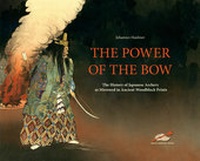
The Power of the Bow
The History of Japanese Archery as Mirrored in Ancient Woodblock Prints
1st Edition
Published on 10. December 2020
Book
Paperback/Softback
264 pages
978-3-938921-75-3 (ISBN)
Description
There is almost no other country in the world where bows are more closely intertwined with history and culture than in Japan. The bow is not only a means to hunt animals and defeat enemies, but it also plays a significant role in Japan's mythology and popular belief when children are born, diseases are to be healed, demons expelled, and good harvests secured. The bow is even attributed the power to transmit messages from the gods and predict the future.
About 190 magnificent and expressive woodblock prints from the 19th century illustrate historical events, and take the reader on a foray through Japan's mythology and intellectual history. Bow rituals, competitions, and ceremonies are depicted, legendary archers are portrayed and their exploits are told. Along the way, the influence of Shintoism, Taoism, Buddhism, and Confucianism on Japanese archery is described.
The Power of the Bow is an illustrated reader for all bow lovers and all friends of Japanese culture and history.
More details
Language
English
Place of publication
Ludwigshafen
Germany
Target group
Adult education
Professional and scholarly
The Power of the Bow is an illustrated reader for all archers, especially for those who practise Kyudo. And the friends of Japanese culture and history.
Edition type
New edition
Product notice
Klappenbroschur
Illustrations
190
190 farbige Holzschnitte
Dimensions
Height: 21.5 cm
Width: 27.5 cm
Weight
1500 gr
ISBN-13
978-3-938921-75-3 (9783938921753)
Schweitzer Classification
Persons
Dr. Johannes Haubner has studied and practised Kyudo, the traditional art of Japanese archery, for about thirty years. He is a member of the German Kyudo Federation (DKyuB), led a series of Kyudo courses, and published several essays on Kyudo-related topics. But not least, his enthusiasm for woodblock prints of Ukiyo-e artists made him delve deeper into Japan's mythology, history, and culture.