

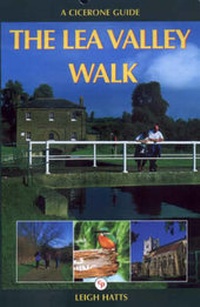
The Lea Valley Walk
Published on 1. April 2001
Book
Paperback/Softback
128 pages
978-1-85284-313-7 (ISBN)
Description
The Lea Valley Walk is one of the finest and most varied walking routes around the capital, and an excellent way to get out of (and into) London. It offers 50 miles of traffic-free walking, tracing the route of the River Lea from its source at Leagrave near Luton to where it meets the Thames in east London. As the route follows the river it undergoes a fascinating metamorphosis from urban trail to rural pathway. So, whether you choose to walk for health, fresh air or views of wildlife and countryside, to visit friends, to explore heritage attractions, to escape or simply to explore your surroundings, the Lea Valley Walk offers it all. The Prince of Wales, making his maiden speech in the House of Lords in 1974, described the Lee Valley Park as 'a classic example of what could be done with derelict land if impetus and determination was there'. A quarter of a century later the Lea Valley, once London's market garden, is again recognised as a rich green lung running down the east side of the capital. This is a walk that can be enjoyed by everybody from the keen long-distance walker to those with young children or those new to taking exercise.
Thanks to the many railway stations alongside the Park, between Ware and London, the Walk can be reached easily. Some of the sections are very short. Indeed, these stretches often contain much heritage and countryside to enjoy - such as the one mile between Cheshunt and Waltham Abbey.
The Lea Valley Walk is one of the finest and most varied walking routes around the capital, and an excellent way to get out of (and into) London. It offers 50 miles of traffic-free walking, tracing the route of the River Lea from its source at Leagrave near Luton to where it meets the Thames in east London. As the route follows the river it undergoes a fascinating metamorphosis from urban trail to rural pathway. So, whether you choose to walk for health, fresh air or views of wildlife and countryside, to visit friends, to explore heritage attractions, to escape or simply to explore your surroundings, the Lea Valley Walk offers it all. The Prince of Wales, making his maiden speech in the House of Lords in 1974, described the Lee Valley Park as 'a classic example of what could be done with derelict land if impetus and determination was there'. A quarter of a century later the Lea Valley, once London's market garden, is again recognised as a rich green lung running down the east side of the capital. This is a walk that can be enjoyed by everybody from the keen long-distance walker to those with young children or those new to taking exercise.
Thanks to the many railway stations alongside the Park, between Ware and London, the Walk can be reached easily. Some of the sections are very short. Indeed, these stretches often contain much heritage and countryside to enjoy - such as the one mile between Cheshunt and Waltham Abbey.
Thanks to the many railway stations alongside the Park, between Ware and London, the Walk can be reached easily. Some of the sections are very short. Indeed, these stretches often contain much heritage and countryside to enjoy - such as the one mile between Cheshunt and Waltham Abbey.
The Lea Valley Walk is one of the finest and most varied walking routes around the capital, and an excellent way to get out of (and into) London. It offers 50 miles of traffic-free walking, tracing the route of the River Lea from its source at Leagrave near Luton to where it meets the Thames in east London. As the route follows the river it undergoes a fascinating metamorphosis from urban trail to rural pathway. So, whether you choose to walk for health, fresh air or views of wildlife and countryside, to visit friends, to explore heritage attractions, to escape or simply to explore your surroundings, the Lea Valley Walk offers it all. The Prince of Wales, making his maiden speech in the House of Lords in 1974, described the Lee Valley Park as 'a classic example of what could be done with derelict land if impetus and determination was there'. A quarter of a century later the Lea Valley, once London's market garden, is again recognised as a rich green lung running down the east side of the capital. This is a walk that can be enjoyed by everybody from the keen long-distance walker to those with young children or those new to taking exercise.
Thanks to the many railway stations alongside the Park, between Ware and London, the Walk can be reached easily. Some of the sections are very short. Indeed, these stretches often contain much heritage and countryside to enjoy - such as the one mile between Cheshunt and Waltham Abbey.
More details
Series
Language
English
Place of publication
Kendal
United Kingdom
Illustrations
Laminated Cover
Dimensions
Height: 172 mm
Width: 116 mm
ISBN-13
978-1-85284-313-7 (9781852843137)
Copyright in bibliographic data and cover images is held by Nielsen Book Services Limited or by the publishers or by their respective licensors: all rights reserved.
Schweitzer Classification
Other editions
New editions

Leigh Hatts
The Lea Valley Walk
Book
05/2007
2nd Edition
Cicerone Press
€32.40
Article is exhausted; no reprint
Person
Leigh Hatts has been walking the Thames towpath and exploring the river and Docklands since 1981 when he worked on the Thames Walk Feasibility Study which resulted the Countryside Commission persuading the government to designate the 180 mile route as a national trail. In addition to writing three Thames books, Leigh Hatts was for a decade the author of the London Transport Walks Book series. He also devised the 20 mile Bournemouth Coast Path which now links the South West Coast Path to the Solent Way to create a 652 mile coast route from Minehead to Emsworth. In addition to a guide to this route he has written walks books featuring Dorset's coast and countryside and the New Forest. The author worked as a reporter with the walkers' magazine TGO and as arts correspondent of the Catholic Herald. He is co-founder of Bankside Press and London's in SE1 listings magazine.
Leigh Hatts has been walking the Thames towpath and exploring the river and Docklands since 1981 when he worked on the Thames Walk Feasibility Study which resulted the Countryside Commission persuading the government to designate the 180 mile route as a national trail. In addition to writing three Thames books, Leigh Hatts was for a decade the author of the London Transport Walks Book series. He also devised the 20 mile Bournemouth Coast Path which now links the South West Coast Path to the Solent Way to create a 652 mile coast route from Minehead to Emsworth. In addition to a guide to this route he has written walks books featuring Dorset's coast and countryside and the New Forest. The author worked as a reporter with the walkers' magazine TGO and as arts correspondent of the Catholic Herald. He is co-founder of Bankside Press and London's in SE1 listings magazine.
Leigh Hatts has been walking the Thames towpath and exploring the river and Docklands since 1981 when he worked on the Thames Walk Feasibility Study which resulted the Countryside Commission persuading the government to designate the 180 mile route as a national trail. In addition to writing three Thames books, Leigh Hatts was for a decade the author of the London Transport Walks Book series. He also devised the 20 mile Bournemouth Coast Path which now links the South West Coast Path to the Solent Way to create a 652 mile coast route from Minehead to Emsworth. In addition to a guide to this route he has written walks books featuring Dorset's coast and countryside and the New Forest. The author worked as a reporter with the walkers' magazine TGO and as arts correspondent of the Catholic Herald. He is co-founder of Bankside Press and London's in SE1 listings magazine.
Content
General Map Introduction Leagrave to Luton Luton to Luton Airport Parkway Luton Airport Parkway to Harpenden Harpenden to Hatfield Hatfield to Hertford Hertford to Ware Ware to St Margarets St Margarets to Rye House Rye House to Broxbourne Broxbourne to Cheshunt Cheshunt to Waltham Abbey Waltham Abbey to Enfield Lock Enfield Lock to Ponders End Ponders End to Tottenham Hale Tottenham Hale to Lea Bridge Lea Bridge to Hackney Wick Hackney Wick to Bromley- by- Bow Bromley- by- Bow to Canning Town Canning Town to East India Dock East India Dock to Island Gardens Bibliography