

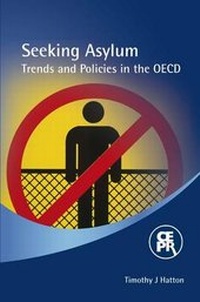
Seeking Asylum
Trends and Policies in the OECD
Published on 14. July 2011
Book
Paperback/Softback
152 pages
978-1-907142-40-6 (ISBN)
Description
Asylum seekers are at the forefront of policy debate in the developed world and are likely to remain so. Tim Hatton's timely new book provides a concise narrative and fresh analysis of the number and composition of asylum seekers, the political and social reaction to them, and the evolution of policy in the OECD. The historical development of international asylum policies is traced from the 1951 Refugee Convention right up to the present. Hatton investigates forces determining the number of asylum applicants, including war and terror in poor source countries, and evaluates the effects of the increasingly restrictive deterrence policies used by the developed world. The book explains how public opinion and politics have led to a backlash against asylum seekers, and studies the effects on those who are admitted as refugees as well as those who are rejected. The key findings are that tougher policies do reduce the number of applicants, and that the choice of asylum policy is constrained by popular opinion as well as by trends in national politics. With these realities in mind, Hatton examines feasible policy options.
Highlighting European policy, he argues that a more integrated EU-wide strategy would better serve the interests both of its citizens and of refugees.
Highlighting European policy, he argues that a more integrated EU-wide strategy would better serve the interests both of its citizens and of refugees.
More details
Language
English
Place of publication
London
United Kingdom
Target group
College/higher education
Illustrations
Illustrations
Dimensions
Height: 234 mm
Width: 156 mm
ISBN-13
978-1-907142-40-6 (9781907142406)
Copyright in bibliographic data and cover images is held by Nielsen Book Services Limited or by the publishers or by their respective licensors: all rights reserved.
Schweitzer Classification