

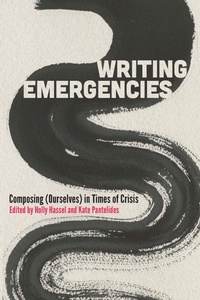
Writing Emergencies
Description
Despite the adage "there are no writing emergencies," at times situations invite or require immediate written response. In a modern era of social media and with the constancy of "crisis," knowing when, how, and why to respond quickly is increasingly important. In Writing Emergencies, a diverse group of authors contribute scholarly, narrative-based discussions of writing emergencies, descriptions of more and less successful strategies, and a reflective conclusion that offers implications for writing studies praxis and theory.
In this collection, contributors demonstrate the reality of writing emergencies-in their own writing lives, classrooms, and programs-and they offer both self- and community-focused approaches for response. Chapters focus on discernment and prioritization, recognizing that all stressors are not necessarily emergencies. Instead, expanding our vocabulary for (and subsequent understanding) of the kinds of difficulties we come across can build our professional capacity and support greater career sustainability. The volume also illustrates the role of coalitions in navigating writing emergencies and how purposefully building and activating these coalitions subverts some challenges before they become emergencies, particularly those that are recurrent or manufactured.
Writing Emergencies both names and grapples with writing emergencies and offers insights for capacity-building in the acts of filtering and prioritizing competing urgent demands. The findings are meaningful for all leaders, students, and teachers who center care in their relationships with others.
More details
Person
Holly Hassel is professor of writing studies and director of First-Year Writing at Michigan Technological University. She has served as program chair and chair of the Conference on College Composition and Communication as well as editor of the journal Teaching English in the Two-Year College. Her research focuses on college students' transition to postsecondary academic literacies and has appeared in many coauthored or edited scholarly books, as well as peer-reviewed journals. She is coauthor of Reaching All Writersand A Faculty Guidebook to Effective Shared Governance and Service.
Kate Pantelides is professor of English and Senior Provost Fellow at Middle Tennessee State University. She is coauthor of A Theory of Public Higher Education and Try This, which has been adopted by writing programs across the country. Her scholarship addressing research methods, innovative pedagogy, and contemporary rhetorics is available in numerous scholarly journals and books.