


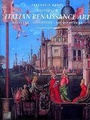
History of Italian Renaissance Art
Painting, Sculpture, Architecture
5th Edition
Published on 28. July 2003
Book
Hardback
768 pages
978-0-500-23803-5 (ISBN)
Description
Covering over four centuries of Italian painting, sculpture and architecture, this book brings into focus the elements of this extraordinarily creative period and the personalities who gave it life. Since the publication of the fourth edition, many more works have been restored, including Michelangelo's Last Judgment in the Sistine Chapel and Raphael's Stanze frescoes in the Vatican. Fresh views of renowned works are included with art commissioned or produced by women. Extended captions identify Renaissance patrons and provide details about the historical context, emphasizing how art was created and why, while in-depth visual analysis clarifies the aesthetic developments that emerged in key artistic centres such as Florence, Rome, Venice and Siena. New iconographic diagrams and computerized reconstructions add dimension to the meanings behind classical, secular and sacred motifs. Architectural plans, colour maps, and an expanded glossary and bibliography complete this picture of the Italian Renaissance.
More details
Edition
5th Revised edition
Language
English
Place of publication
London
United Kingdom
Target group
College/higher education
Professional and scholarly
Edition type
Revised edition
Illustrations
432 colour and 422 b&w illustrations, colour maps, glossary, bibliography
Dimensions
Height: 292 mm
Width: 220 mm
Weight
3170 gr
ISBN-13
978-0-500-23803-5 (9780500238035)
Copyright in bibliographic data is held by Nielsen Book Services Limited or its licensors: all rights reserved.
Schweitzer Classification
Other editions
Previous edition
Book
02/1994
4th Edition
Thames & Hudson Ltd
€75.71
Article exhausted; check for reprint