

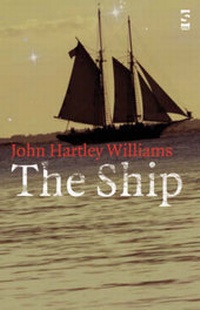
The Ship
Published on 1. October 2007
Book
Hardback
144 pages
978-1-84471-339-4 (ISBN)
Description
John Hartley Williams may well contain several poets, all of them jostling for expression. These would include his younger self and many of his aliases, the lover, the satirist, the anarchist, the lyricist, the experimentalist, the saboteur etc. - all of whom are represented in this collection of largely unpublished work dating back as far as 1958, and ending in 1982. This marvellous book is organised not simply an `early selected' poems, with everything arranged in chronological order, but as a coherent new collection epitomised by the title poem The Ship.
Poetry has a philosophical function: to place seriousness (often equated with reliability or consistency) in question, and thereby achieve the serious joke that conceals the fundamental unease without which things never will get better. This is not just irony, which is just a privileged form of time-wasting. The humour that the serious joke contains demonstrates how much of what we take seriously for granted is merely shadow-play (political speeches, the news channel, the oil crisis, supermarkets). The serious joke reveals the paucity of present day reality. It replaces the names of shadow-discourse with the names of things as they are: axes, bottles, carpets, dwarves, eggs, feet, geckoes, hats, igloos, jampots, kukudus, lampposts, mistresses, nappies, octopi, penguins, quicksands, rats, sausages, tubs, underwear, violins, whips, ex-wives, yams, and zoot-suits. If the names come at you systematised through the alphabet, so much the better; the alphabet is the most humorously devised system ever (it makes no sense). This book aims to give you things as they are, and to make sense through the fuzzy logic with which they are presented.
Poetry has a philosophical function: to place seriousness (often equated with reliability or consistency) in question, and thereby achieve the serious joke that conceals the fundamental unease without which things never will get better. This is not just irony, which is just a privileged form of time-wasting. The humour that the serious joke contains demonstrates how much of what we take seriously for granted is merely shadow-play (political speeches, the news channel, the oil crisis, supermarkets). The serious joke reveals the paucity of present day reality. It replaces the names of shadow-discourse with the names of things as they are: axes, bottles, carpets, dwarves, eggs, feet, geckoes, hats, igloos, jampots, kukudus, lampposts, mistresses, nappies, octopi, penguins, quicksands, rats, sausages, tubs, underwear, violins, whips, ex-wives, yams, and zoot-suits. If the names come at you systematised through the alphabet, so much the better; the alphabet is the most humorously devised system ever (it makes no sense). This book aims to give you things as they are, and to make sense through the fuzzy logic with which they are presented.
Reviews / Votes
Over a long and productive career, John Hartley Williams has always enjoyed launching poems that sail far away from land. The poems that make up The Ship are, it appears, ones that go back to his beginnings, though there's little sense of apprentice work here, let alone dewy-eyed rapture at sexual appetency, even though several poems appear at first blush to be about young love. No blushing for this poet, though. This is Keats reprised through the sensibility of a tongue-in-cheek Rimbaud (say). `I was standing in the station listening to/loudspeakers, when her sexy fingers//tickled my back. C' etait le coup de foudre!/A picture of ideological villains we were - la chap with slick chops, a dolly with/blind, straight, hair, speeding in a/coloured motor car to egophilia.' The decision to end lines with unimportant, casual-raggedy words, the mingling of linguistic registers (slangy idiom, codformality, neologisms, the sudden lurch into French), the cheeky-aggressive discomposing of readerly expectations (`are you sitting comfortably. Then watch out' each and every Williams poem seems to imply): these are all trademarks which characterise his later work. -- John Lucas * Staple * There is certainly a more melancholy edge to some of the work here, a sense of `inarticulate longing' more closely associated with a strict romantic sensibility, perhaps, but there is also the absurd humour, the sharp and acrid reek of piracy, as well as those hilarious narrative romps - Who Invited Carstairs? - for example, which are picaresque and swashbuckling to boot. John Hartley Williams is a much underrated poet and this collection of his early writing provides a rich and rewarding read. -- Steve Spence * Tears in the Fence *More details
Series
Language
English
Place of publication
Cambridge
United Kingdom
Illustrations
Not illustrated
Dimensions
Height: 216 mm
Width: 140 mm
Thickness: 16 mm
ISBN-13
978-1-84471-339-4 (9781844713394)
Copyright in bibliographic data and cover images is held by Nielsen Book Services Limited or by the publishers or by their respective licensors: all rights reserved.
Schweitzer Classification
Person
John Hartley Williams grew up in London. He worked as a teacher in France, the former Jugoslavija, and West Africa, and has made his home in Berlin since 1976. Williams has published many collections of poetry. A retrospective volume, The Ship, was published by Salt in 2007. A novel, Death Comes For The Poets, co-written with Matthew Sweeney, will appear from the Muswell Press in 2012 as will a new collection of poems Assault On The Clouds from Shoestring.
Content
Two Poems
Greed for Life
A Cool Seduction
Swimming at Night
The Jewel
A Little Greek Myth
The Sexual Aquarium
Hamlet Unbound
Heathrow
On the Royal Wedding of Princess Anne: November 14th 1973
The Permanent Secretary to the Minister for Home Affairs Offers an Explanation
Heroes
Summer School 1976
The Hang-Out
Literature
Amelia and Caledon
My Way
Hedge Poet
Cat Up the Tree
Summa Cum Laude
Lueebeck
Not a Description
The Secret
Song of the Grillbar Restaurant
Communications
Poem
Who Invited Carstairs?
Long John Silver's Song
A Moment of Truth in Le Bar Du Chateau
To the God of Creative Writing
Money
Time and Western Man
The Dwarf
The Dentist
My Friend Moultby
Lament for the Subotica-Palic Tramway
Ten Poems for Treasure
The Ship
Flea Market
Four Seasons
My Father was an Interventionist
On First Looking into Gittings' `Keats'
Going Home
Two for Nerval
Magyarorszag
Ode to a Paella
Five Anecdotes of the Count
Moment Abbey
Pan's Joke
Greed for Life
A Cool Seduction
Swimming at Night
The Jewel
A Little Greek Myth
The Sexual Aquarium
Hamlet Unbound
Heathrow
On the Royal Wedding of Princess Anne: November 14th 1973
The Permanent Secretary to the Minister for Home Affairs Offers an Explanation
Heroes
Summer School 1976
The Hang-Out
Literature
Amelia and Caledon
My Way
Hedge Poet
Cat Up the Tree
Summa Cum Laude
Lueebeck
Not a Description
The Secret
Song of the Grillbar Restaurant
Communications
Poem
Who Invited Carstairs?
Long John Silver's Song
A Moment of Truth in Le Bar Du Chateau
To the God of Creative Writing
Money
Time and Western Man
The Dwarf
The Dentist
My Friend Moultby
Lament for the Subotica-Palic Tramway
Ten Poems for Treasure
The Ship
Flea Market
Four Seasons
My Father was an Interventionist
On First Looking into Gittings' `Keats'
Going Home
Two for Nerval
Magyarorszag
Ode to a Paella
Five Anecdotes of the Count
Moment Abbey
Pan's Joke