

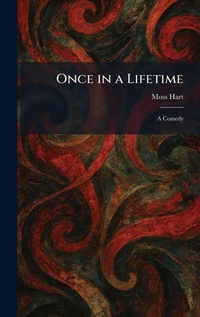
Once in a Lifetime
Description
"Once in a Lifetime" is a sharp-witted satirical comedy that captures the chaotic transition of the film industry from silent movies to "talkies." Written by the acclaimed Moss Hart, this play follows the misadventures of three down-on-their-luck vaudevillians-Jerry, Mae, and George-who decide to seek their fortune in Hollywood by opening a school for elocution. As the film industry scrambles to adapt to synchronized sound, the trio finds themselves navigating a landscape of eccentric studio moguls, aspiring starlets, and the general absurdity of the studio system.
With its biting humor and fast-paced dialogue, "Once in a Lifetime" serves as a timeless critique of the entertainment industry and the fleeting nature of fame. The play famously skewers the irrationality of Hollywood, where incompetence is often rewarded and the most unlikely individuals can rise to power. This work remains a cornerstone of American comedic theater, celebrated for its vibrant characters and its insightful look at the birth of the modern movie industry. As a quintessential piece of 1930s drama, it continues to entertain audiences with its hilarious take on the American dream and the gold-rush mentality of the early film era.
This work has been selected by scholars as being culturally important, and is part of the knowledge base of civilization as we know it. This work was reproduced from the original artifact, and remains as true to the original work as possible. Therefore, you may see the original copyright references, library stamps (as most of these works have been housed in our most important libraries around the world), and other notations in the work.
This work is in the public domain in the United States of America, and possibly other nations. Within the United States, you may freely copy and distribute this work, as no entity (individual or corporate) has a copyright on the body of the work.
As a reproduction of a historical artifact, this work may contain missing or blurred pages, poor pictures, errant marks, etc. Scholars believe, and we concur, that this work is important enough to be preserved, reproduced, and made generally available to the public. We appreciate your support of the preservation process, and thank you for being an important part of keeping this knowledge alive and relevant.