

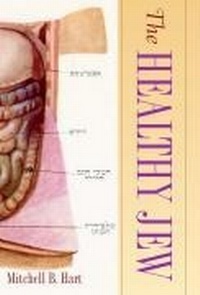
The Healthy Jew
The Symbiosis of Judaism and Modern Medicine
Published on 13. August 2007
Book
Hardback
280 pages
978-0-521-87718-3 (ISBN)
Description
The Healthy Jew traces the culturally revealing story of how Moses, the rabbis, and other Jewish thinkers came to be understood as medical authorities in the nineteenth and twentieth centuries. Such a radically different interpretation, by scholars and popular writers alike, resulted in new, widespread views on the salubrious effects of, for example, circumcision, Jewish sexual purity laws, and kosher foods. The Healthy Jew explores this interpretative tradition in the light of a number of broader debates over 'civilization' and 'culture', Orientalism, religion and science (in the wake of Darwin), anti-Semitism and Jewish apologetics, and the scientific and medical discoveries and debates that revolutionized the fields of bacteriology, preventive medicine, and genetics/eugenics.
Reviews / Votes
'This is a unique work, an essential and path-breaking book of exquisite detail and quality. Written in a highly accessible and effective narrative prose, The Healthy Jew ask that we rethink the place and value of Jews and Judaism in the Western medical, scientific and, ultimately, political imagination. It does so through the patient and meticulous accumulation of discursive elements, each of which is endowed with implacable force. This is, to my mind, a highly original and singularly illuminating book.' Gil Anidjar, Columbia University 'Mitchell Hart's The Healthy Jew is an excellent and well-researched book, brimming with information and insight. While historically rigorous, it is also an entertaining look at a very unusual development in modern Jewish cultural history. It is written with great flair - and with occasional flashes of wit. Yet the topic is a serious one, and Hart has the historical sophistication to register its broader, more theoretical ramifications.' Peter Eli Gordon, Harvard University 'The past decade or so has seen a tremendous amount of scholarship on the Jewish body, almost all of it focusing on disease and degeneration. Mitchell Hart does not challenge the importance or the validity of this scholarship. Instead, he argues that it presents an incomplete picture. Hart's book challenges what has become a very dominant paradigm in Jewish cultural studies. This book introduces an element of complexity and ambivalence that has heretofore been missing from scholarship about representations of the Jews.' Alan Steinweis, University of NebraskaMore details
Language
English
Place of publication
Cambridge
United Kingdom
Target group
College/higher education
Professional and scholarly
Product notice
sewn/stitched
Paper over boards
With dust jacket
Illustrations
Worked examples or Exercises
Dimensions
Height: 235 mm
Width: 163 mm
Thickness: 21 mm
Weight
517 gr
ISBN-13
978-0-521-87718-3 (9780521877183)
Copyright in bibliographic data and cover images is held by Nielsen Book Services Limited or by the publishers or by their respective licensors: all rights reserved.
Schweitzer Classification
Other editions
Additional editions
E-Book
10/2007
1st Edition
Cambridge University Press
€73.99
Available for download
Person
Mitchell B. Hart is Associate Professor of History at the University of Florida. His first book, Social Science and the Politics of Modern Jewish Identity (2000), won the Salo Baron Award for Best First Book in Jewish Studies, presented by the American Academy of Jewish Research.
Content
Introduction; 'Links in a long chain': Jews, Judaism, health and hygiene; 1. 'Tis a little people, but it has done great things': the role of health and medicine in modern Jewish apologetics; 2. Moses the microbiologist: Alfred Nossig's The Social Hygiene of the Jews; 3. Healthy Hebrews, healthy Jews: the Bible as a sanitary code in Anglo-American medical literature; 4. From ghetto to jungle: eugenics, social Darwinism, and the reinterpretation of Jewish history; 5. TB or not TB, that was a Jewish question: kashrut and the prevention of tuberculosis; 6. 'Then what advantage does the Jew have?': Judaism as a model for Christian health; 7. Conclusion.